Bang Bang Bang Bang (neoclassical) is a single, released on March 3, 2023, with one track. The facts available about it are few, so this guide treats it as a doorway into the larger project of a composer who thinks of music as part of his practice. It makes no claims about what happens inside the piece beyond what the title and the surrounding catalog support.
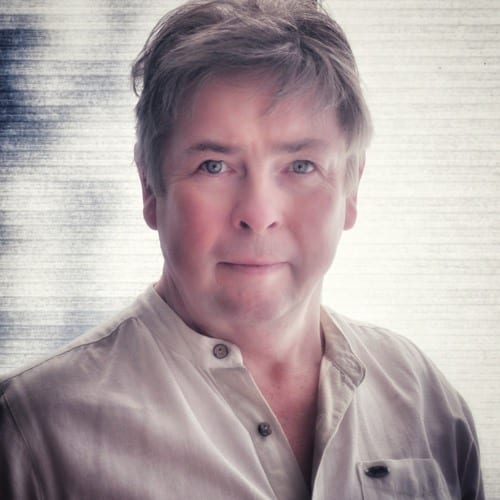
Tom Evans describes himself as a meditation guide, mystic engineer and storyteller, and as a contemporary alchemist. He trained as an engineer, has published 18 books by 2023, and leads New Reality Journeys. His music arrives alongside that work, not apart from it. He refuses the boundaries between meditation, music, storytelling and technology, and treats them as interconnected tools for awakening.
This single came in 2023, after the album Stygian (2022) and the singles Largo and Chant For The Unholy (both 2022), and before the album Origins (2025). It also shares a year with the single Miracle (2023). It belongs to a period in which he was releasing discrete pieces between larger album statements. A single suits that rhythm: one idea, one sitting.
The parenthetical "(neoclassical)" is the most useful clue we have. It signals a reworking or framing of the piece in a neoclassical register, which in contemporary composition usually points toward restrained, melodic, acoustic-leaning writing set against electronic texture. That is an expectation, not a documented description. What can be said with confidence is that Evans works primarily as a composer and sound designer rather than a vocalist, and that he describes his music as doors to higher perception, not as background accompaniment.
The title's repeated phrase invites a question worth carrying into the listen: does a percussive, insistent word like "bang" survive in a neoclassical setting, or does the music transform it into something spacious? That tension between a blunt title and a refined genre label is part of the pleasure of approaching the piece cold.
There is only one: the title track itself. As a single, it asks to be heard whole. Its interest lies in three things you can verify by ear:
- The pacing. Note whether the piece builds, circles or settles. Evans's other titles, like Largo, point toward slow, dignified movement, so notice whether this piece shares or deliberately breaks from that character.
- The relationship between title and sound. The repetition in the name may or may not appear in the music as a figure or pulse. Listen for it.
- Its function. Evans treats composed sound as a perceptual tool. Ask what state the piece seems built to produce: alertness, stillness or something stranger.
This is not bhakti or kirtan, and nothing in Evans's stated background places it there. He declares no lineage to a single teacher or Eastern tradition. His work is syncretic and post-traditional, drawing on Western esoteric and Hermetic sources. He curates The Adytum, a contemporary school of practical alchemy, and his Path to Overstanding curriculum pairs 22 meditations keyed to the Major Arcana with 22 ambient compositions.
So the useful tradition for this single is contemporary ambient and neoclassical composition, filtered through a mind that treats sound as alchemical technology. Compilation appearances such as Electronic Mood Board, Touched by Tech and Abbey Road Masters: Hybrid Score place him in the same circles. The piece is best heard as modern instrumental music made with a practitioner's intent, not as devotional music in an inherited form.
This single suits listeners who want their music to engage the mind, not sedate it. Evans's work is aimed at people who read science fiction, enjoy philosophy and consciousness research, and want practice that activates thinking rather than transcending it. If you come to ambient music for spa-style relaxation, this may not be your entry point; Evans is explicit that his intention is awakening potential, not conventional stress reduction.
It also suits a particular moment: a pause between tasks when you want a short, complete piece to reset attention, or a creative session where you want something with intention behind it. Because it is a single, it asks little commitment, which makes it a sensible first step for someone curious about Evans before taking on Stygian, Origins or the larger Path to Overstanding.
Give it a single uninterrupted pass with headphones, in a quiet room, without a screen. Evans designs his sound for active listening, so treat the piece as an experiment in attention. Before pressing play, hold the title in mind and decide what you expect from it. Afterward, sit for a minute and note what changed, and whether the neoclassical frame shifted your expectation.
Then listen again with your attention on a different layer, such as the lowest register, the sense of space or the overall shape. A second pass often shows how the piece is built.
If the single resonates, move outward: Largo for contrast in pacing, then Stygian and Origins for his album-length thinking. If you want the guidance behind the sound, his YouTube channel (@TomEvans) and tomevans.co are the places to start.