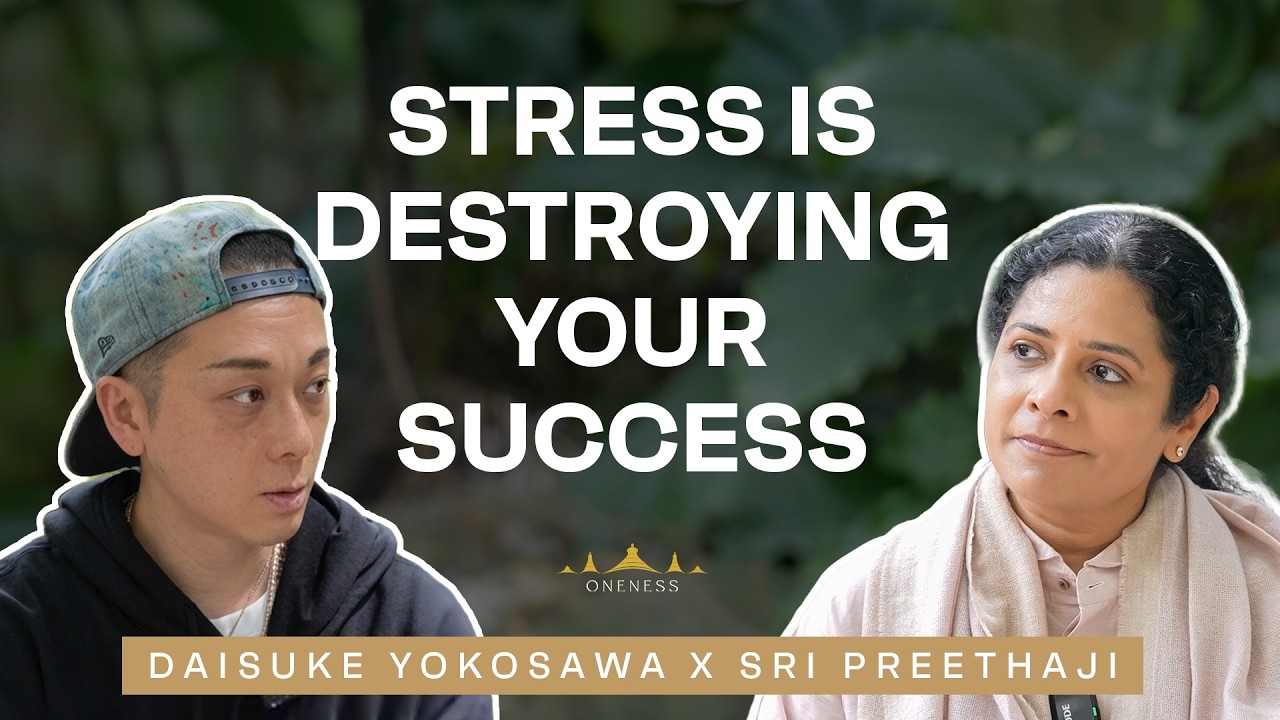
This brief teaching explores the intersection of Sri Krishnaji's spiritual philosophy and the unique needs of young people navigating modern life. Through the lens of the Oneness Movement, Sri Krishnaji addresses how youth can access deeper consciousness, meaning, and authentic living in a complex world. The focus is on making ancient wisdom accessible to contemporary generations seeking genuine transformation rather than superficial solutions.
Who is Sri Krishnaji?
Sri Krishnaji is a central figure in the Oneness Movement, a spiritual organization that emerged from South India and teaches practical approaches to consciousness and enlightenment. Rather than presenting spirituality as withdrawal from life, Sri Krishnaji's work centers on awakening people to their full potential while fully engaged with the world. His teachings blend classical Eastern wisdom with responses to modern psychological and existential challenges, making them relevant to contemporary seekers across all age groups.
The Oneness Movement, guided by Sri Krishnaji alongside Sri Preethaji, emphasizes that spiritual awakening is not reserved for monastics or those who renounce worldly life. Instead, it is available to anyone willing to inquire into their own consciousness and the nature of their conditioning. This democratization of spirituality is particularly resonant for younger generations who may feel alienated by traditional religious structures but hungry for genuine meaning.
Why Does Spirituality Matter for Youth?
Young people today face unique pressures: social media-driven identity formation, economic uncertainty, climate anxiety, and a pervasive sense of disconnection despite constant digital connectivity. Traditional institutions—religious, educational, familial—often fail to address these existential dimensions, leaving youth to navigate profound questions alone. This is where Sri Krishnaji's teachings become relevant.
Rather than offering escapism or dogmatic answers, Sri Krishnaji's approach invites young people to understand their own minds and the nature of suffering. The Oneness Movement teaches that much of youth suffering stems from false conditioning: inherited beliefs about who they should be, what success looks like, and what will make them happy. By examining these conditionings directly, young people can begin to live more authentically and find meaning that isn't dependent on external validation.
What Is the Oneness Movement's Core Teaching on Consciousness?
The Oneness Movement, through Sri Krishnaji's teachings, centers on the concept that consciousness is fundamental to human experience and that most people live in a state of fragmented, conditioned awareness. This conditioning—absorbed from family, culture, education, and media—creates a false sense of separation between the self and others, between mind and body, and between the individual and the larger whole.
For youth specifically, this often manifests as chronic self-doubt, perfectionism, anxiety about the future, and a felt sense of isolation despite social connectivity. Sri Krishnaji's work points to the possibility of awakening from this conditioned state into what the movement calls "Oneness consciousness"—an experience of interconnection, authenticity, and clarity about one's true nature and purpose.
This awakening is not mystical in an otherworldly sense. Rather, it involves direct observation of how one's conditioned mind creates suffering, blocks creativity, and prevents genuine connection with others. Once this mechanism is seen clearly, transformation becomes possible not through force or willpower, but through understanding.
How Does Sri Krishnaji Address Youth-Specific Challenges?
The Oneness Movement recognizes that youth face distinct developmental and cultural challenges. Sri Krishnaji's teachings address several key areas:
- Identity Formation: Young people are constructing their identities in an age of infinite external input and comparison. Sri Krishnaji's inquiry into "Who am I beyond my conditioning?" offers a counterbalance to the fragmented, reactive identity formation that social media encourages.
- Meaning and Purpose: Many youth feel pressure to "optimize" their lives—choosing the right career, the right partner, the right path—often based on inherited or cultural definitions of success. The Oneness Movement teaches that authentic purpose emerges from understanding oneself, not from external templates.
- Relationships and Connection: Youth often struggle with loneliness, social anxiety, and difficulty with genuine intimacy. Sri Krishnaji's teachings on consciousness emphasize that authentic connection becomes possible when we meet others from a place of awareness rather than from our conditioned patterns.
- Mental and Emotional Health: Rather than pathologizing the struggles many youth face, Sri Krishnaji's approach invites inquiry into the roots of anxiety, depression, and disconnection, often finding them to be rooted in false conditioning rather than inherent deficiency.
What Makes Sri Krishnaji's Approach Unique for Younger Generations?
Many traditional spiritual paths were developed in different cultural and historical contexts. While their wisdom remains valuable, they can sometimes feel distant or inaccessible to contemporary youth. Sri Krishnaji's particular gift is the ability to translate timeless principles into language and frameworks that resonate with modern consciousness.
The Oneness Movement does not require belief in any religious doctrine, adherence to specific rituals, or acceptance of particular cosmologies. Instead, it invites direct investigation into one's own experience. This empirical, inquiry-based approach appeals to youth raised in a scientific, questioning culture while honoring genuine spiritual depth.
Additionally, Sri Krishnaji's teachings emphasize that spiritual awakening is not about becoming someone other than who you are or about reaching some distant future state. Rather, it's about awakening to the consciousness that is already present, right now, available to anyone who turns their attention inward with genuine curiosity.
How Can Youth Engage With These Teachings Practically?
The Oneness Movement offers various entry points for young people: online programs, live events, books, and guided inquiries. The core practice involves self-inquiry—asking fundamental questions about one's conditioning, beliefs, and the nature of one's experience, and then observing what arises without judgment.
For youth, this might look like: examining why they feel pressure to achieve a particular image of success; noticing the voice of internalized authority figures (parents, teachers, cultural narratives) that runs constantly in the mind; observing how comparison and competition create a sense of scarcity and inadequacy; and beginning to distinguish between their authentic desires and their conditioned wants.
The goal is not to achieve a perfect meditative state or reach enlightenment in some distant future, but to begin living with greater clarity, authenticity, and freedom right now—while still fully engaged with school, career, relationships, and the practical demands of life.
What Is the Broader Impact of Spirituality in Youth Communities?
When young people begin to engage with genuine spiritual inquiry rather than spiritual materialism (treating spirituality as another commodity to acquire), several shifts occur. They become less susceptible to manipulation through social media and advertising because they're developing a stronger internal reference point. They develop genuine compassion for themselves and others because they understand that suffering comes from conditioning, not from inherent badness. They become more creative and innovative because they're not constrained by internalized rules about what's possible.
Most importantly, youth who engage with Sri Krishnaji's teachings through the Oneness Movement report a shift in their fundamental sense of belonging and purpose. Not a belonging that requires them to fit into a predetermined role, but a belonging to consciousness itself, to the larger wholeness of existence, which paradoxically gives them greater freedom to be themselves.
Where to go from here
If you're a young person drawn to these ideas, the invitation is to begin exploring your own consciousness directly rather than taking anyone's word for it—including Sri Krishnaji's. Engage with the teachings of the Oneness Movement through their publicly available resources, but most importantly, apply the principle of inquiry to your own life: What am I believing about myself that may not be true? What would change if I questioned that belief? What becomes possible when I contact my own authentic awareness rather than my conditioned patterns?
For those who work with young people—parents, educators, counselors—Sri Krishnaji's approach offers a framework for supporting genuine development rather than mere achievement optimization. It invites young people into their own wisdom rather than imposing external solutions.
The teaching is fundamentally hopeful: youth suffering is real, but it is not inevitable or permanent. It arises from conditioning that can be seen and released. And on the other side of that release is not escape from the world, but the capacity to engage with life, relationships, and purpose from a place of genuine clarity and wholeness.