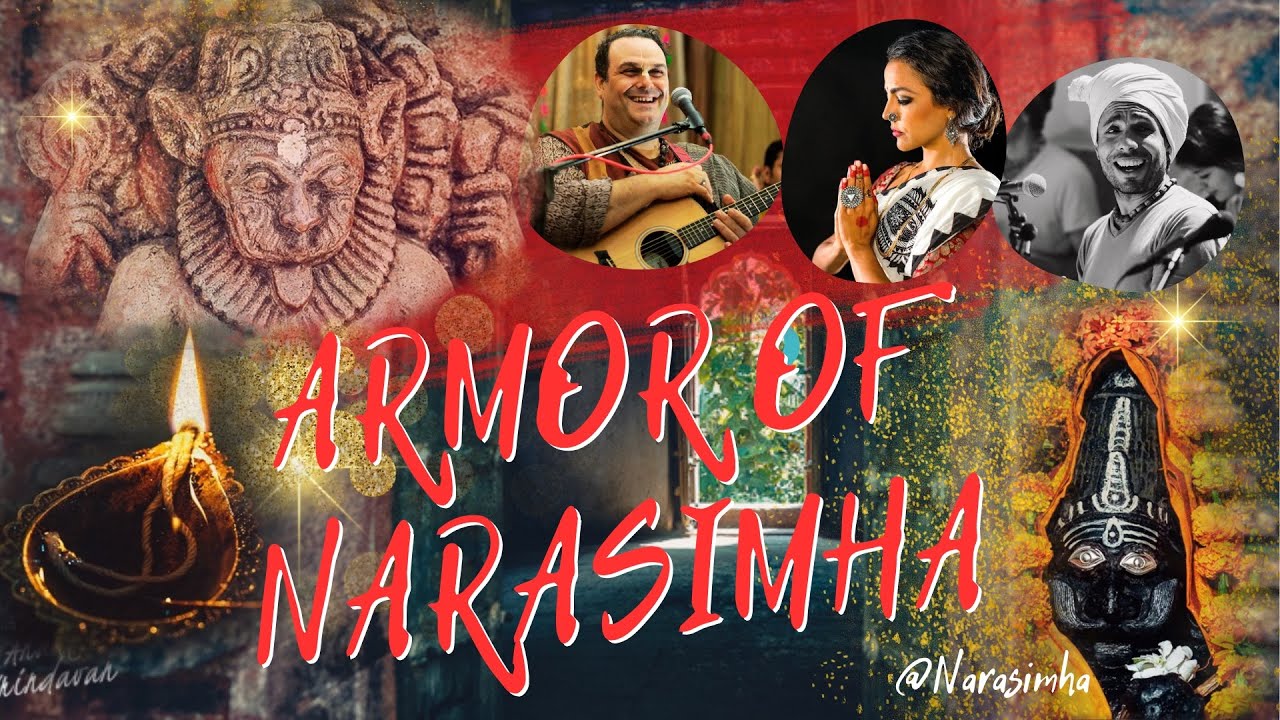
The moment the ensemble at the Royal Opera House in Mumbai began, they announced their central argument through sound before any explicit claim was made: opening with a deceptively simple refrain—"We all bleed blood, we all breathe air, we all break bread, we've all been there"—the performance grounded itself in a universal truth so basic it almost disappears, yet foundational to human kinship. But Gaura Vani and her band were not interested in stopping there. They were about to demonstrate that beneath this shared flesh-and-blood existence lies another layer of kinship—one that an 8th-century Sanskrit text about spiritual liberation might reveal more clearly than any contemporary philosophy, and that by bringing together traditional Indian instruments, modern Western orchestration, classical devotional singing, and contemporary rap, a single performance could weave these worlds into something larger than the sum of its parts.
What is Bhaja Govindam and why does it remain urgent?
"Bhaja Govindam"—literally, "worship Govinda" or "take refuge in Krishna"—was composed by Adi Shankaracharya, the towering 8th-century philosopher and saint who systematized Advaita Vedanta, the non-dual tradition of Hindu philosophy. This is not hagiography; Shankaracharya was a systematic thinker. The composition is far more than a devotional song; it is philosophical argument set to verse, structured to address what he called the mudhamate—the foolish mind—not foolish in an insulting sense, but caught in confusion, prone to mistaking the temporary for the eternal, the body for the self.
The text diagnoses a fundamental human problem rooted in what Hindu philosophy calls samsara—the cycle of birth, death, and rebirth driven by attachment, desire, and ignorance. Shankaracharya argued that because most people remain bound to the body, to property, to relationship, to reputation, to pleasure and pain, they generate karma—the accumulated weight of actions—that forces them to be reborn again and again. The Sanskrit phrases that appear later in this performance—punarapi jananaṃ punarapi maraṇaṃ, punarapi jananījaṭharē śayanam iha saṃsārē bahudustārē (again and again birth, again and again death, again and again lying in the mother's womb, in this world with many afflictions)—are not poetic flourishes offered at the end for aesthetic effect. They constitute a logical cascade. The implication is inexorable: if you remain bound to desire, you will be reborn.
But there is a way out, Shankaracharya argues. It is through bhaja—the act of taking refuge, of remembering, of invoking the divine. Not as escape from life, but as the recognition of what is real beneath life's changing surface. This is the central teaching of Advaita Vedanta: there is a self behind the individual self, a consciousness that witnesses all change without being changed by it. In recognizing that consciousness—what the Upanishads call Brahman—one finds liberation.
For nearly twelve centuries, "Bhaja Govindam" has lived in the realm of classical Indian music. It is performed by monks in temples, by master musicians in concert halls trained over decades to master its nuances, by devotional singers in ashrams at dawn. It is architecture: formal, geometrically perfect, designed for deep contemplation. But this performance at the Royal Opera House asks a radically different question: what happens when you place this ancient wisdom directly alongside our contemporary moment? What happens when the person performing it is not a renunciate monk but a contemporary artist with a full ensemble, and when the contemporary moment includes Mumbai rap and electric guitar alongside the harmonium?
How does the performance structure the meeting of two worlds?
The genius of Gaura Vani's arrangement reveals itself in the overall architecture. The opening seconds (0:02) establish the foundation with an English refrain: "We all bleed blood, we all breathe air, we all break bread, we've all been there." This is repeated with gathering intensity, becoming a chant itself. The lyrics carry weight precisely because they are unsentimental biological facts, not spiritual claims. They make no appeal to the divine, no invocation of transcendence. They simply name what is empirically true across all cultures, all centuries, all circumstances: we share a body, we share breath, we share hunger, we share vulnerability. Every human being, regardless of tradition, philosophy, or path, knows this truth in the cells.
Only after this grounding does the classical Sanskrit enter. At 1:19, the first invocation—bhaja govindam, govinda, bhaja mudhmate—arrives like a deepening, like the earth dropping away beneath the shared ground and revealing another foundation beneath it. The ensemble gradually builds around the Sanskrit text, and this is where the production choices become not just musical but philosophical. Gaura Vani's harmonium carries the foundational frequency—that deep, resonant drone that has anchored devotional music in India for over a thousand years. The harmonium is not a background element or decorative touch; it is the sonic home from which everything else emerges and to which everything returns.
Over this foundation, Prema Hamilton's keyboards create a harmonic space that refuses to choose between ancient and present, between sacred and secular, between the temple and the concert hall. A saxophone weaves modern jazz harmonics into the Sanskrit syllables. A violin bows the melody with classical precision. The bansuri flute—an instrument loaded with Krishna mythology—dances through the upper registers. A flugal horn adds another layer of voice. The mridanga drum and kartals provide the rhythmic spine of classical Indian percussion, but they also interact with contemporary percussion in ways that suggest conversation rather than hierarchy.
An acoustic guitar and electric guitar participate in this conversation not as ornaments to be hung on an ancient frame but as equal voices, as if saying: the ancient wisdom does not need our protection; it is robust enough to speak through whatever instruments we bring it. This is orchestration as philosophy. Each player seems to be asking: what does this 8th-century teaching about the nature of consciousness and liberation sound like when we bring our full contemporary consciousness to it? What frequencies emerge when the past and present resonate together?
What changes when the contemporary rapper enters the conversation?
About halfway through the classical section, at 4:46, the music makes a dramatic pivot. The ensemble welcomes a young rapper from Mumbai, credited as DJ Nick. His section is entirely in Hindi/Hindustani, the vernacular language of contemporary urban India, and it functions simultaneously as translation, as commentary, as dialogue, and as something like friendly engagement with the renunciative ideal that Shankaracharya advocates.
Beginning at 5:10, Nick's rap acknowledges hunger, desire, and struggle with unflinching honesty. "Dil mera jume jaise nila gagan / Bhale karm karu main har ghadi har kshan" (My heart floats like the blue sky / Though I labor every moment). He builds metaphors of caged birds seeking freedom, the poet's pen as a tool of rebellion and artistic expression, the mridangam drum as both spiritual anchor and contemporary beat, the suggestion that spirituality and worldly struggle are not opposed but intertwined.
The brilliance of this choice is that Nick's section does not contradict Shankaracharya—it complicates him in a way that is deeply necessary. A young person in 21st-century Mumbai is not going to respond to an 8th-century ascetic sage by simply renouncing desire and the world. That path is not available to him, nor perhaps should it be. But he can recognize that the yearning beneath Shankaracharya's ancient wisdom—the restlessness with ordinary existence, the hunger for something beyond the pinjere (the cage), the recognition that material success and worldly achievement don't touch the deepest part of you—is his hunger too, his ache too. It's just that he experiences it while living in the world, not in a forest ashram.
Crucially, the rap does not resolve the tension between desire and renunciation, between worldly life and spiritual seeking. It refuses false resolution. It sits in the tension. That sitting-in, that refusal to harmonize what is genuinely difficult and even contradictory, is where the performance makes its most important claim about what spirituality in the contemporary moment might actually look like: not as escape, but as acknowledgment; not as solution, but as awakening to the real problem.
What happens when the classical returns?
At 6:29, after Nick's rap, the classical devotional section returns—specifically the refrain "Radha naam sharnam hum bhaje bhaje" (Radha's name is our shelter, we remember, we remember). This return is not presented as a victory of the ancient over the modern, or as a correction of the rapper's words. It is presented as a conversation held. Both voices have been heard. Both remain true. Both point toward the same seeking.
The final Sanskrit section arrives with full gravitational weight. At 7:14, the text reaches its culmination: "samprāptē sannihitē kālē nahi nahi rakṣati ḍukṛṅkaraṇē / punarapi jananaṃ punarapi maraṇaṃ / punarapi jananījaṭharē śayanam" (When time approaches and death draws near, the circle of family cannot protect you; again birth, again death, again lying in the mother's womb). This is the moment of reckoning—the recognition that all that the world offers as comfort, security, relationship, and identity will ultimately fail. Nothing external can save you. Nothing external can protect you from the fundamental nature of existence.
And then the final prayer: kṛpayā'pārē pāhi murārē (By your grace, O Supreme Being, protect me). Only the divine, only the recognition of the consciousness that pervades and transcends all appearance, offers actual refuge.
What is accomplished by the scale of this production?
By the time we arrive at these final Sanskrit words, we have traveled through multiple dimensions: first through the body and its universal needs, then through ancient philosophical wisdom about consciousness and liberation, then through the contemporary voice of a young person struggling to reconcile worldly life with spiritual hunger, then through music that refuses to choose between instruments and eras but instead makes them speak as one organism.
The video credits reveal the full scope: 13 musicians, multiple vocalists, dancers, a comprehensive production team including a dedicated director, lighting designer, sound engineer, mixing/mastering engineer, and video editor. This was not a casual performance. It was a deliberate, carefully produced artistic statement—a claim that contemporary spirituality does not need to apologize for production value or professional excellence. Rather, that excellence can become a vehicle for depth.
A dancer (Ambika) moves through portions of the performance, translating the Sanskrit and Hindi lyrics into physical language. The Royal Opera House itself—with its neoclassical architecture—becomes part of the argument about what it means to house ancient wisdom in a modern concert space. The lighting (designed by Sanjeev Davidson) shifts throughout the performance, creating visual equivalents to the tonal and philosophical shifts. The sound design captures not just the music but the acoustic space itself. Nothing here is incidental or decorative.
What is the performance ultimately claiming about us?
The performance answers its own central question: what unites us across time and culture is not just our biology (though that is real) or even our stories (though those matter), but our shared longing—what Shankaracharya called the remembrance of the divine, what DJ Nick calls the hunger expressed through the pen, what every seeker in every era recognizes as the fundamental ache at the center of being alive.
That recognition, when it happens, is what the Sanskrit calls śaraṇaṃ—taking shelter, finding refuge. But this performance demonstrates that taking shelter is not a destination you arrive at and stay in. It is the constant act of recognition, of remembering, of invoking what is real beneath what appears to be real. It is something that happens moment to moment.
The performance invites us into that refuge without pretending the journey there is simple or linear or that the destination is one place called enlightenment. Instead, it demonstrates that the journey itself—from body to philosophy to contemporary struggle to ancient wisdom to standing in a concert hall with thousands of strangers and recognizing something familiar in each of them—is the real shelter.
Where to go from here
If this performance resonates, the next step is not necessarily to seek out more music, though that would deepen the experience. Rather, it is to sit with the central claim: that "we all bleed blood" and that beneath that blood is a seeking that Adi Shankaracharya named 1,200 years ago and that DJ Nick names now through rap. Both are true. Both matter. The harmonium drone and the saxophone and the contemporary beat are all frequencies of the same search for what is real.
Listening to the full performance—not just hearing the music but watching how the ensemble brings it into being, how each musician relates to the others, how the dancer translates philosophy into movement, how the production team has designed light and sound to support each layer—offers a model for how traditional wisdom and contemporary consciousness might relate to each other. Not as opposites. Not as one correcting the other. But as partners in a conversation that has no ending, only deepening.