Transcript
[0:04] Now whether or not that the trauma of
[0:08] the loss of a guru
[0:11] caused that person to hallucinate or
[0:13] whether they went [music] into a plane
[0:15] of consciousness where they saw how it
[0:17] is. From where I'm sitting I suspect it
[0:20] was the latter.
[0:22] [music] I think we tend to get very
[0:24] caught in our
[0:29] our um egocentric predicament [music]
[0:32] about our plane of reality as being more
[0:36] real than [music] it appears to be.
[0:37] Finally, it's just moving from one dream
[0:40] plane to another. [music]
[0:43] But it's very clear that the moments the
[0:47] approach of death
[0:50] can be a profound
[0:55] condition [music] for spiritual work.
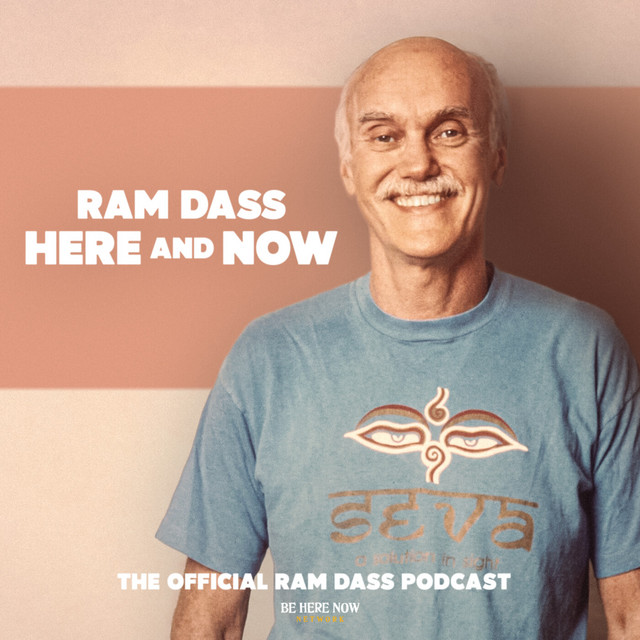
[1:03] Welcome to here and now with Ramdos.
[1:06] This is episode 314,
[1:09] an exercise in spiritual awakening. This
[1:13] was recorded at a retreat on June 17th
[1:16] in 1976.
[1:18] So relative early days and Ramdas is
[1:21] telling us stories something he does so
[1:24] well. There's stories about his beloved
[1:26] guru Maharaji about his encounters with
[1:30] people facing death. And there's some
[1:33] brilliant wisdom in here from his old
[1:34] friend Aldis Huxley
[1:37] that offers a perspective that may shift
[1:40] how you see dying. I mean, it's one of
[1:43] these things we all will eventually do
[1:45] and we're so afraid to talk about it.
[1:48] And so, this is such an important talk.
[1:52] So, if this episode stirs something in
[1:54] you, we have an offering we'd like to
[1:57] share. There are a few thousand people
[2:00] right now gathering around this fire.
[2:03] There's stories of Ramdas and Maharaji
[2:06] and this legacy of love. It is our fall
[2:10] immersion and it's four weeks. It's all
[2:13] of the old sought song telling stories.
[2:17] It's the people that were there. It's
[2:18] the people whose lives were changed and
[2:20] it helps us carry this ember forward. So
[2:25] come gather in community. Open your
[2:27] heart. Bask in this spirit of loving
[2:30] awareness. It's free. It's nourishing.
[2:33] And it's the kind of gathering Ramdos
[2:35] would have loved. Check it out.
[2:37] Ramdas.org/fire.
[2:39] And with that, here is this week's
[2:42] episode. Here's Ramdos here and now.
[2:49] [music]
[2:50] This is Ramdas
[2:53] and the show is called Here and Now with
[2:55] Ramdas.
[2:57] >> [music]
[3:04] >> Maharaji was sitting with a group of
[3:05] people and um
[3:09] a man appeared very excitedly at the
[3:12] gate and Maharaji screamed before the
[3:15] man even came into sight.
[3:18] I know what you want. I know he's dying.
[3:20] Tell him I won't come.
[3:23] And the man came in. He and he was the
[3:25] servant of one of Maharaji's devotees,
[3:29] a wealthy devote I guess. And he said,
[3:32] "But Maharaji, how did you know?" He
[3:34] said, "The man just had a heart attack
[3:36] and the doctor says he's near death and
[3:37] he just sent me running over here."
[3:40] They always underestimate Maharaji and
[3:43] um he said and he said he just wants to
[3:47] see have you with him you know. Maharaji
[3:50] says no tell him I won't come. Tell him
[3:52] I won't come. Maharaji if you would just
[3:54] come I'm sure it would be all right. Nay
[3:59] and Maharaji said here give him this
[4:02] banana.
[4:04] So it was like the mango you know
[4:06] everybody figured
[4:08] the banana will heal a man and they
[4:10] rushed back and they mashed up the
[4:12] banana and they pushed it in between his
[4:14] lips and he ate the entire banana and he
[4:17] died.
[4:19] I neglected to say the line that
[4:21] Maharaji said, "Give him this banana and
[4:23] he'll be all right." Okay, which he was.
[4:32] Maharaji was walking with one of his
[4:34] devotees and suddenly he looked up in
[4:36] the up and he said, "Oh, ma so and so
[4:40] just died." This old devote woman in a
[4:43] little village many miles away. He said,
[4:45] "Oh, she just died." And he laughed and
[4:48] laughed and laughed.
[4:50] And the man said to him who was a very
[4:52] old friend been with Maharaji for maybe
[4:55] 40 years as a devotey said, "You
[4:58] butcher, what are you laughing about if
[5:00] she just died?"
[5:02] And Maharaji said to him, "What would
[5:05] you like me to do? Make believe I'm one
[5:06] of the puppets?"
[5:09] Right? Do you really want me to get lost
[5:11] into the drama? Is that what you want?
[5:13] You want me to play? Right.
[5:19] Some years ago
[5:23] I had a student who um
[5:28] it's very beautiful boy and he um
[5:32] he just come to me now and then to sort
[5:34] of do sadna and everything I taught him
[5:36] he did better than I did.
[5:40] and he went off into a cave in Arizona.
[5:44] And um the next thing I heard, he had
[5:48] died.
[5:51] And um I was a little confused about
[5:54] what had happened, whether I had taught
[5:56] him wrong or I had not perceived some
[5:58] danger.
[6:01] But later it turned out that um he had
[6:04] taken um some LSD
[6:08] and uh gotten very paranoid about
[6:11] something that had come up in his
[6:13] relationships. And he had gone into his
[6:16] um cabin and done very intensive
[6:19] pranayyam which plus the LSD
[6:23] was an ego trip. the way he did it and
[6:26] he burst his u blood vessels of his
[6:29] heart
[6:30] and he died.
[6:33] So when I heard that I thought well
[6:36] that's like suicide.
[6:41] Now his mother didn't know how he had
[6:42] died and she came to me with his diary
[6:47] and he had written a letter to her at
[6:49] the end the last time before he did that
[6:51] final pranayyam.
[6:55] See, they found him with blood on the
[6:57] wall from his nose and all. And I
[6:59] assumed that that wasn't didn't sound
[7:02] like samadei to me, but his mother came
[7:04] to me and she said, "My son left his
[7:08] body. He went into Maha Samadei." And he
[7:11] got completely enlightened.
[7:14] And he had written a diary. He had said,
[7:15] "Dear mother, though I'm leaving you in
[7:18] the body now, I won't leave you. I am
[7:20] now with Christ. Christ is here with me.
[7:23] I'm going into Christ. I will always be
[7:25] with you.
[7:27] Don't ever worry. Sign love, Tony.
[7:33] So the mother and I talked for a while
[7:35] and she was pretty hysterical about the
[7:37] whole thing but strongly believed that
[7:39] and she knew nothing about the LSD. And
[7:42] so then she said to me, "You're going to
[7:45] India in a few months." This was in
[7:47] 1970.
[7:48] Uh would you ask your guru about my son?
[7:52] Sure. So I took a picture with me of
[7:54] Tony
[7:57] and at the appropriate moment I took out
[7:59] the picture and I handed it to Maharaji.
[8:01] Maharaji said it was a high school
[8:03] graduation picture or something.
[8:04] Maharaji looked at it and he said oh
[8:06] he's he left his body. I said yeah.
[8:12] He said um
[8:15] he took medicine meaning the LSD. I said
[8:18] yeah.
[8:22] I said, ' That's what I thought. Like
[8:25] it's an ego trip and suicide my whole
[8:27] mind. He said, 'N. He said, um, he
[8:31] finished his work.
[8:34] He said, uh, he's with Christ.
[8:38] He said his mother shouldn't worry. He's
[8:41] always with her.
[8:53] If you ever go to Banaris
[8:56] Barnasi, Kashi,
[8:59] different names,
[9:03] it's a very awesome experience because
[9:05] there are literally
[9:08] thousands and thousands of
[9:11] beings in the
[9:16] um in the streets.
[9:18] who are nothing more than skin and
[9:21] bones. Many of them are lepers. They are
[9:24] cancerous in various ways. They are
[9:27] deformed
[9:30] and um they sit with their begging bowls
[9:32] in rows near the burning gut and most of
[9:36] them have affixed to their loin cloth a
[9:39] little um few rupees which is enough for
[9:42] the wood for the funeral fire for their
[9:45] funeral fire. And uh at the gut or at
[9:48] the um
[9:51] at the river edge of the Ganes there is
[9:54] a platform where for thousands of years
[9:58] there have been continuous fire and
[10:00] there are the bodies are being burned
[10:02] and uh then the remains are thrown into
[10:06] the Ganjis river
[10:11] and all of these people have come to
[10:12] Bonaris to um to drop their bodies
[10:15] because it's a very apic ious place to
[10:17] do that
[10:19] and their eyes have a very um great
[10:21] radiance about them.
[10:24] And when I first went to India, before I
[10:26] understood
[10:28] or had a sense of the spiritual
[10:34] uh significance of this place,
[10:38] I went through the streets full of pity
[10:40] for all these people
[10:42] and I got very disoriented because they
[10:45] were looking at me with what I
[10:47] experienced as pity
[10:49] and that seemed unbelievable to me
[10:51] because I was healthy and wealthy And
[10:54] you know, uh, they were sick and weak
[10:57] and yet they were looking at me with
[10:59] pity and they were right here. They were
[11:01] so right here that I couldn't handle
[11:03] their right hearness and I went home to
[11:06] the hotel and I hid.
[11:08] Um, this I was taking a lot of drugs at
[11:10] that time and I was high on something
[11:14] and that might have exacerbated the
[11:16] paranoia but I suddenly felt definitely
[11:19] confronted by their intense presence.
[11:23] And later after I'd been in the temple
[11:24] for a while and I began to understand
[11:26] what that was about, I went back
[11:29] and I began to understand what their
[11:32] pity was about. Here I was roaming
[11:36] around the world lost in sansar
[11:39] sanssara.
[11:41] And they were people who were clear.
[11:43] They knew that they had spent their
[11:46] whole life getting ready for the moment
[11:48] of death. And at the moment of death,
[11:51] they knew that if they were burned on
[11:54] that got with the purity of their own
[11:56] heart, that would call forth Shiva
[12:01] who would come and who would breathe the
[12:03] name Ram into their ear
[12:06] and they would be liberated at that
[12:08] moment.
[12:10] And beings that had third eye vision can
[12:13] see that whole process going on around
[12:15] the gut. They can see these beings.
[12:19] When Maharaji died,
[12:23] when he left his body, there was a fire
[12:25] in the temple compound and um one of the
[12:30] devotees, all the rest of them were very
[12:32] uh distraught having lost the guru and
[12:35] the physical form.
[12:37] One of the devotees all night long was
[12:40] in ecstasy singing at the top of his
[12:42] lungs right by the fire. Sithar Ram Shri
[12:46] Ram J Ram JJ Ram just in ecstasy and
[12:50] everybody felt that the emotion had been
[12:51] too much for him and he had flipped out
[12:54] and the next day when they asked him
[12:57] what happened he said well didn't you
[12:58] see it he said Maharaji was sitting up
[13:03] smiling laughing and Rah was pouring
[13:07] ghee clarified butter over his body so
[13:10] it would burn faster and all the davas
[13:13] and angels uals were graining flowers
[13:15] down from above, right? And his vision
[13:19] was clear and he saw that. No one else
[13:22] others, one old lady saw Maharaji get up
[13:26] on his elbow and look at her and go like
[13:28] that, you know, right
[13:33] now. whether or not that the trauma of
[13:36] the loss of a guru
[13:40] caused that person to hallucinate or
[13:42] whether they went into a plane of
[13:44] consciousness where they saw how it is.
[13:47] From where I'm sitting, I suspect it was
[13:49] the latter.
[13:51] I think we tend to get very caught in
[13:53] our
[13:58] our um egocentric predicament about our
[14:02] plane of reality as being more real than
[14:05] it appears to be. Finally, it's just
[14:08] moving from one dream plane to another.
[14:12] But it's very clear that the moments the
[14:16] approach of death
[14:19] can be a profound
[14:23] condition for spiritual work.
[14:29] In fact, looked at from one point of
[14:31] view, one's entire life is a preparation
[14:35] for dying.
[14:37] And the way the work you've done in this
[14:40] lifetime will determine how conscious
[14:44] you are at the moment of death.
[14:48] At the moment when you can not cling
[14:50] back to earth, but to go forward, leave
[14:54] your body, let it go, and just go
[14:57] towards and into the light.
[15:00] in um
[15:04] Huxley's book Island is a very beautiful
[15:08] um
[15:10] description
[15:11] in which the doctor is sitting with his
[15:14] wife. Aldis, this was Aldis' blueprint
[15:17] for his own death that he wrote in this
[15:20] book. And actually when he died, Lara
[15:23] sat by his bedside and Aldis took LSD.
[15:27] And then Aldis wrote on his pad, I don't
[15:30] feel any feeling in my thighs. I don't
[15:32] feel and he just watched himself leave
[15:35] his body just very conscious. Aldis had
[15:37] this kind of uh delight in the play of
[15:41] God. All this once said to me in
[15:45] Copenhagen, we were at a conference
[15:46] together and he said, "Don't you
[15:48] appreciate that the reason people are so
[15:49] attracted to diamonds and rubies is
[15:51] because they remember the astral plains
[15:53] where those were all pebbles, right? And
[15:56] that's what the planes were like. And
[15:57] it's just the memory that's pulling them
[15:59] that makes those things so precious.
[16:03] But he wrote this beautiful way in which
[16:06] the doctor was helping his wife at the
[16:09] final moments of her life. And he said,
[16:12] "Lightly, my darling, lightly,
[16:15] even when it comes to dying, nothing
[16:18] ponderous or portentious
[16:22] or emphatic,
[16:24] no rhetoric,
[16:26] no tremolo,
[16:28] no self-conscious persons putting on its
[16:31] celebrated imitation of Christ or Gerta
[16:35] or little Nell."
[16:38] And of course, no theology and no
[16:40] metaphysics.
[16:41] Just the fact of dying and the fact of
[16:44] the clear light.
[16:46] Throw away your baggage and go forward.
[16:50] There are quick sands all about you,
[16:52] sucking at your feet, trying to suck you
[16:55] down into fear and self-pity and
[16:58] despair. That's why you must walk so
[17:00] lightly.
[17:03] The light came the horse whisper. The
[17:07] clear light. It's here along with the
[17:11] pain. In spite of the pain.
[17:14] And where are you?
[17:17] Over there in the corner. I can see
[17:20] myself there. Brighter, brighter.
[17:25] A smile of happiness intense almost to
[17:27] the point of elation transfigured her
[17:30] face.
[17:32] Through his tears, Dr. Robert smiled
[17:34] back at her.
[17:37] So now you can let go, my darling. He
[17:39] stroked her gray hair. Now you can let
[17:42] go, he insisted. Let go of this poor old
[17:46] body. You don't need it anymore.
[17:50] Let it fall away from you.
[17:53] Leave it there like a pile of worn out
[17:55] clothes. Go on. Go on into the light,
[18:00] into the peace,
[18:03] into the living peace.
[18:06] of the clear light.
[18:11] Now the karma that we have accred
[18:16] over many lifetimes
[18:19] as we start to awaken in the middle of a
[18:22] lifetime
[18:23] not after death but in the middle of a
[18:25] lifetime
[18:27] like we are doing here.
[18:30] Then we start to live our lives
[18:32] consciously
[18:34] in such a way that we don't create new
[18:36] karma. But the old karma keeps running
[18:39] off and it may run off for many
[18:42] lifetimes.
[18:43] Right?
[18:45] And even though you've prepared yourself
[18:47] right up to the moment of death so that
[18:50] you're ready to keep God in mind as you
[18:52] die,
[18:54] at the moment when the ego structure
[18:58] starts to disintegrate
[19:01] and there is what is called the review
[19:03] or seeing your life flash before you and
[19:06] all the events that have happened in
[19:09] your life and the way in which you have
[19:11] loved or hurt or whatever you've done
[19:16] and pass all of it.
[19:19] There is whatever karma is left will
[19:22] grab at that point and that grabbing
[19:26] will start to determine what your next
[19:28] work is in your next breath.
[19:34] So that you can anticipate that although
[19:36] you get yourself very clear and very
[19:39] ready and very open and very flowing,
[19:42] you don't necessarily wipe out all your
[19:44] karma,
[19:46] you may still have more work to do.
[19:49] But the difference is that when you die
[19:52] consciously
[19:56] openly going towards it,
[20:02] there is no karma created by the death
[20:05] process itself.
[20:07] For the clinging to life at the moment
[20:09] of death,
[20:11] that yearning keeps creating life after
[20:14] life after life after life. And it's at
[20:17] the point where you let go of physical
[20:20] plane existence
[20:21] that you can start to get on with it in
[20:24] terms of other work you have to do.
[20:27] When Mahatma Gandhi was dying, he walked
[20:29] out into his yard. An assassin shot him
[20:33] three times. Our images of assassins in
[20:36] America.
[20:38] Think of Kennedy brothers, Martin Luther
[20:40] King.
[20:42] And always there's horror and violence
[20:45] connected with it. And we see we imagine
[20:49] if we can the moment that somebody shot
[20:52] that they are stunned or confused.
[20:57] Gandhi had just as much time as any of
[20:59] the others when he's shot and as he shot
[21:02] as he falls over he just says Rahm
[21:07] just he goes out on the name of God.
[21:10] He's ready for his death.
[21:12] Because every moment of life is the
[21:14] moment of death. And when you are deep
[21:16] enough into like vipasana meditation and
[21:19] you see thought being created, preserved
[21:23] and destroyed, you see the universe
[21:27] being born and dying over and over again
[21:30] with all your thoughts. And you see that
[21:32] life is a series of many deaths
[21:35] and rebirths. The whole process you see
[21:38] as death and birth, not only seasons but
[21:42] thought forms and the universe as you
[21:44] create it.
[21:48] It's just a week ago that um or a week
[21:52] ago last Monday that one of the students
[21:55] that we that we've been working together
[21:57] in New York died
[22:01] and I was by his bedside as he died
[22:05] and I came away from that so enriched.
[22:11] The moment was so beautiful.
[22:15] The release was so easy.
[22:21] He just kept letting go and letting go
[22:24] and letting go. There was no grabbing,
[22:27] no holding, no panic, no fear.
[22:31] You're just holding hands, rubbing his
[22:34] brow, just whispering to him, "Go to the
[22:36] light. Let go. We're here. It's okay.
[22:40] You can let go. This body isn't going to
[22:42] be much use to you now. Go ahead, Ray.
[22:44] It's okay. And the trust was complete
[22:48] and he just flowed outward and you could
[22:51] feel the being leaving the body. Then
[22:54] there was this body here and for a
[22:55] little while there are some pulses in
[22:58] the neck and so on and then it just
[23:00] quieted and it was over and Raymond was
[23:04] free
[23:06] and we were free. There was no grabbing,
[23:09] no clinging, no panic, no pain, nothing.
[23:12] that was just floating outward. And the
[23:14] nurses stood around and they were very
[23:19] touched by that moment.
[23:21] One of the nurses said, "I hope when I
[23:23] die I'm surrounded by that kind of
[23:25] love."
[23:32] The process you are involved in here
[23:36] is the process of dying.
[23:41] Not necessarily at this moment your
[23:43] physical death though some of you may be
[23:45] dying physically ready getting ready to
[23:47] drop your bodies
[23:50] but you are in the process of having the
[23:53] way in which you know yourself die.
[23:58] Lest you die and be reborn you cannot
[24:02] know the kingdom of heaven.
[24:05] This is a death seminar in a strange
[24:09] way.
[24:11] And a lot of the anxiety and panic and
[24:14] symptoms and tension a lot of you are
[24:18] feeling is because it's very hard to die
[24:24] because there is much clinging to who
[24:26] you know yourself to be.
[24:29] Many of you come up to me and say I'm
[24:31] confused. I don't know who I am. And I
[24:33] say wonderful.
[24:35] All right.
[24:37] because you are in the process of dying.
[24:42] And what appears to me obvious now is
[24:46] that our relationship with physical
[24:49] dying
[24:51] must become much more intimate.
[24:56] For the culture is now ready, it seems
[24:59] to me, to begin to bring the process of
[25:02] physical death out from under wraps.
[25:07] and to treat it more consciously as it's
[25:10] beginning to do the process of birth
[25:13] for these in India these are all natural
[25:15] processes most of them they happen in
[25:17] the homes you are born and you die in
[25:20] home
[25:23] and perhaps we are starting there are
[25:26] movements in America now to make dying
[25:28] much more humane
[25:31] and that's the beginning of this process
[25:34] the work of hospitals like hospice or
[25:36] gather groups like hospice.
[25:42] There is a a tremendous interest now in
[25:45] the process of dying
[25:48] and a great deal of it is due to the
[25:51] work of one woman Dr. Elizabeth Ross
[25:56] whose books have described the stages
[25:59] and processes people go through in
[26:01] dying.
[26:05] From the moment you find out that you're
[26:07] going to die
[26:09] and there is denial and then there is
[26:12] anger and then there is bargaining.
[26:17] You try to bargain for it. if I take the
[26:19] medicine will I get better and then
[26:21] there's depression
[26:24] and then either a person lets go and
[26:26] accepts
[26:29] or they go into a
[26:34] state of sort of resignation
[26:37] and it's that acceptance that opens them
[26:39] in a certain way that makes it possible
[26:42] for them to do the kind of work you're
[26:45] doing now. Death is the trauma for most
[26:49] people that allows them to be sitting in
[26:52] this room at this moment.
[26:54] And you're sitting in here without
[26:56] having to have a trauma to do it. That's
[27:00] because of the nature of your
[27:02] incarnation.
[27:08] Recently I had the opportunity to spend
[27:10] an evening on death row at San Quentin
[27:13] talking to each of these men one at a
[27:15] time and then leading a meditation. The
[27:18] meditations were no less high than the
[27:21] meditations we are sharing this week
[27:27] on a death row in which they're all in
[27:29] segregated cells.
[27:32] But the imminence of death
[27:35] created the conditions that allowed them
[27:37] all to be innocent once again.
[27:42] And we got so clear and so high that at
[27:47] one moment we were sending out loving
[27:49] kindness meta blessings of peace and
[27:52] light to all beings who suffer
[27:56] from San Quentin death row. And at that
[27:59] moment, we forgot we were on death row
[28:03] because we were just a group of souls
[28:05] gathered together to share the light.
[28:13] And visiting them was like visiting
[28:15] monks in a Tibetan monastery
[28:18] in their cells.
[28:22] And on the walls were pictures of Jesus
[28:24] and
[28:26] mandalas. And they had books by Alan
[28:29] Watts and yoga books in the Bible. And
[28:32] they were getting ready. And we have
[28:35] yoga teachers teaching in San Quentin.
[28:39] Steve's involved in that work right
[28:41] here.
[28:45] And a lot of what the Hanaman Foundation
[28:47] does that's sponsoring this retreat is
[28:50] connected with prisons
[28:53] try to say use your time to become more
[28:56] conscious.
[29:00] Use your dying to become more conscious
[29:02] says the Hanaman Foundation's project
[29:05] and dying.
[29:10] And there may come a time when we will
[29:12] have a place, a space where people can
[29:16] come to die intentionally,
[29:19] consciously,
[29:21] surrounded by people like you
[29:25] who aren't so freaked by death that you
[29:28] don't surround the person with an ocean
[29:30] of denial.
[29:39] There are many meditations on death.
[29:42] The most vivid one is the Buddhist
[29:44] meditation on death in which in the old
[29:47] days when the bodies were left in the
[29:49] cemetery unburied,
[29:52] the monks would go into the cemetery and
[29:54] meditate
[29:56] and they would meditate on the corpses
[29:59] in different states of decomposition
[30:04] and realize that that was their body.
[30:07] the swollen corpse, the bloated corpse,
[30:10] the flyinfested corpse, the bleeding,
[30:13] the broken corpse, the skeleton,
[30:15] and they would sit before it and
[30:17] meditate upon it.
[30:22] When you can sit with somebody that's
[30:24] dying [clears throat] and not be so
[30:26] preoccupied with their dying, I'll tell
[30:28] you a very beautiful image that you get
[30:31] a feeling for. A few weeks ago, I was
[30:34] with Elizabeth Ross at a workshop she
[30:37] was giving undying in Colorado Springs,
[30:40] and there was one woman there who
[30:42] presented the following image.
[30:47] I I don't have it exact, but it's close
[30:49] enough. She said, "Imagine that you came
[30:51] to visit a woman in the hospital. She
[30:54] was 28 years old
[30:57] and she had three children
[30:59] and she was dying of leukemia. What
[31:02] would you feel
[31:05] as you walked into the hospital room?
[31:10] >> Huh?
[31:15] >> What?
[31:15] >> Pity.
[31:16] >> Pity.
[31:19] >> Pity of all people around.
[31:21] >> Pity of the people around her.
[31:24] >> Just say it.
[31:26] >> Anger. Worry.
[31:27] >> Helplessness.
[31:28] >> Helplessness. What?
[31:30] >> Injustice.
[31:32] sadness, misunderstanding, love,
[31:35] compassion. Okay,
[31:38] now imagine that you are the 28-year-old
[31:41] woman
[31:43] and everybody that walks into the
[31:45] hospital room is full of these
[31:46] reactions.
[31:51] There's nobody there with you.
[31:55] Everybody's reacting to your condition.
[31:59] Do you hear that beautiful, very, very
[32:02] powerful image? Everybody's reacting to
[32:05] your condition. Nobody hears you.
[32:10] And to be able to say to somebody,
[32:13] right, your body is decaying. It's
[32:15] you're going to drop your body. And here
[32:17] we are.
[32:19] Here we are.
[32:24] I remember when my mother was dying, I
[32:26] said to her, she said, 'What do you
[32:27] think death's about, Rich? I said,
[32:30] 'Well, I don't know. I said, 'Obviously,
[32:32] your body is decaying. It's It's on its
[32:34] way, but you and I seem to be in the
[32:37] same space we always were.
[32:40] I don't think it has much to do with
[32:42] your body.
[32:45] I said, I think you're going to drop
[32:47] your body, but I don't think you and I
[32:48] are going anywhere. I think we're going
[32:49] to be together.
[32:53] And we certainly were
[32:58] at her funeral. She was certainly
[33:00] present and enjoyed it thoroughly.
[33:03] [laughter]
[33:05] I had to keep shutting her up.
[33:12] I've got to tell you one story. She did
[33:13] just one really very rascally thing. I
[33:17] think and there's such black humor in
[33:20] it. Incredibly black humor.
[33:24] Every anniversary
[33:26] my mother and father exchanged one red
[33:28] rose
[33:30] and along with whatever gifts they gave,
[33:32] but it was a token of their love. They
[33:34] had had been married 40
[33:37] 40 odd years, 41 or two years.
[33:42] So on the casket was a blanket of red
[33:44] roses which is common. And as the casket
[33:48] was being wheeled down the aisle of the
[33:51] temple when it came a breast of the
[33:54] front row in which the family mourers
[33:57] were which was my brother, my father, my
[34:00] two brothers, sister-in-laws and me.
[34:05] One red rose fell off the blanket and
[34:08] fell at my father's feet.
[34:11] And the the man pushing the casket
[34:13] didn't notice it and he kept right on
[34:14] going. And our eyes were all glued on
[34:17] this rose because we all knew the story,
[34:19] right? Nobody said a word, of course.
[34:22] And ceremony is over. My father bent
[34:24] over and picked up the rose. We went
[34:26] out. We sat in the limousine. People
[34:30] coming to the window and he held the
[34:31] rose.
[34:33] Nobody would say anything.
[34:36] Now my father is a very
[34:40] um
[34:43] a person who has primarily been
[34:45] concerned with material things. He's a
[34:49] uh in other words his world has been
[34:52] when you're dead you're dead.
[34:54] My older brother is a stock broker and
[34:56] that's his world also. So with my
[34:59] sister-in-laws,
[35:00] but I had a brother who had um
[35:05] gone into other plains of consciousness
[35:07] and he was convinced that he was Christ.
[35:10] So he was in the car and then there was
[35:12] me.
[35:14] A peculiar lot for a limousine, you
[35:16] might say. An odd odd lot of beings
[35:21] to be incarnated together in a limousine
[35:24] with a rose.
[35:26] And of course it was my brother Christ
[35:28] who said [laughter]
[35:31] I guess mother sent you a final message
[35:35] and everybody agreed. That's far out.
[35:37] Everybody in the car agreed. You see
[35:40] they wouldn't have agreed to that you
[35:42] know ever except the emotions of the
[35:44] moment opened them all and they all
[35:46] agreed and my father's next words were
[35:48] we've got to save the rose. Right? So
[35:52] then became a desperate issue of how to
[35:56] preserve this rose
[35:59] and it people had to be called long
[36:01] distance and there was a whole
[36:02] production to get this process where
[36:04] they put it in a liquid glass thing so
[36:07] the rose would be preserved forever.
[36:11] That's the material part of it, right?
[36:14] The problem was that the process didn't
[36:16] quite work and slowly the coloring came
[36:18] out of the rose and the water all turned
[36:20] this kind of muddy dark water and this
[36:23] thing was on the mantle piece right this
[36:25] this rose [laughter]
[36:26] and after a few years my father uh met
[36:30] this wonderful woman and I gave the
[36:32] bride away and helped carry her across
[36:34] the threshold. We each took a leg,
[36:35] right?
[36:37] And uh now what to do with this thing?
[36:40] You see, I mean this rose which this
[36:42] actually it was a ball of dark muddy
[36:44] water by then, right?
[36:47] You couldn't throw away mother's last
[36:49] message at this point, right? So it went
[36:52] into a case in the back of the garage
[36:54] which you hold for important things of
[36:57] great significance that you
[37:00] and it's still being put away. It's
[37:03] interesting. It's being always put away.
[37:05] To me, the humor of the way in which one
[37:08] clings, one clings rather than letting
[37:12] go. The clinging rather than the letting
[37:13] go. And how macab macab macab the
[37:18] clinging gets right all the time.
[37:24] I can imagine a uh
[37:31] [sighs]
[37:32] I wouldn't create it with my mind
[37:34] because then it'll have to happen not
[37:36] like Martin Luther King I have a dream
[37:39] uh but I could imagine just I could
[37:42] imagine an ashram
[37:45] in which this kind of process that we're
[37:47] involved in goes on every day. Okay. And
[37:50] in which included right in it is a large
[37:55] center for people to come in order to
[37:58] leave their bodies. And that you people
[38:02] part of your livelihood and part of your
[38:05] work is in caring for these beings and
[38:09] they're feeding you and you're feeding
[38:11] them.
[38:13] And everybody's in the process of going
[38:14] to God. And dying is merely one of the
[38:17] vehicles of doing it just as chanting
[38:19] is. And chanting is no bigger deal than
[38:21] dying is. These are all exercises for
[38:25] becoming more conscious.
[38:27] And I think that it's important in
[38:29] thinking about dying to put it into
[38:31] perspective
[38:32] of spiritual work. Not to elevate it so
[38:36] much into dying, but to see it as merely
[38:40] processes of spiritual an exercise in
[38:44] spiritual awakening.
[38:46] Okay.
[38:49] Okay, that's enough of that. See if
[38:52] there's any.
[38:54] [clears throat]
[38:55] I just read you a delightful thing. A
[38:57] lot of people ask about heaven and hell.
[39:01] A soldier named Nobashigi came to Hakwin
[39:05] and asked, "Do heaven and hell really
[39:07] exist?" "Who are you?" inquired the
[39:10] master. "I am a samurai," the warrior
[39:13] replied. "You a samurai?" Hakowan
[39:15] exclaimed. What kind of ruler would have
[39:18] you as his guard? You have the face of a
[39:20] beggar.
[39:22] No Bashiki became so angry that he
[39:24] reached for his sword. But Hawwin
[39:26] continued, "So you have a sword?" "Well,
[39:29] your weapon is probably much too dull to
[39:31] cut off my head."
[39:34] As Nobigi drew his sword, Hakuan looked
[39:36] right at him and exclaimed, "That is
[39:39] hell."
[39:41] Sheathing his sword, the samurai bowed
[39:43] with great humility and respect. And
[39:45] this, Hakuan announced, is heaven.
[39:54] Now that you are watching your minds and
[39:58] seeing a little bit about how your mind
[40:00] keeps creating your stuff, you begin to
[40:04] understand what the creation of hells
[40:06] and heavens are about.
[40:11] And even the plane which is called
[40:14] eternal damnation
[40:16] is a plane in which your mind creates a
[40:19] model that you are in eternal damnation.
[40:24] And as long as you try to get out of it,
[40:29] push against it, it goes on. And the
[40:32] minute you say, "Okay, I'm damned for
[40:34] eternity and here I am." As long as you
[40:37] put space around it and be mindful of
[40:39] eternal damnation, it's just another
[40:42] trip.
[40:43] All right? As long as you denied it, it
[40:45] clung. So it is with all the rest of
[40:47] your stuff.
[40:50] Planes, dying, living, it's all the same
[40:52] stuff.
[40:56] The Ramdos here and now podcast is
[40:58] [music] brought to you by Be Here Now
[41:00] Network and romdos.org.
[41:03] We appreciate you listening. You can
[41:06] support the preservation of Ramdos's
[41:08] legacy by joining our Patreon. [music]
[41:11] There you can find every episode of the
[41:13] Ramdos here and now podcast adree
[41:15] [music]
[41:16] as well as commentary free episodes of
[41:18] each episode and guided practices from
[41:21] Ramdos and [music] friends. Visit
[41:23] patreon.com/romdospodcast
[41:26] for a free week trial.