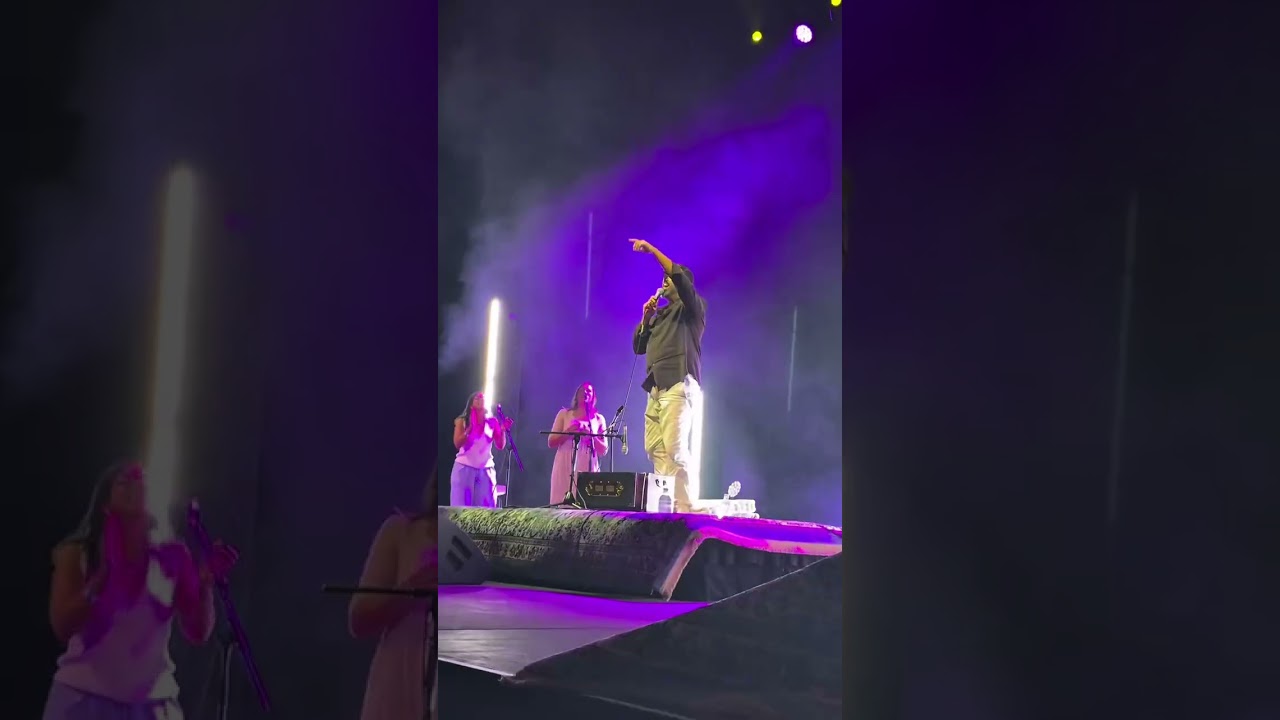
Six minutes into a video that has drawn over 12 million views, Martha Baraka stands before us singing a single, unshakeable affirmation: "Wewe Ni Mungu Wetu"—You Are Our God. The title itself is the message. Not whispered, not intellectualized, but voiced, repeated, witnessed. This is gospel devotion at its most direct: the conversion of belief into presence, of faith into sound.
What does "Wewe Ni Mungu Wetu" actually mean?
The phrase translates from Swahili as "You Are Our God"—a declaration of collective surrender and recognition. The use of the plural pronoun "our" rather than "my" shifts the song from personal testimony into communal prayer. This grammatical choice echoes a long tradition in African gospel music, where the individual voice is never separate from the community it serves. The entire body of belief is spoken as one.
Gospel music, particularly in East African traditions, functions not as entertainment but as technology—a precise tool for aligning the body, voice, and spirit toward transcendence. The song becomes a vehicle for something larger than the artist herself. Martha Baraka's presence is real, but her voice is a conduit.
How does devotional music work as spiritual practice?
The repetition embedded in the song's structure—the return to "hallelujah," the cycling invocation—is not ornamental. Repetition in devotional singing serves a neurological and spiritual function. It creates a container, a space where the rational mind can settle and the body's deeper intelligence takes over. This is why kirtan traditions across cultures rely on the mantra, the repeated phrase, the sung prayer. The voice becomes a meditation.
Throughout the video, Martha Baraka and the ensemble hold the phrase "from nothing to something," a thematic through-line that suggests transformation. In Christian theology and practice, this resonates with the arc of redemption—the journey from spiritual emptiness to fullness, from separation from the divine to reunion. The song doesn't argue this point; it embodies it. The voice speaking it is proof of it.
What role do production and craft play?
Behind every spiritual work is craft. The song was produced by Yusufu Manamba (credited as FNS), with beat arrangement by JC Sambaa and direction by Mbangwa Hasan. These are not afterthoughts to the music—they are its scaffolding. The visual presentation, the arrangement, the pacing: all of these serve the single purpose of creating space for the prayer to land. A gospel song is only as powerful as the container built around it allows.
The music video itself, released in July 2022, functions as a modern form of what gospel has always been: communal gathering. Where congregations once filled churches, a song now crosses continents through streams and social platforms. The mechanism has changed; the function remains identical. People come to witness the invocation, to add their voice (internally, at least) to the collective "You Are Our God."
Why does Swahili matter for this devotion?
Language carries spiritual weight. Swahili, spoken across East Africa, carries its own musical and tonal qualities—vowel-heavy, rhythmic, suited to song. By singing this prayer in Swahili rather than English, Martha Baraka grounds the devotion in a specific place, a specific people, a specific lineage of worship. Gospel music in African languages is not a translation of something English-speaking; it is its own tradition, with its own spiritual authority.
The decision to sing "Wewe Ni Mungu Wetu" in Swahili is a declaration: this is how *we* pray. Not how the world tells us to pray, but how our ancestors prayed, how our communities pray, how the voice naturally flows in the language we know in our bodies.
What does 12 million views signify?
The video's reach—12 million and counting—speaks to something genuine in the work. People don't sustain attention on devotional music unless it touches something true in them. The number is not incidental. It suggests that across language, geography, and belief tradition, the invocation "You Are Our God" finds resonance. The form is gospel, the language is Swahili, but the hunger it addresses is universal: the need to speak the sacred aloud, to know we are not alone in that speaking, to find our voice within a larger choir.
Where to go from here
If you come to this song as a listener, approach it as you would any devotional practice: with openness rather than analysis. Sing along if you can, even silently. Notice what happens to your body when you repeat "hallelujah," when you say "You Are Our God." Gospel music is an invitation, not a lecture. The power lives in the doing, not the understanding.
Martha Baraka's work exists across multiple platforms—available on Spotify, Apple Music, Boomplay, YouTube Music, and other streaming services. Her social presence on Instagram, TikTok, and Facebook continues to extend the reach of her devotional practice. For those drawn deeper, the production credits (JC Sambaa, Yusufu Manamba, Mbangwa Hasan) point toward a full ecosystem of artists committed to the craft of spiritual music-making in East Africa.