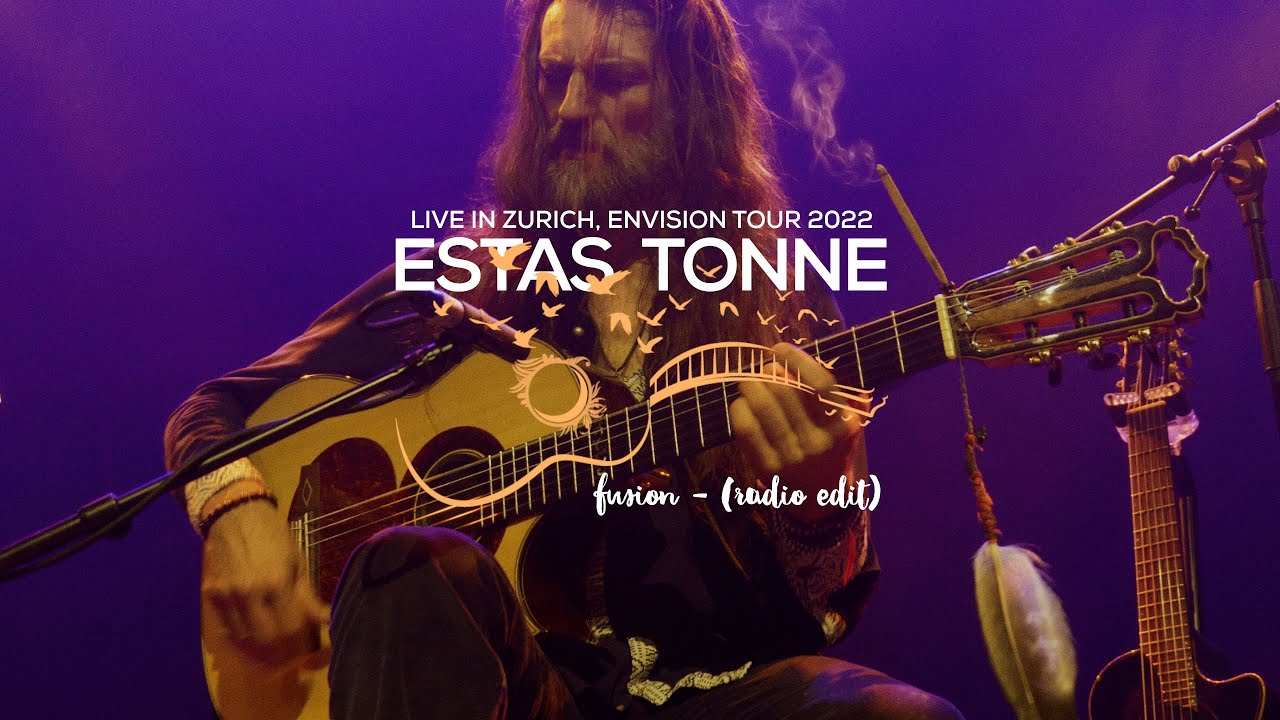
"Internal Flight" is a 24-minute solo guitar composition recorded for the album Old Style (2025)—Estas Tonne's first spontaneously recorded, loop-free studio work in 13 years. Originally a fast-paced piece created 20 years ago, it has evolved into a slower, meditative version that moves through visceral heat and resonance toward spacious calm. The recording is a single-take studio performance with minimal editing, capturing the artist's intent to honor childlike purity, gentleness, and heartfelt presence while marking a new creative direction.
What is the structural arc of "Internal Flight"?
The composition unfolds across roughly four distinct phases. The opening establishes a sustained, warm resonance—repeated invocations of "heat" and instrumental passages that build internal pressure and attention. This is not a metaphorical heat but a sonic one: the guitar's body and strings generating frequencies that seem to vibrate the listener's own chest cavity. Around the midpoint, the piece enters a more spacious, exploratory zone where heat dissipates into longer silences and arpeggiated patterns that suggest ascent or dispersal. The final third retreats into gentler, almost lullaby-like passages—the "fusion version" title reflecting how classical and folk idioms blend with ambient textures. By the close, the piece has conducted the listener through an internal landscape: from ignition to flight to descent into stillness.
Why did Estas Tonne choose to slow down a 20-year-old composition?
According to the album notes, the original composition was "fast-paced" but has "evolved into a slower, more soothing version." This shift reflects both artistic maturity and a deliberate philosophical stance. After 13 years of producing healing and meditation sound journeys—both in live settings and studio—Tonne's approach has refined toward subtlety and presence. The slower tempo allows each note to resonate fully, inviting listeners to inhabit the sound rather than be propelled by it. Tonne writes that while "it's impossible to go backward in the reality of this world," the work preserves what he calls "the flame of purity, gentleness, kindness, and heartfelt sharing." The slow version is not a regression but an honoring: a mature artist choosing constraint and spaciousness over virtuosic speed.
How does the "fusion" approach differ from conventional solo guitar?
The fusion designation signals a blending of idioms—classical fingerstyle technique, folk melodic sensibility, and ambient textural space coexist without compartmentalization. Unlike many contemporary solo guitar recordings that rely on loop pedals, samples, or studio layering, this track was recorded in a single take with "no loops or samples, only slight editing and mastering." This means every texture, every resonance, every rise and fall originates from a single instrument and player in real time. The fusion happens not through post-production stitching but through Tonne's ability to voice the guitar across multiple registers simultaneously: deep bass resonance, mid-range melody, and high harmonic shimmer all emerging from one instrument. The result feels ensemble-like despite its solitary origin—a fusion of fullness achieved through acoustic purity rather than technological multiplication.
What is the role of silence and space in this recording?
Silence is not absence but presence. Throughout the 24 minutes, Tonne uses silence—the gaps between phrases, the decay of a held note, the breath-space before a new section—as actively as he uses sound. This approach aligns with meditative listening practices where silence allows integration and reflection. The piece does not rush to fill every moment; instead, it trusts that emptiness can be as generative as fullness. This restraint distinguishes "Internal Flight" from many healing-music recordings that aim for continuous, ambient wash. Here, the listener is invited to notice: the texture of a single high harmonic, the warmth of a bass note settling into the body, the quality of returning to quiet. Silence, in this context, is where internal flight occurs—where the ear and nervous system find room to move.
What does "Old Style" signify as an album statement?
The album title gestures toward both retrospection and integrity. Tonne has revisited a song created two decades earlier, yet the album as a whole marks "a new beginning while honoring past experiences." The term "old style" resists trendiness: no loops, no samples, no layering tricks—only a player and an instrument recorded honestly in one pass. This aesthetic choice echoes classical and folk recording practices while speaking to a contemporary audience fatigued by overproduction. The album is subtitled a "sketch album," emphasizing spontaneity and authenticity over polish. By calling it "Old Style," Tonne suggests that purity and directness are not antiquated but eternally necessary. The album's philosophy, as stated in the notes, is that "it is profoundingly important to keep the flame of purity, gentleness, kindness, and heartfelt sharing alive" even as the world moves at accelerating speed.
How does the repetition of "heat" function in the composition's emotional language?
The incantatory recurrence of "heat"—sometimes solo, sometimes doubled or tripled—functions as both sonic and somatic anchor. Heat is visceral: it evokes blood flow, activation, the warmth of presence. By naming heat repeatedly, Tonne invites listeners to locate themselves in their own embodied aliveness rather than drifting into abstraction. This is a meditation technique: grounding awareness in sensation. The heat also suggests intensity or fervor—a spiritual temperature at which genuine transformation becomes possible. As the piece progresses, the heat invocations become sparser, less urgent, as if the internal fire has been kindled and now needs only air to sustain it. By the end, heat has become background, allowing other qualities—calm, spaciousness, rest—to emerge. The repetition thus traces a psychological and energetic arc.
What is the connection between "Internal Flight" and Estas Tonne's broader healing practice?
For 13 years prior to Old Style, Tonne has conducted sound journeys explicitly framed as healing and meditative work, performing both live and releasing studio recordings aimed at therapeutic resonance. "Internal Flight" extends this practice into the solo studio context while distilling it to essentials. The piece does not announce its healing intent or employ New Age tropes; instead, it achieves healing through acoustic purity, structural integrity, and the artist's own presence. The work operates on the principle that when a musician plays with genuine attention, honesty, and absence of manipulation, listeners' nervous systems can attune and settle. The flight evoked in the title is not escape but an ascent of consciousness through sound—an upward movement of awareness within the body and being. This aligns with Tonne's stated commitment to keeping alive "gentleness and heartfelt sharing," core elements of his therapeutic sound work.
Where to go from here
To deepen engagement with this work, listen to the full Old Style album, available on Estas Tonne's YouTube channel and Spotify. The album context reveals how "Internal Flight" sits within a broader artistic arc—each of the 10 tracks offering variations on themes of presence, healing, and the marriage of classical craft with contemplative intention. For those interested in solo guitar as a meditative practice, explore how artists like Estas Tonne use constraint (single take, no loops, acoustic only) to generate depth rather than breadth. Consider, too, how silence and space function in your own listening: can you notice the gaps as readily as the notes? For practitioners of sound meditation or healing work, "Internal Flight" offers a model of how contemporary musicians honor ancient principles—purity, gentleness, heartfelt presence—without nostalgia or retreat. The work speaks to a hunger many feel: for art made in wholeness, without fragmentation or technological mediation.