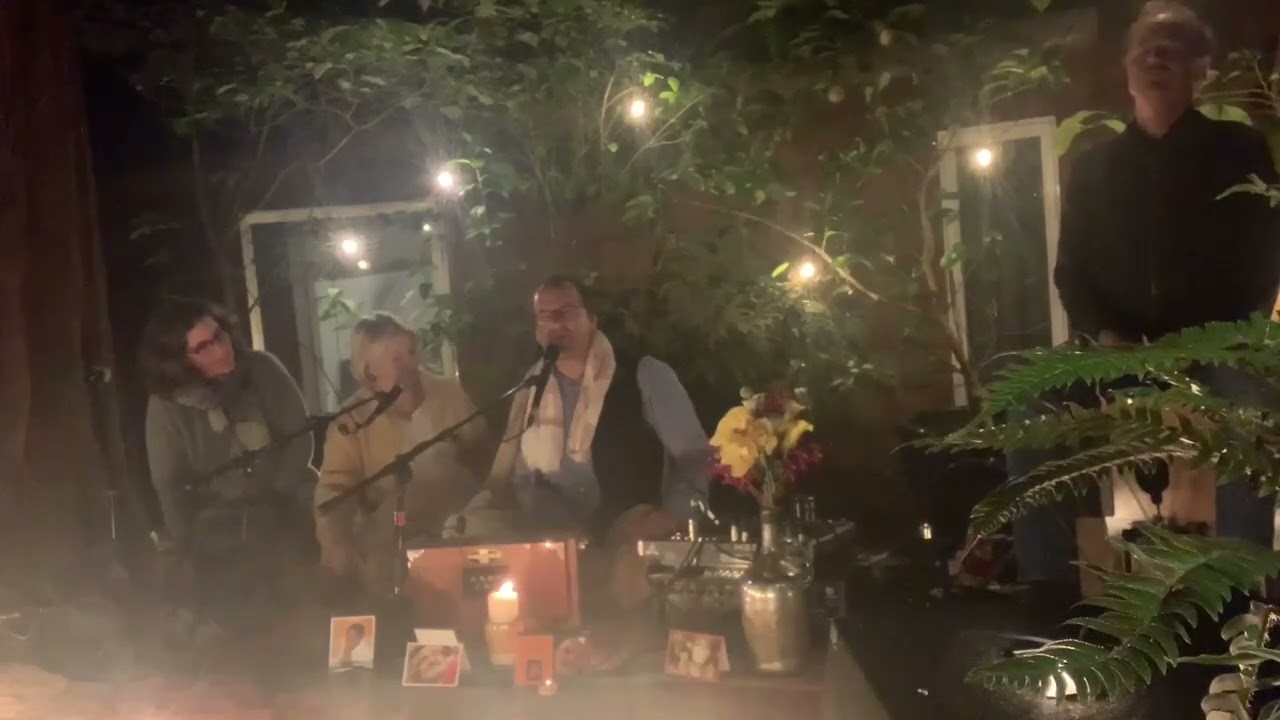
Ben Leinbach's four-minute devotional song "Love Will Lead The Way" unfolds not as a sermon but as a lived confession—tracking the subtle movements by which someone learns to surrender their white-knuckled grip on control and let something larger guide the journey. The song doesn't ask for faith first; it meets you in the confusion, the superstition, the stumbling, and only then suggests that love might be the ground beneath it all. Rather than presenting a neat spiritual solution, it captures the actual texture of learning to trust, moment by moment, as you walk through an uncertain world.
The opening image does the work immediately:
I keep rolling my lucky number—what's that about?
The question itself is the teaching. We are not hearing someone who has transcended magical thinking; we are hearing someone noticing, in real time, the small superstitions and bargains we strike with the universe. The lucky number becomes shorthand for all of it: the red string we wear, the number we avoid, the ritual we cannot break without feeling something vital might collapse. Most spiritual practice starts by condemning these behaviors as delusion. This song starts by asking, with genuine curiosity, what they're really about. That compassion toward our own confusion is itself a form of wisdom.
Immediately after comes the paradox that holds the whole song:
This just might be a life of splendor / but I have my dots / I can't say exactly why.
Here is the fundamental tension nobody teaches you about. Yes, there is abundance available. Yes, there is beauty and ease possible. But there are also "dots"—the gaps, the unclear places, the reasons we hold ourselves back that we cannot articulate. The refusal to explain away these dots, to pretend we understand the pattern, is an act of spiritual maturity. Not everything connects. Not everything makes sense. And that's okay. This is where genuine practice begins: not in the moment of clarity, but in the honest acknowledgment of confusion.
The song then names the particular trap of modern anxiety:
Why I keep waiting on doomsday through all these.
There's a rhythm to our anticipation of catastrophe. We wait for the economic collapse, the illness, the betrayal, the breaking of the thing we love. This waiting becomes our baseline posture—our default nervous system state. We are not living; we are living in preparation for disaster. We are not present to what is; we are braced against what might be. The person in this song recognizes this pattern and voices it without shame. But notice what comes next in the lyrics: "will lead the way"—even in naming the trap, the song is already pointing toward an exit.
The shift from abstract anxiety to concrete action is subtle but complete:
I put one foot in front of the other and not in my mouth.
This is practical spiritual instruction disguised as casual observation. It is saying: the way out of catastrophe-waiting is not through more thinking, more planning, more protective strategies. It is through the humble, embodied act of moving forward. Your body knows what to do. Put one foot in front of the other. And "not in my mouth" adds a crucial self-aware joke—we trip ourselves up with our own words, our reactivity, our unfiltered speech. The spiritual path includes not speaking our anxiety into the world, not narrating our fear into greater reality through constant verbalization.
But the song doesn't promise this practice prevents falling:
At times I trip off and on.
The imagery is almost comic—tripping, recovering, catching yourself, tripping again. This is not a metaphor for spiritual failure; it is an accurate description of being human and embodied. You will fall. Your foot will catch on something. The commitment is not to avoid falling but to keep putting one foot in front of the other after you do. This is what sustained spiritual practice actually looks like: not perfection, not getting it right, but the willingness to keep going even when you mess up.
Then comes a grounding statement delivered with striking matter-of-factness:
Is better here than from six feet under / that much is true.
The song brings mortality into the room and acknowledges it without flinching. Even with all the confusion, all the stumbling, all the uncertain dots—being alive is better than the alternative. This is not a morbid statement but a radical one. The very fact of presence, of being here now, is itself a kind of blessing. No matter how lost you feel, no matter how much you're waiting for doomsday, consciousness itself is precious. Alive and confused is infinitely better than absent. This recognition anchors the entire spiritual message: we're not practicing to become perfect or to transcend existence. We're practicing to align with the simple, overwhelming fact that we are here, we are alive, and that already matters.
All of this culminates in the central teaching:
Through all phases of this life love will lead the way.
Notice it is not "try to make love lead" or "love should lead" or "I hope love leads." It is offered as something already true, already operative—if we can align ourselves with it. Love is not presented as a feeling we must generate, but as a principle, a force, a direction that is already present in reality. It doesn't matter if you feel loving right now. Love will lead the way. The word "phases" is essential; it acknowledges that this is not a single realization but an ongoing commitment through different seasons, ages, and cycles of life. You'll practice this through joy and heartbreak, through abundance and scarcity, through clarity and confusion.
The final move is into active surrender:
I'm gonna let lovely love will lead the way.
There's something tender and almost childlike in the phrase "lovely love"—not a grand cosmic force but an intimate affection. And the decision to "let" it lead suggests releasing the ego's need to steer, the illusion that you can control outcomes, the false burden of making the universe happen the way you think it should. This is the actual work of spiritual maturity: getting out of your own way.
As a devotional song, this piece functions less as information and more as a practice vehicle. Music has long been used in spiritual traditions to integrate truths that words alone cannot reach. The repeated refrain "love will lead the way" acts as a mantra, offering a small reset each time you hear it. Singing or listening to these words is a micro-moment of permission—permission to release your grip, to stop trying to manage everything, to trust. The specific images—lucky numbers, dots, doomsday, stumbling, mortality, phases—keep the teaching grounded in recognizable human experience. You don't need to be an advanced practitioner. You just need to have lived: to have felt superstition, to have been confused, to have stumbled, to have been afraid of the future.
For those drawn to this song, the practice is simple: let it become your meditation. Put it on repeat. Let the message settle into your nervous system over time. You might sing it, or simply listen. You might focus on one line that speaks to your current situation—perhaps "I put one foot in front of the other" if you're overwhelmed with options; perhaps "six feet under that much is true" if you need grounding in what actually matters; perhaps the central refrain if you simply need permission to stop steering. The song can serve as an anchor point when anxiety rises, a reminder that you don't have to have it all figured out. Love can lead the way. You just have to let it.