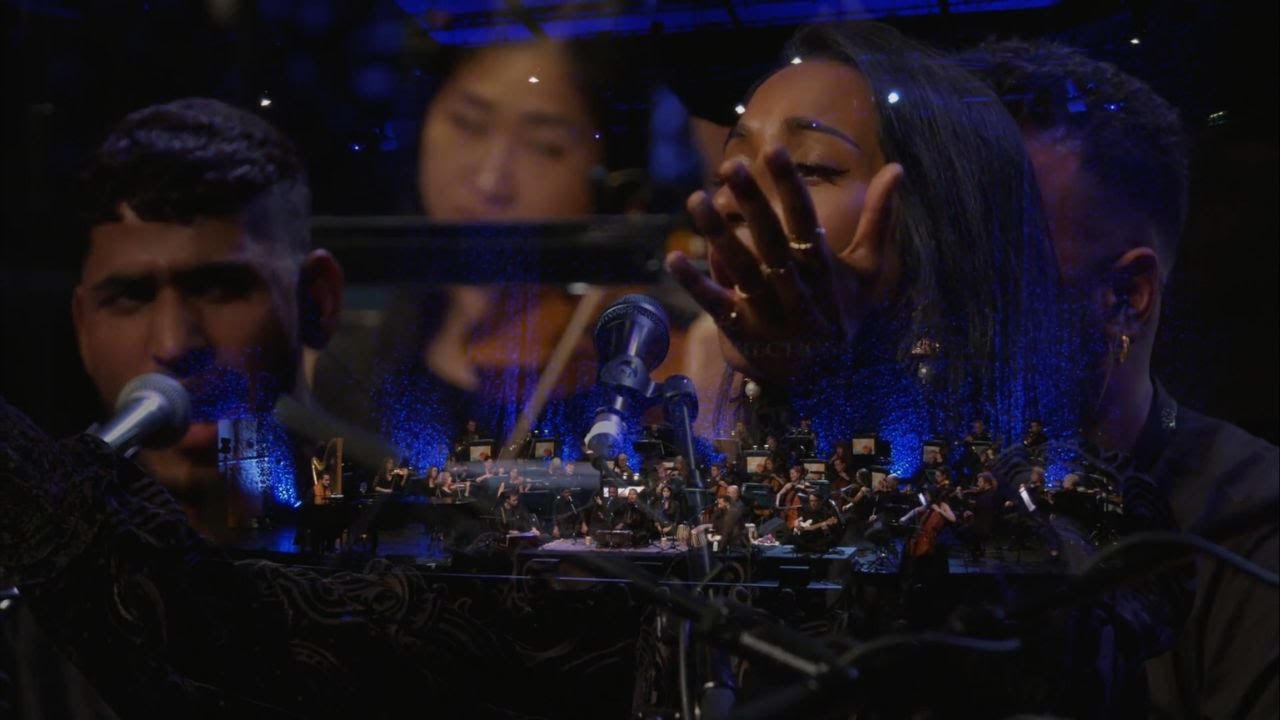
A Na'at Sharif is a form of Islamic devotional poetry specifically composed to praise and honor Prophet Muhammad. In the qawwali tradition, which originated in South Asia and developed within Sufi practice, Na'ats hold a sacred place as expressions of reverence and spiritual connection. The text of Ya Mustafa Noor Ul Huda—meaning "O Mustafa, Light of Guidance"—follows this classical structure, with the refrain "Saani Tera Koi Nahi" (You have no equal) affirming the Prophet's unique status in Islamic devotion. The form allows for both structured melodic development and improvisational vocal embellishment, characteristic of the qawwali style.
The significance of performing a Na'at extends beyond musical expression; it serves as a spiritual practice within Islamic and Sufi contexts. The repetition of phrases, the building of emotional intensity through call-and-response, and the meditative focus on the subject of praise create a devotional environment. By bringing this composition into an orchestral setting with contemporary arrangements, this performance honors both the historical tradition and the living evolution of the form.
The arrangement by Rushil takes the melodic framework established by Ustad Nusrat Fateh Ali Khan and Ustad Farrukh Fateh Ali Khan and expands it into a full orchestral texture. Traditional qawwali typically features a lead vocalist (often the Nusrat Fateh Ali Khan's heir or student), supporting singers in the group, harmonium, tabla, and sometimes other percussion. This orchestral version adds strings—violin and cello—which extend the harmonic palette and create sweeping melodic counterpoints that would not occur in the purely acoustic ensemble.
The tabla playing by Amrit Dhuffer maintains the rhythmic foundation essential to qawwali, providing the complex polyrhythmic cycles that allow vocalists to both anchor themselves and improvise within structure. The harmonium, played by Fram Karbhari, supports the core melodic and harmonic progression. The addition of string instruments (Nicholas Efthymiou on violin, Lydia Alonso on cello) creates orchestral swells that amplify emotional peaks without obscuring the vocal line or the traditional percussion work. This layering effect serves the devotional purpose by creating spaces of intensity and moments of stillness that guide the listener through the spiritual progression of the text.
Abi Sampa carries the lead vocal line, a role that in qawwali demands not only technical skill but also spiritual presence. The vocal approach in qawwali differs markedly from opera or Western classical singing: the voice is used as an instrument of emotional communication, with ornaments, bends, and repetitive phrases designed to move the listener into states of heightened awareness or trance (a state called hal in Sufi terminology). The supporting singers—Jatinder Kwatra, Jatin Sirpal, and Sathyandran Ketheeswaran—create a choral foundation, responding to and reinforcing the lead vocalist's phrases, which is a defining structural element of qawwali music.
The layered vocal arrangement allows for moments where multiple voices sing in unison on key phrases (such as the repeated affirmations in the text), creating powerful unison passages that emphasize the devotional message. Other moments feature call-and-response between the lead and ensemble, a technique that drives the emotional and rhythmic momentum of the piece forward. The repetition of phrases—integral to qawwali—creates a meditative quality that allows the listener to absorb the meaning of the text more deeply with each iteration.
The recording was engineered and mixed by Chris Cara at Soundscape Studios, with mastering by Alex Psaroudakis. These technical steps are crucial in an orchestral qawwali recording because they must preserve the clarity of each instrumental and vocal element while creating a cohesive, immersive sound. The live recording at Soundscape Studios captures the ensemble interaction in real time, rather than overdubbing parts separately, which preserves the organic ensemble feel essential to qawwali's communicative power.
The video direction by Andrew Britton (Limelight Films) provides visual documentation of the performers in ensemble, allowing viewers to see the physical coordination, the breath support, and the emotional engagement of the singers and instrumentalists. This visual component matters because qawwali, though centered on music, is also a performance tradition where the physical presence and emotional expression of the performers contributes to the listener's experience. The production quality allows the listener to hear both the delicate details of individual voices and instruments and the full orchestral swell, supporting the dynamic arc of the devotional work.
The melody of Ya Mustafa Noor Ul Huda was composed by Ustad Nusrat Fateh Ali Khan and Ustad Farrukh Fateh Ali Khan, two of the most influential qawwali musicians of the 20th century. Ustad Nusrat Fateh Ali Khan (1948-1997) is widely recognized as the artist who brought qawwali to international audiences through recordings, film soundtracks, and world tours, while also maintaining deep roots in the Sufi spiritual tradition. His approach to composition and arrangement—which respected classical forms while introducing new possibilities for expression—set a template for contemporary qawwali artists.
By performing this melody in an orchestral arrangement, artists like Rushil and Abi Sampa acknowledge the historical foundation while creating new pathways for the music to reach contemporary listeners. This is not a departure from qawwali tradition but rather a continuation of its adaptive nature. Qawwali has always evolved through the contributions of master musicians who honor the form while introducing innovations suited to their era. The orchestral arrangement represents this ongoing evolution, making the devotional message accessible to audiences who might encounter it through concert settings, recording platforms, or international contexts.
To deepen your understanding of qawwali and Na'at traditions, explore recordings by Ustad Nusrat Fateh Ali Khan, the foundational master of modern qawwali, whose own arrangements and compositions shaped the form in the late 20th century. Listen to other Na'at compositions to recognize the recurring themes of praise, humility, and spiritual longing that structure this genre. Consider investigating the Sufi mystical context in which qawwali developed, particularly the teachings of the Chishti order, which valued music as a path to direct spiritual experience. If you are interested in contemporary qawwali, follow artists like Abida Parveen, Rahat Fateh Ali Khan, and emerging performers who continue to develop the tradition. Finally, seek out live qawwali performances or recordings made in spiritual gatherings (known as qawwali mehfils), where the devotional function of the music can be more fully experienced.