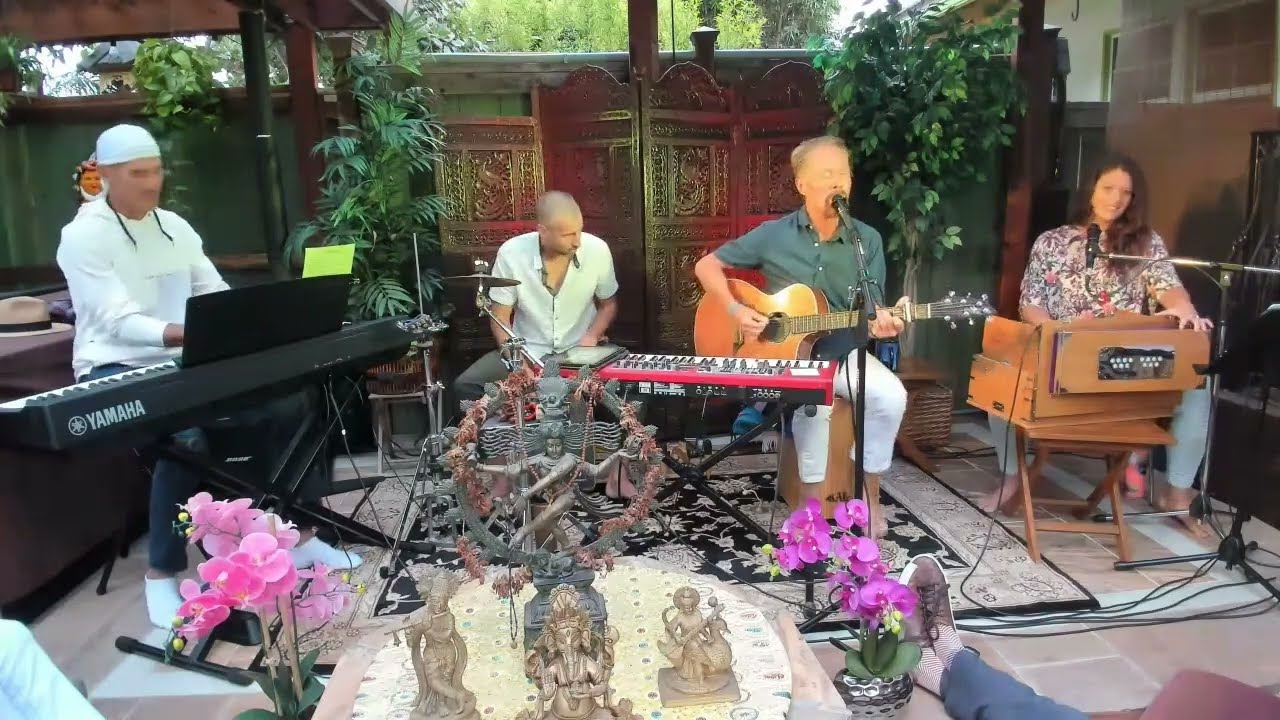
"Same Sun," from Girish's 2019 album Sky of the Heart, is a six-minute kirtan composition that sits at the intersection of devotional chanting and contemporary spiritual music. Kirtan—call-and-response chanting drawn from Hindu and Bhakti traditions—uses repetition and melody to anchor the mind in sacred sound, and Girish's approach carries that lineage forward into a modern context where the practice serves contemplative listeners seeking meditative structure.
Kirtan is not performance in the Western concert sense; it's a participatory spiritual practice built on the call-and-response between a singer and an audience, though in recorded form it becomes an invitation to internal participation. The voice becomes an instrument of devotion, and the repetition of sacred names and phrases creates a sonic anchor for meditation. Girish's work exists in this space—each melodic phrase and drone element designed to carry the listener inward rather than outward.
At the heart of kirtan practice lies the harmonium, a pump-organ that provides both harmonic foundation and meditative drone. In "Same Sun," as in much of Girish's catalog, the harmonium's sustained notes create a tonal landscape that the voice weaves through and around. The drone is not background; it's the sonic ground upon which all meaning rests. This is sacred architecture in sound—every note placed with intention to create a resonant field rather than a song to be consumed and forgotten.
The album title itself points toward Girish's artistic intention: Sky of the Heart suggests an expansiveness, a vastness reached through inner turning rather than outer seeking. "Same Sun" functions as one movement within that larger landscape—a single breath, a single phrase, extended and deepened through repetition until the boundary between singer and listener dissolves.
For those encountering kirtan for the first time, "Same Sun" offers an entry point into a practice thousands of years old yet alive and evolving. Listen not as you would a song with verse and chorus, but as an invitation to stillness. The meaning emerges not from individual words or moments but from sustained attention to sound itself—the oldest form of meditation known to human practice.