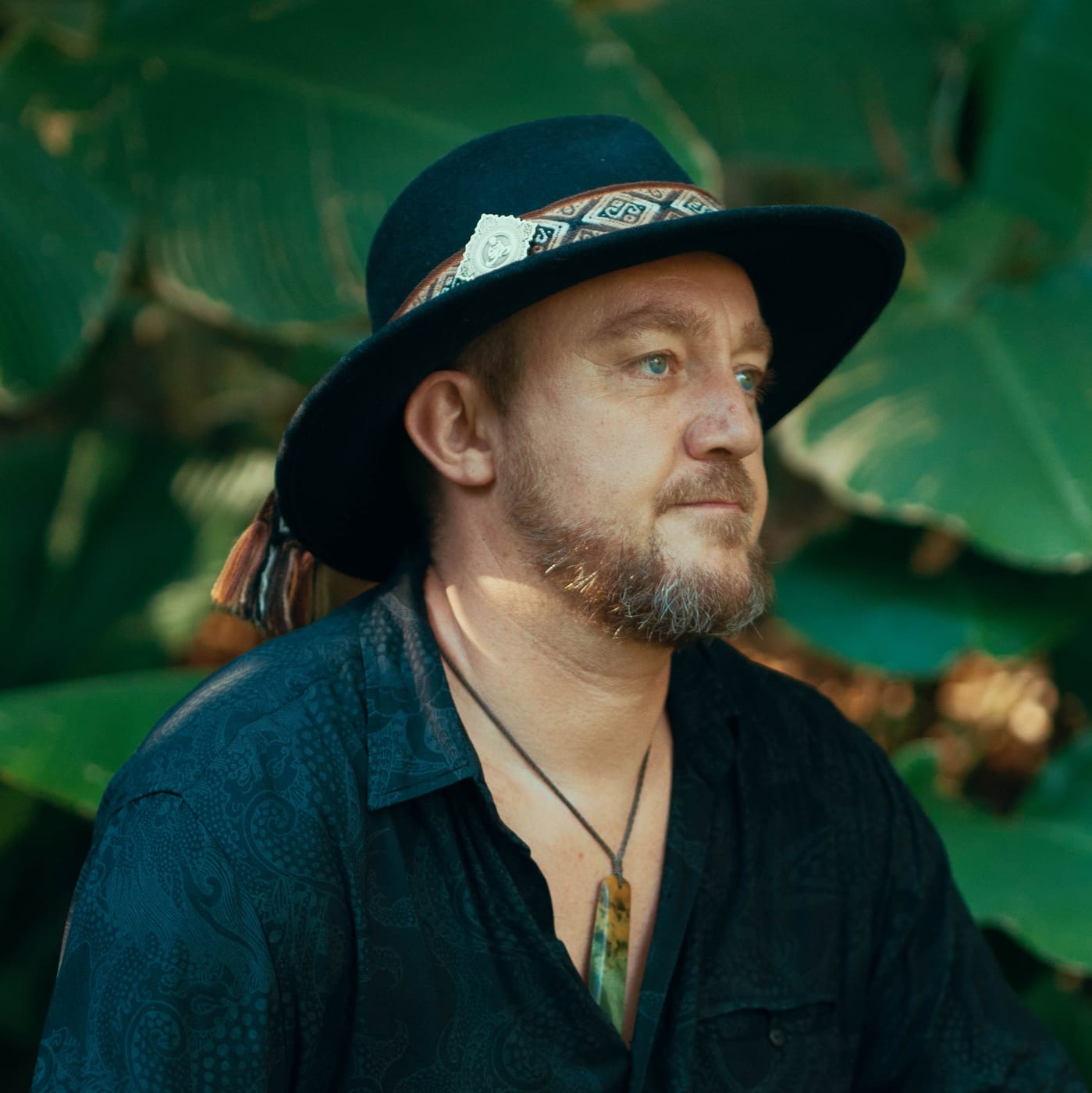

Liquid Bloom is the world-electronic project of Amani Friend, a producer, DJ and sound designer whose work occupies a particular and fairly rare territory: the space where deep ambient music, downtempo groove and ecstatic dance meet. With roughly 224,000 followers on Spotify, the project has built a substantial audience, but its significance is better measured by the kind of listening it invites. This is music designed to be inhabited rather than merely heard, whether in a darkened room, on a yoga mat, in a breathwork circle or in the middle of a crowd that has surrendered to the beat.
The bio that accompanies the project describes an intention "of creating spaces of remembrance, movement and awakening." It is language that could easily slide into abstraction, but the catalog gives it substance. Friend's records move deliberately between meditative states and the dancefloor, treating them not as opposites but as two ends of a single continuum of embodied attention.
The public record on Friend's early life is thin. Details such as his hometown, upbringing and early musical training are not documented in the material available, and it would be a disservice to fill that gap with speculation. What can be said with confidence is that Friend emerged as a producer with a deep orientation toward ritual, sound and collective experience, and that his path runs through two interconnected endeavors: Liquid Bloom and the Desert Dwellers.
Friend is a co-founder of Desert Dwellers, a project that long predates the wider recognition of Liquid Bloom in many listeners' minds, and he curates the Desert Trax label. These roles matter because they reveal him not only as a solo artist but as a curator and community builder. A label is an editorial act: it says this belongs alongside that. Through Desert Trax, Friend shapes a broader sonic world in which Liquid Bloom is one expression among several.
Specific dates for the founding of these ventures are not part of the verified record, so they are left aside here. What the structure shows is a musician whose work extends beyond personal output into stewardship of a larger body of music.
Many profiles hinge on a single dramatic moment, a crisis or revelation that redirects an artist's life. The available facts do not supply one for Friend, and none should be invented. What the work itself suggests is a gradual deepening: a movement from electronic production as craft toward electronic production as a vehicle for what Friend's own descriptions call "dance medicine," breathwork and meditation. These are the subjects he is known to be knowledgeable about, and they have become inseparable from how his music is framed and used.
Liquid Bloom's central achievement is synthesis. The project blends sacred chants and world traditions with textured soundscapes and cutting-edge production, and it does so with an attention to flow that is as much architectural as musical. Ancient vocal traditions sit inside modern sound design without feeling like decoration, and rhythm is used both to energize and to settle.
Two threads define the approach:
- Ambient depth. Long, evolving textures that give listeners room to breathe, relax or turn inward.
- Ecstatic movement. Grooves that carry the same material onto the dancefloor, where the emphasis shifts from contemplation to release and collective resonance.
The best of the work holds both at once. That balance is what distinguishes it from music that is simply "chill" or simply "festival."
Two projects stand out among the documented work.
Elemental Soundscapes for Breathwork Facilitators & Guides. Friend curated this album of long sound beds, each resonating with one of five elements: water, air, fire, earth and ether. The format is purpose-built. Breathwork sessions require sustained, unobtrusive sound that can support a facilitator's work across extended periods, and an album of long beds addresses that need directly. It is a practical offering as much as an artistic one, and it reflects an understanding of how music functions inside guided practice.
The Kuya Sessions. Friend created this series together with Poranguí. Its final album, Kuya Sessions: Sol Remixed, remixes the original Kuya: Sol sessions, weaving terrestrial and celestial sounds with ancient instruments and field recordings. As a closing chapter, it shows the collaborative and reworking side of Friend's practice: material is returned to, reshaped and allowed to reveal new dimensions. The presence of field recordings alongside ancient instruments also underscores the project's grounding in the physical world, in actual places and actual sounds, rather than purely synthesized atmosphere.
Beyond these, Liquid Bloom's wider discography exists, but without verified titles and dates in the source material, this profile does not enumerate it.
The most recent documented work points in two directions at once. The Kuya Sessions series has reached its conclusion with Sol Remixed, a completed arc rather than an ongoing one. Meanwhile, the Elemental Soundscapes album shows Friend directing his craft toward practitioners: facilitators and guides who use sound as part of their own work with others.
That dual orientation, toward finished artistic statements and toward functional tools for healing and movement practices, suggests where the project currently sits. It is less concerned with the conventions of the album cycle than with usefulness, resonance and longevity. Friend's work lives comfortably in playlists, ceremonies, studios and dance spaces alike.
Liquid Bloom reaches several overlapping communities. There are listeners who come through ambient and downtempo, drawn to its texture and patience. There are dancers and festival-goers who encounter it as part of the conscious dance and ecstatic dance world. And there are meditators, yoga practitioners and breathwork facilitators who use the music as a container for their own practices.
Why this matters is partly cultural and partly structural. In an era of fragmented attention, music that deliberately invites presence offers something countercultural. And by drawing on sacred chants and world traditions, Liquid Bloom participates in a broader, sometimes contested conversation about how contemporary electronic music engages with inherited spiritual and cultural material. The project's own framing emphasizes remembrance and reverence, treating ancient traditions as meeting modern sound design rather than as raw material to be mined. How that balance is judged will vary by listener, but the seriousness of intent is evident.
Legacy is a word to use carefully for an artist still working, but the outline is already visible. Amani Friend has helped shape a corner of electronic music in which the dancefloor and the meditation cushion are understood as neighbors. Through Liquid Bloom, Desert Dwellers and Desert Trax, he has contributed not only recordings but a way of thinking about what music is for: to move people, to settle them and to remind them, as his own description puts it, of something shared.