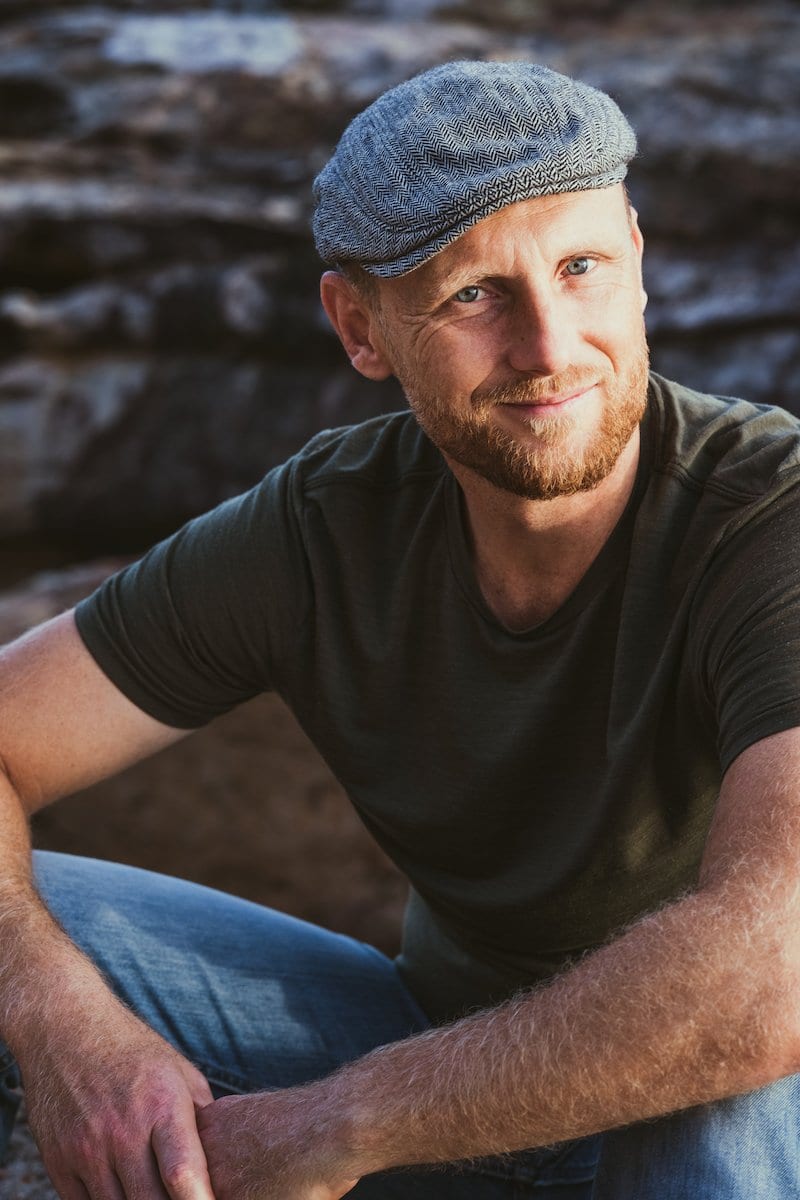

Tomek Wyczesany, Ph.D., occupies an unusual position in the landscape of contemporary meditation. He is a teacher who speaks fluently in the language of the laboratory and the language of contemplative tradition, and who does not treat the two as rivals. Based on the Sunshine Coast of Australia, he offers guided meditations to a global audience and mentors individuals one-on-one. His work is quiet in manner but wide in reach, and it rests on a conviction that rigorous thinking and inner stillness can support each other.
The public record says little about where Wyczesany began. His hometown is not documented in the sources available, and a responsible profile should not fill that gap with speculation. What can be said is that his early adult path was academic. He earned a Master's degree and a PhD, and he went on to spend more than a decade in academic positions at universities across Europe and Australia. That span of years, moving between institutions and continents, shaped the sensibility he now brings to his teaching: careful, evidence-minded, and at ease with questions that do not resolve neatly.
Biographies of meditation teachers often hinge on a single dramatic moment. Wyczesany's published account offers something more gradual, and it would be a disservice to invent a scene where none is recorded. What the record shows is a parallel track. According to his YouTube channel, he has practiced meditation for over 15 years, a period that overlaps substantially with his time in academia. He trained in various mindfulness traditions and eventually began leading retreats and workshops. The shift from scholar to teacher, then, appears less like a departure from one life into another and more like the slow rising of a long-standing practice into the foreground of his work.
What Wyczesany is known for is a particular kind of translation. His teaching centres on mindfulness, acceptance, and awareness in everyday life. It aims to help people quiet the mind, find clarity and focus, and connect with what he describes as their inner wisdom. The framing is practical rather than ornamental. Meditation, in his hands, is not an escape from ordinary experience but a way of meeting it with more steadiness.
His approach is grounded in both science and contemplative wisdom traditions, and he is explicit about that pairing. For listeners who have felt that meditation culture asks them to suspend their skepticism, this is a meaningful distinction. He does not ask for belief. He offers a method and an evidence-based frame, and leaves room for the contemplative insight that no study fully captures.
Sleep is among the subjects he addresses, alongside meditation, mindfulness, contemplative wisdom, and mentoring. These are the areas in which his work is most clearly situated.
The most visible part of Wyczesany's work is his catalogue of guided meditations. They have been streamed almost 5 million times, and his Spotify audience numbers over 93,000 followers. Those figures suggest a steady, attentive listenership rather than a fleeting viral moment, the kind of audience that returns to a practice night after night.
Less visible, but central to how he describes his work, is the one-on-one mentoring. He works with people who are seeking clarity on their current path, navigating health challenges, or simply feeling stuck. The meditations are said to carry the same spirit as this individual work, which suggests a continuity between the recorded voice and the live conversation: unhurried, direct, and respectful of the listener's intelligence.
His mentoring is aimed in particular at scientists, academics, and other rational minds, and it is evidence-based. This is a deliberate choice of audience. Having spent over a decade inside universities himself, Wyczesany understands the specific pressures of that world: the long horizons, the self-scrutiny, the habit of living largely in the head. Offering guidance to people in that position, in terms they can trust, is a form of service that general wellness programming rarely provides.
The record available does not list specific named albums, books, or titled retreat programs, and so none are described here. What is documented is the breadth of the practice: recorded meditations, retreats and workshops he has led, and individual mentoring.
Today Wyczesany teaches from the Sunshine Coast, a setting that suits the unforced tone of his work. His present chapter combines the three strands that have defined his path: guided meditation for a wide audience, mentoring for individuals at a crossroads, and a continuing commitment to teaching grounded in both science and contemplative tradition. Nothing in the available record points to a dramatic reinvention underway. The work appears to be deepening rather than changing direction.
Wyczesany matters for who he reaches and how. Much of the public conversation about mindfulness swings between two poles: enthusiastic spirituality on one side and dismissive skepticism on the other. A teacher who can speak credibly to both camps fills a real gap. His listeners include people who simply want help sleeping or settling an anxious mind, and also those who need to be convinced that contemplative practice deserves a place in a disciplined, analytical life.
For scientists and academics in particular, his example carries weight. It shows that a person trained to question everything can also sit in stillness, and that doing so need not feel like a betrayal of intellectual standards. For people facing health challenges or a sense of being stuck, his emphasis on acceptance and awareness offers a way to stay present with difficulty without being consumed by it.
It is early to speak of a final legacy, and the facts do not call for grand claims. What stands out is consistency: more than fifteen years of practice, a decade-plus of academic work, millions of streams, and a mentoring practice built on trust and evidence. Tomek Wyczesany is the kind of teacher whose influence accrues slowly, one listener and one quiet evening at a time. For a field often tempted by spectacle, that restraint is part of his significance.