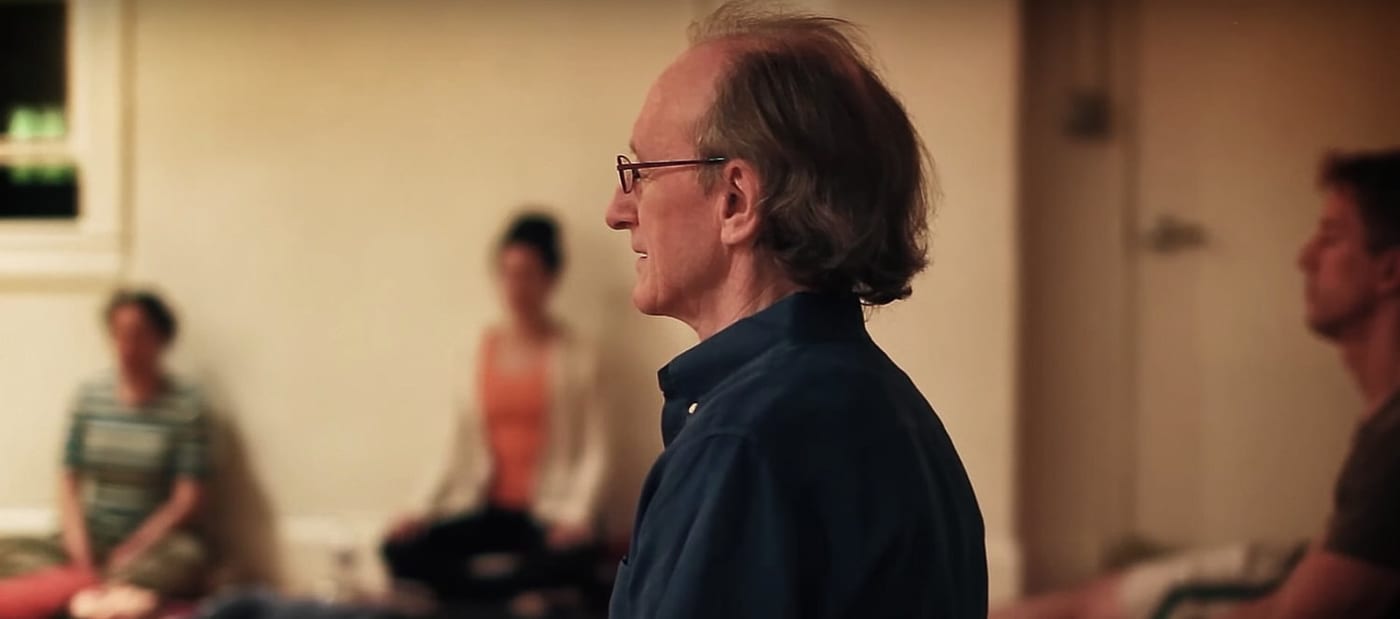

Hugh Byrne, PhD, is a meditation teacher, trainer, and author whose work rests on a simple but demanding premise: how we work for change matters as much as the change we seek. He is a lead teacher at the Insight Meditation Community of Greater Washington (IMCW), and his teaching, which draws on both Buddhist and secular traditions, has reached retreat centers, workplaces, and civic institutions. Published sources also identify him as a cofounder of the Mindfulness Training Institute of Washington.
Byrne's public identity is shaped by two threads that might seem, at first glance, to pull in different directions: a long engagement with the political world and a deep, sustained commitment to contemplative practice. His story is largely the story of how those threads came to inform one another.
Details of Byrne's childhood and hometown are not part of the public record he has shared, so his story is best told from the point at which his vocation comes into view: a passion for social justice.
For more than twenty years, Byrne worked for human rights in Latin America and Africa, and for U.S. policies that support equality and genuine development. It was serious, sustained work, and he continues to value it. But he has also spoken candidly about its costs. He recalls the stress and the sense of separation that came from an "us" and "them" approach to advocacy, and from being tightly tied to particular outcomes.
That honesty is the hinge of his story. Encountering Buddhist teachings, Byrne came to see that the manner in which people pursue change is essential to creating a more just, peaceful, and sustainable world. Means and ends, in this view, are not separable. An activism driven by aversion and attachment to results can quietly reproduce the divisions it hopes to heal. Mindfulness and compassion offered a different ground to stand on, one that did not require giving up the commitment to justice, only transforming the way it was held.
Byrne is known for bringing contemplative practice into conversation with social engagement and with the ordinary struggles of changing one's own behavior. His areas of expertise include mindfulness, compassion, loving-kindness, and habit change, and he approaches each with the training of a longtime practitioner.
He has more than thirty years of meditation and retreat practice and more than twenty years of teaching experience. He is a graduate of a four-year retreat teacher training, a rigorous path that reflects a traditional, practice-first understanding of what it means to teach. His instruction moves comfortably between explicitly Buddhist contexts and secular ones, a fluency that has allowed him to meet people where they are.
A particular fascination runs through his work: how habits become unconscious and automatic, and how mindfulness can make them visible. His premise is that change becomes possible only once a pattern is seen clearly. Awareness does not force transformation, but it opens the space in which choice can return.
Byrne has written two books on this theme. The Here-and-Now Habit (2016) draws on Buddhist teachings and neuroscience to explore how mindful presence can itself become a cultivated habit, an intriguing reframing in which the practice of attention is not opposed to habit but is one of its best uses.
Habit Swap: Mindfulness Skills to Change Habits for Good (2020) turns more directly to application. It offers mindfulness-based skills for recognizing and changing habits, building on the earlier book's foundation of contemplative wisdom and brain science.
Beyond his writing, Byrne has taught with IMCW and with a range of other organizations, including Kripalu, Omega, and Insight Meditation Society, as well as corporations, government agencies, and nonprofits. That breadth is notable. Few teachers move between the quiet of a residential retreat and the conference room of a federal agency, and fewer still do so without diluting what they offer.
In Washington, DC, he has also helped organize community efforts that bring mindfulness into civic life, including a year of engaged dharma, an initiative that reflects his enduring interest in how inner practice and public life can support each other.
Today Byrne continues as a lead teacher at IMCW, where he teaches and helps sustain a community of practitioners in the nation's capital. He often co-leads retreats and workshops with Rebecca Hines, combining meditation, poetry, and gentle movement. The pairing suggests a teaching style that values the whole person: the quiet mind, the imaginative language of verse, and the body as a place where practice lives.
His recorded teachings have found an audience as well. With roughly 68,000 followers on Spotify, his talks and guided meditations reach listeners well beyond the retreat hall, people who may encounter mindfulness for the first time through a pair of earbuds on a commute or a late-evening walk.
Byrne matters in part because of where he teaches. Washington, DC, is a city defined by policy, power, and advocacy, and it is full of people who care intensely about outcomes and who often pay for that intensity in exhaustion and polarization. A teacher who has lived that experience, and who can speak about the strain of "us" and "them" from the inside, offers something credible to that audience.
His influence also lies in the way he reframes the relationship between contemplation and action. Rather than treating meditation as an escape from the world's problems, he presents it as preparation for engaging them with clarity, steadiness, and care. For activists, public servants, and professionals worn down by their own commitments, this is a meaningful invitation.
Finally, his work on habits reaches people whose concerns are more personal: the persistent patterns of distraction, reactivity, or self-criticism that most of us recognize. By grounding mindfulness in both traditional teachings and contemporary neuroscience, he offers a bridge for readers who might be skeptical of one language but open to the other.
Byrne's career traces an unusual arc, from advocacy to contemplation and then back toward the world, now with different tools. His legacy is still being written, but its outlines are clear: a teacher who took the lessons of his own burnout and division seriously, built a life of deep practice, and then devoted himself to helping others bring that steadiness into their work, their communities, and their daily habits. In a culture that often treats change as something to be won by force, he keeps returning to a quieter proposition: that how we show up is part of what we create.