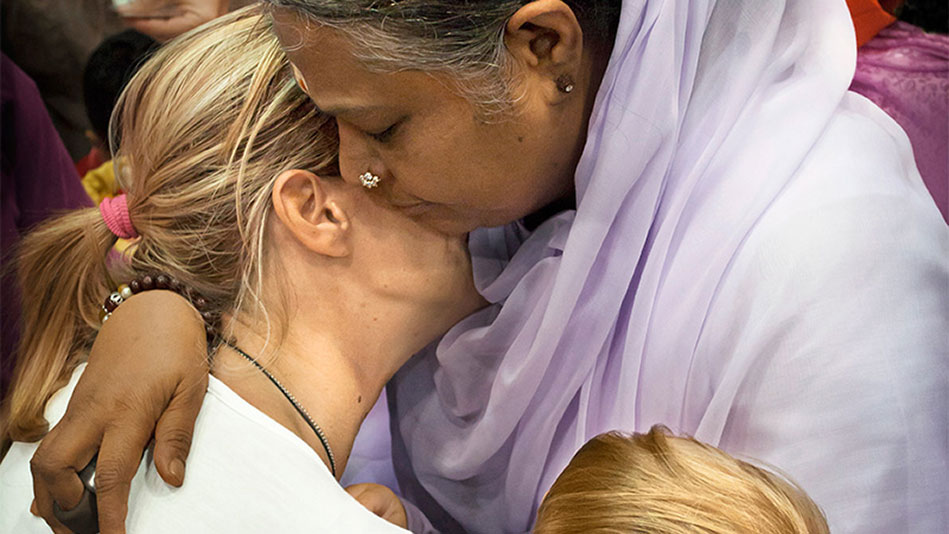
In the profound words of Amma, "A loving look, a tender word, can melt the hardest heart." This statement encapsulates the essence of human connection and the transformative power of love. It suggests that even the most fortified emotional barriers can be softened through simple acts of kindness and affection. In a world often marked by division and strife, this message serves as a poignant reminder of the healing potential inherent in our interactions with one another.
Delving deeper into this quote, we find that it speaks not only to the power of love but also to the vulnerability that accompanies it. To offer a loving look or a tender word requires an openness that can be daunting, especially in the face of hardened hearts shaped by past experiences and pain. Yet, Amma's wisdom encourages us to embrace this vulnerability, suggesting that it is through our willingness to connect authentically that we can foster understanding and compassion, ultimately leading to profound change.
The image / the metaphor
The imagery in Amma's quote evokes a sense of warmth and gentleness. The "loving look" conjures visions of soft eyes that convey empathy and understanding, while the "tender word" suggests a voice that speaks with care and consideration. These elements are not merely decorative; they are active agents capable of penetrating the defenses we erect around our hearts. The verbs "melt" and "can" imply a dynamic process, one that is both possible and contingent upon the willingness of the giver and receiver to engage in this exchange of love.
On a metaphorical level, the act of melting signifies transformation. Just as ice succumbs to warmth, so too can the heart yield to love. This metaphor invites us to consider the nature of our own hearts—what barriers have we constructed, and how might we allow love to soften them? The quote encourages us to recognize that love is not merely a passive emotion but an active force that can reshape our inner landscapes, fostering connection and healing.
In the speaker's tradition
Amma's teachings are deeply rooted in the bhakti tradition, which emphasizes devotion and love as pathways to spiritual realization. In this context, the concepts of dharma and kenosis resonate profoundly. Dharma, or righteous living, calls us to act with integrity and compassion, while kenosis—the act of self-emptying—invites us to let go of our ego-driven desires in favor of love for others. This interplay of selflessness and devotion is central to the bhakti path, where the heart becomes a vessel for divine love.
Moreover, the notion of sunyata, or emptiness, aligns with Amma's message. By emptying ourselves of preconceived notions and judgments, we create space for genuine connection. This is echoed in the Bhagavad Gita, where Krishna speaks of the importance of selfless action and love for all beings. In this light, Amma's quote serves as a reminder that our capacity to love is not only a personal journey but also a collective one, where each act of tenderness contributes to the greater tapestry of human experience.
Living the teaching
Consider a modern scenario where this teaching can be applied: a workplace filled with tension and competition. In such an environment, a simple act of kindness—a smile, a compliment, or a moment of genuine inquiry about a colleague's well-being—can shift the atmosphere. By embodying Amma's message, one can create ripples of compassion that encourage others to respond in kind, fostering a culture of support rather than rivalry. This illustrates how love and tenderness can transform even the most challenging situations.
Another application of this teaching can be found in personal relationships, particularly during moments of conflict. When disagreements arise, it is easy to become entrenched in our positions, allowing anger and frustration to harden our hearts. However, by choosing to respond with a loving look or a tender word, we can create an opening for dialogue and understanding. This approach not only diffuses tension but also deepens our connections, reminding us that love is a powerful antidote to discord.
A reflection
As we contemplate Amma's wisdom, we might ask ourselves: How can I cultivate a more loving and tender presence in my interactions with others? This question invites us to reflect on our daily lives and consider the ways in which we can embody love, even in small gestures. By embracing this inquiry, we open ourselves to the possibility of transformation—not only within ourselves but also in the hearts of those we encounter.