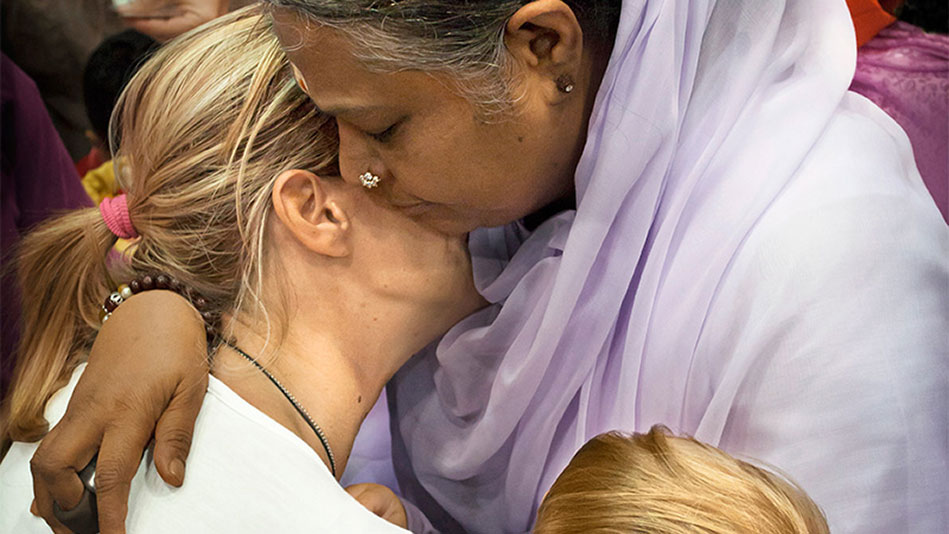
The Essence of Selfless Love
Amma's assertion that "selfless love is the highest form of love" invites us to explore the profound depths of love that transcend personal desires and attachments. This statement challenges us to reconsider our understanding of love, urging us to move beyond the confines of ego and self-interest. In a world often driven by transactional relationships and conditional affections, the call to embrace selfless love resonates deeply, reminding us of the transformative power that such love can wield in our lives and communities.
To grasp the significance of this teaching, we must first recognize that selfless love is not merely an ideal but a practice that requires conscious effort and commitment. It asks us to cultivate a love that is unconditional, one that seeks the well-being of others without expectation of reciprocation. This form of love is not only the highest expression of our humanity but also a pathway to spiritual awakening, as it aligns us with the essence of our interconnectedness and the divine nature of existence.
The image / the metaphor
At the heart of Amma's quote lies a vivid imagery of love that is expansive and boundless. The term "selfless" evokes a sense of liberation from the constraints of the self, suggesting a love that flows freely, unencumbered by the weight of personal gain or recognition. The use of "highest" elevates this love to a sacred status, positioning it as the pinnacle of emotional and spiritual experience. This language invites us to envision love as a vast ocean, where the waves of compassion and empathy wash over us, urging us to dive deeper into the currents of connection with others.
Delving deeper into the metaphor, we can see that selfless love is akin to a flame that illuminates the darkness, providing warmth and guidance without seeking anything in return. It is a love that mirrors the sun, which shines upon all beings indiscriminately, nurturing life and growth. This imagery serves as a reminder that true love is not possessive or exclusive; rather, it is a radiant force that fosters unity and healing, transcending the boundaries of individuality and ego.
In the speaker's tradition
Amma's teachings are deeply rooted in the bhakti tradition, which emphasizes devotion and love for the divine as the ultimate expression of spiritual practice. In this context, selfless love aligns with the concept of "bhakti," where the devotee surrenders their ego and personal desires to cultivate a loving relationship with the divine. This surrender, often described as "kenosis," or self-emptying, allows for a profound transformation of the heart, enabling individuals to experience the divine presence in all beings.
Moreover, the notion of selfless love resonates with the Buddhist concept of "sunyata," or emptiness, which teaches that the self is an illusion and that true understanding arises from recognizing our interconnectedness. In the Bhagavad Gita, Krishna speaks of "nishkama karma," or selfless action, which echoes Amma's sentiment by encouraging individuals to act out of love and duty without attachment to the fruits of their actions. This interconnected web of teachings across traditions underscores the universality of selfless love as a pathway to spiritual fulfillment.
Living the teaching
Consider a modern scenario where selfless love can manifest: a community member volunteers at a local shelter, dedicating their time and energy to serve those in need without any expectation of recognition or reward. In this act of giving, the volunteer embodies the essence of selfless love, creating a ripple effect of compassion that inspires others to engage in similar acts of kindness. This scenario illustrates how selfless love can transform not only the individual but also the community, fostering a spirit of unity and support.
In the realm of personal relationships, selfless love can be particularly challenging yet rewarding. Imagine a moment of conflict between partners, where one person chooses to listen deeply and empathize with the other's feelings rather than insisting on their own perspective. This act of selflessness can diffuse tension and create a space for healing, allowing both individuals to grow closer through understanding and compassion. Such moments, though small, are powerful reminders of how selfless love can enrich our connections and deepen our emotional bonds.
A reflection
As we contemplate Amma's profound statement, we are invited to reflect on our own capacity for selfless love. What would it look like to embody this highest form of love in our daily lives? Consider the relationships and interactions that challenge you to move beyond self-interest and embrace a more expansive, compassionate approach. In this inquiry, we may discover the transformative potential of love that is truly selfless, illuminating our path toward deeper connection and spiritual awakening.