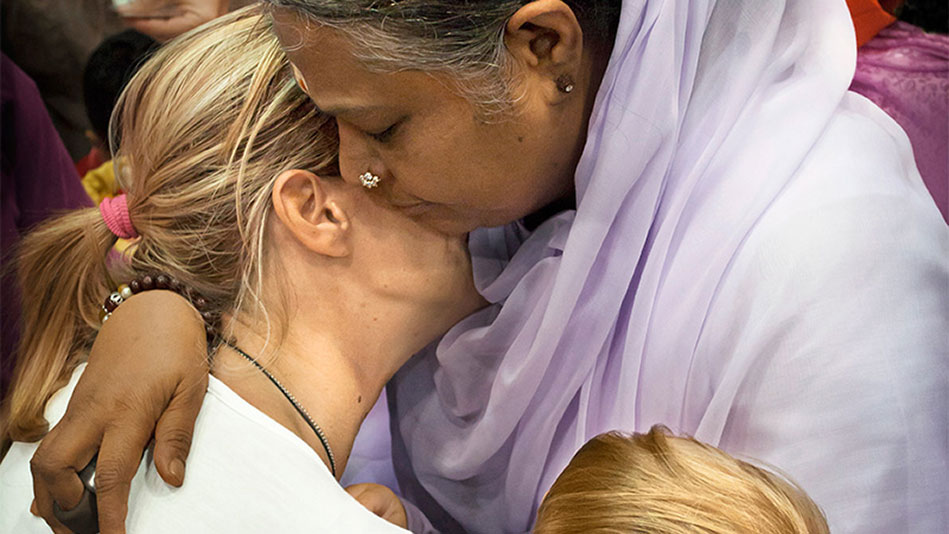
Amma invites us to "sit in the heart," suggesting that the heart is not merely an organ but a sacred space, a home that embodies the nurturing essence of the Mother. This call to dwell in the heart speaks to a profound inner journey, one that transcends the chaos of the external world. In a society often preoccupied with material pursuits, Amma's words remind us of the importance of returning to our emotional and spiritual center, where love and compassion reside.
To "sit in the heart" is to cultivate a state of being that is both reflective and receptive. It encourages us to pause, to listen, and to connect with the deeper currents of our existence. The heart, as Amma describes it, is a sanctuary where we can find solace and strength. This metaphorical home is not just a refuge; it is a place of transformation, where the nurturing qualities of the Mother can be felt and expressed. In this space, we are invited to explore the depths of our own humanity and the interconnectedness of all beings.
The image / the metaphor
The imagery of "sitting in the heart" evokes a sense of stillness and presence. The act of sitting suggests a deliberate choice to pause and engage with our inner landscape. The heart, often associated with love, compassion, and vulnerability, becomes a focal point for our spiritual practice. By choosing to dwell in this space, we are encouraged to cultivate a sense of safety and warmth, akin to the embrace of a mother. The heart, as a home, is a place where we can explore our emotions, confront our fears, and ultimately find healing.
Diving deeper into the metaphor, the heart symbolizes not only our emotional core but also the essence of our being. In many spiritual traditions, the heart is viewed as the seat of wisdom and intuition. By inviting us to "sit" there, Amma encourages us to engage with our inner wisdom and to trust the guidance that arises from this sacred space. This metaphor extends beyond personal introspection; it speaks to the collective experience of humanity, reminding us that we are all interconnected through the shared language of the heart.
In the speaker's tradition
Amma's teachings are deeply rooted in the bhakti tradition, which emphasizes devotion and love for the divine. In this context, the heart is not only a personal sanctuary but also a bridge to the divine presence. Concepts such as bhakti, or devotion, and dharma, the path of righteousness, are intertwined with the idea of the heart as a home. By nurturing our connection to the heart, we align ourselves with our true purpose and cultivate a sense of belonging within the larger tapestry of existence.
In the bhakti tradition, the heart is often likened to a lotus, symbolizing purity and spiritual awakening. This imagery resonates with texts such as the Bhagavad Gita, where the heart is seen as a vessel for divine love and wisdom. Just as the lotus rises from the mud to bloom in the sunlight, so too can we rise from our struggles and challenges by returning to the heart. This process of awakening is not merely personal; it is a collective journey towards realizing our interconnectedness and the divine presence that resides within us all.
Living the teaching
Consider a modern scenario where the teaching of "sitting in the heart" can be applied: imagine a hectic day at work filled with deadlines and stress. In such moments, it is easy to become overwhelmed and disconnected from our inner selves. By taking a few moments to pause, breathe, and visualize sitting in the heart, we can cultivate a sense of calm and clarity. This practice allows us to reconnect with our emotions and intentions, enabling us to approach our tasks with renewed focus and compassion.
Another application of this teaching can be found in our relationships. During a conflict with a loved one, it can be challenging to remain open and compassionate. By consciously choosing to "sit in the heart," we create space for empathy and understanding. This practice encourages us to listen deeply and respond from a place of love rather than defensiveness. In doing so, we not only honor our own feelings but also create a nurturing environment for healing and connection.
A reflection
As we contemplate Amma's invitation to "sit in the heart," we are called to reflect on our own relationship with this sacred space. How often do we take the time to pause and connect with our hearts amidst the busyness of life? In what ways can we cultivate a deeper sense of home within ourselves, allowing the nurturing qualities of the Mother to guide us? Consider these questions as you embark on your journey of self-discovery and connection.