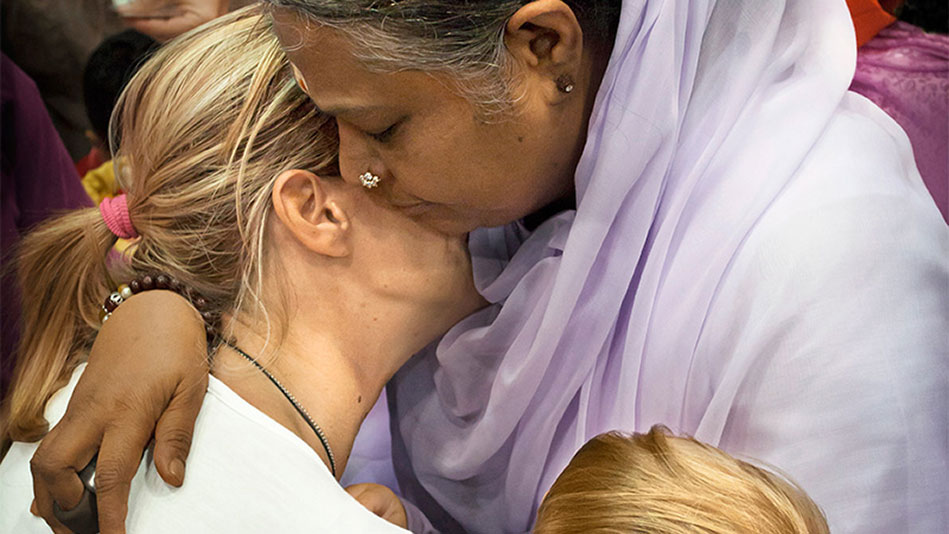
The Gift of Presence: A Journey into Connection
Amma's profound assertion, "The greatest gift you can give is your presence," invites us to reflect on the essence of our interactions with others. In a world often dominated by distractions and superficial engagements, the call to be truly present emerges as a radical act of love and compassion. This quote underscores the importance of our attention and emotional availability, suggesting that the most valuable offering we can make is not material but rather the gift of our undivided self.
Delving deeper, we recognize that presence transcends mere physical proximity; it embodies a state of being that fosters genuine connection. When we are fully present, we create a sacred space where others feel seen, heard, and valued. This act of giving—rooted in the heart of bhakti, or devotional love—reminds us that our relationships flourish not through grand gestures but through the simple yet profound act of being there for one another, in both joy and sorrow.
The image / the metaphor
The imagery in Amma's quote evokes a sense of warmth and intimacy, suggesting that presence is a tangible gift we can offer. The word "gift" implies intention and generosity, while "presence" conveys a deep engagement with the moment and the person before us. This duality of giving and being invites us to consider how our attention can illuminate the lives of those around us, much like a candle dispelling darkness. The act of being present is not passive; it requires our active participation and emotional investment.
Moreover, the metaphor of presence as a gift highlights the transformative power of our interactions. Just as a beautifully wrapped present holds the promise of joy, our presence can uplift and inspire. It serves as a reminder that in a world often characterized by haste and distraction, the simple act of being fully engaged can create profound shifts in our relationships and communities. This metaphor invites us to explore how we can cultivate a deeper sense of connection through our conscious presence.
In the speaker's tradition
Amma's teachings are deeply rooted in the bhakti tradition, which emphasizes love and devotion as pathways to spiritual realization. In this context, presence is not merely a social nicety but a manifestation of the divine connection that exists between all beings. Concepts such as dharma, or righteous duty, and kenosis, the self-emptying of the ego, resonate with the idea that true presence requires us to set aside our distractions and preoccupations. By embodying presence, we align ourselves with the flow of love that characterizes the bhakti path.
In the Bhagavad Gita, Krishna speaks of the importance of being present in the moment, urging Arjuna to focus on his duty without attachment to the results. This teaching echoes Amma's sentiment, as both emphasize the significance of engaging fully with our experiences and relationships. The Gita's call to action, coupled with the bhakti tradition's emphasis on love, illustrates how presence can serve as a bridge to deeper understanding and connection with the divine and with one another.
Living the teaching
Consider a modern scenario where this teaching can be applied: a friend shares a personal struggle, and rather than offering quick solutions or advice, you choose to simply listen. By being fully present, you create a safe space for your friend to express their feelings, allowing them to feel validated and supported. This act of presence not only strengthens your bond but also empowers your friend to navigate their challenges with greater clarity and resilience. In this way, your presence becomes a gift that nurtures both your relationship and their personal growth.
Another application of this teaching can be found in the context of family dynamics. Imagine a busy evening where everyone is preoccupied with their devices, disconnected from one another. By consciously setting aside distractions and engaging in meaningful conversation, you can transform the atmosphere of your home. This intentional presence fosters deeper connections, allowing family members to share their thoughts and feelings openly. In moments of conflict or misunderstanding, choosing to be present can lead to healing and reconciliation, reinforcing the idea that our greatest gift is often our attentive heart.
A reflection
As we contemplate Amma's wisdom, we are invited to consider the ways in which we can cultivate presence in our own lives. How often do we find ourselves physically present yet emotionally absent? Reflecting on this question can illuminate the areas where we might deepen our connections with others. In a world that often prioritizes busyness over being, let us ask ourselves: How can I offer the gift of my presence more fully in my relationships today?