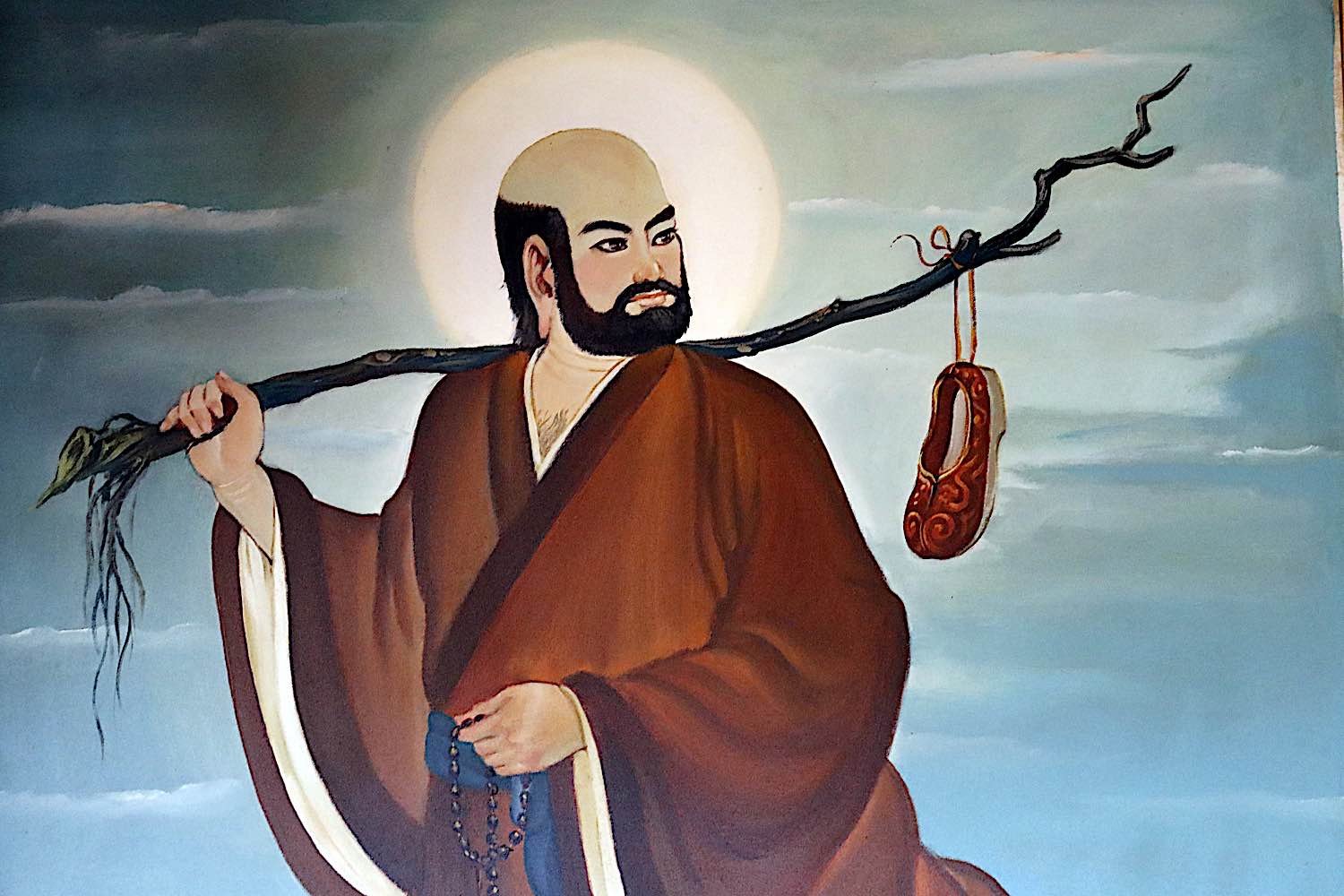
Beyond Words: The Essence of Direct Transmission
Bodhidharma's assertion, "A special transmission outside the scriptures, not founded upon words and letters," invites us to explore the profound nature of spiritual understanding that transcends conventional teachings. This statement challenges the very foundation of how we often perceive wisdom, suggesting that true insight cannot be confined to written texts or verbal expressions. In a world saturated with information, this teaching beckons us to seek a deeper, more intimate connection with the essence of reality, one that is felt rather than merely understood.
At its core, Bodhidharma's quote emphasizes the importance of direct experience in spiritual practice. It suggests that while scriptures and teachings can guide us, they are ultimately limited in conveying the full depth of spiritual truth. This notion resonates deeply within the Zen tradition, where the emphasis is placed on direct experience and personal realization over intellectual understanding. In this light, Bodhidharma's words serve as a reminder that the path to enlightenment is not solely about accumulating knowledge but about engaging with the world in a way that allows for genuine transformation.
The image / the metaphor
The imagery in Bodhidharma's quote evokes a sense of immediacy and intimacy. The phrase "special transmission" suggests a direct handoff of wisdom, akin to passing a flame from one candle to another. This transmission is described as being "outside the scriptures," indicating that it exists in a realm beyond the confines of written language. The choice of words like "not founded upon" emphasizes the limitations of verbal expression, inviting us to consider the ineffable nature of true understanding.
Diving deeper into the metaphor, we can see that Bodhidharma is pointing to a kind of knowing that is visceral and experiential. This transmission is not merely an exchange of ideas but a profound awakening to one's own nature and the nature of reality itself. It invites practitioners to let go of reliance on texts and doctrines, encouraging them to engage with their own direct experience. In this way, the metaphor serves as a bridge between the intellectual and the experiential, urging us to seek wisdom in the silence between words.
In the speaker's tradition
Bodhidharma, the founder of Zen Buddhism, lived in a time when the teachings of the Buddha were being codified into texts. His emphasis on direct transmission reflects a fundamental aspect of Zen practice, which prioritizes personal experience over scholarly interpretation. Concepts such as dharma, or the natural law of the universe, and prajna, or wisdom, are central to this tradition. Bodhidharma's teaching encourages practitioners to cultivate a deep awareness that transcends intellectual understanding, aligning with the Zen practice of zazen, or seated meditation, where one directly encounters the nature of mind.
Living the teaching
Consider a modern scenario where this teaching might resonate: a person grappling with the complexities of life, overwhelmed by the constant influx of information and opinions. In such a situation, the challenge often lies in discerning what is truly meaningful. Bodhidharma's teaching encourages this individual to step back from the noise and seek a deeper understanding that is not reliant on external validation or textual authority. By engaging in practices such as mindfulness or meditation, they can cultivate a direct experience of their thoughts and emotions, leading to greater clarity and insight.
A reflection
As we contemplate Bodhidharma's profound assertion, we are invited to reflect on our own relationship with knowledge and experience. How often do we find ourselves clinging to words and concepts, seeking understanding through external sources rather than through our own direct engagement with life? In what ways can we cultivate a deeper awareness that transcends the limitations of language? This contemplation opens the door to a richer, more authentic experience of existence, inviting us to explore the depths of our own being.
