Seeing the Heart: A Journey to Buddhahood
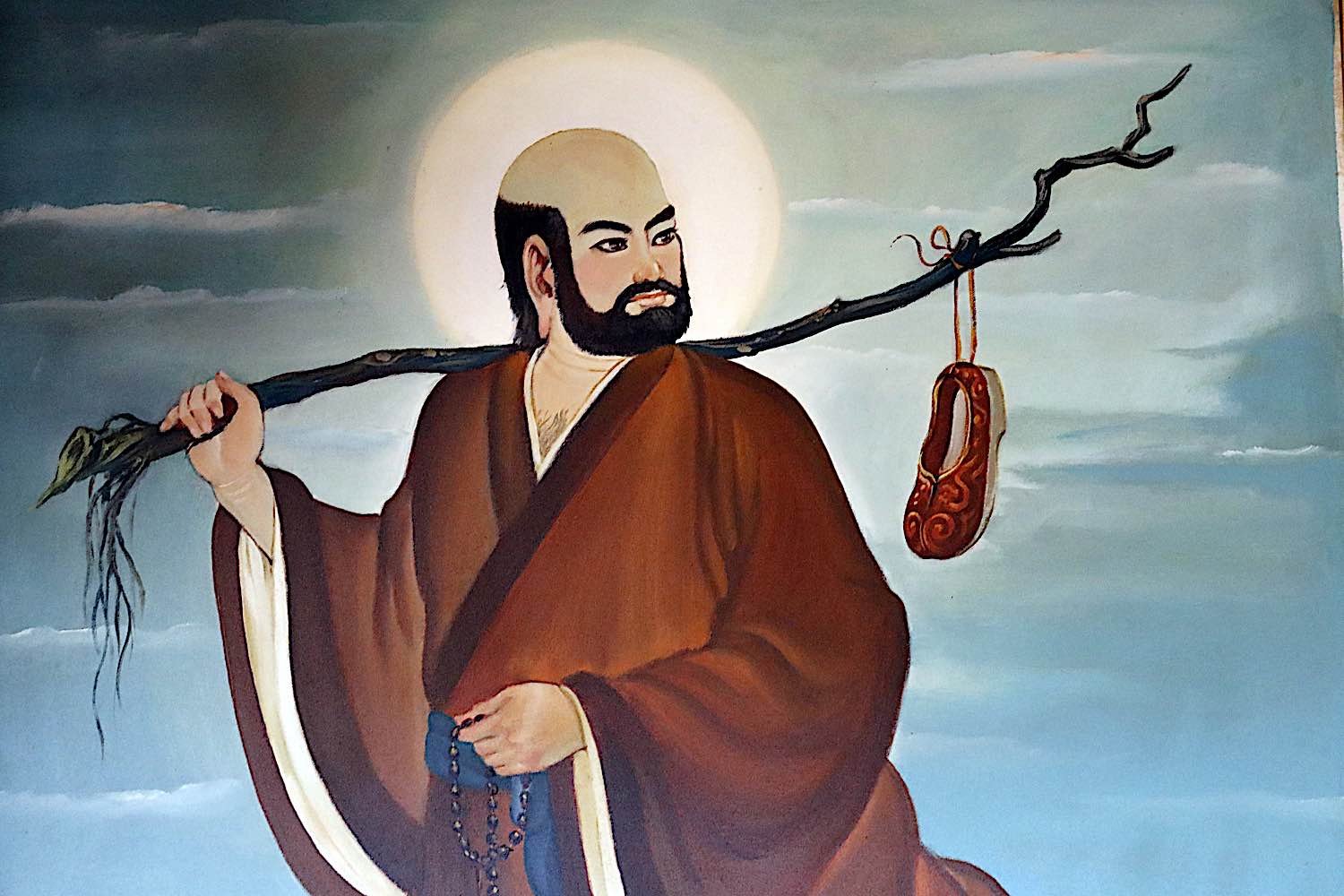
In the profound words of Bodhidharma, "By pointing directly to the human heart, one sees one's own nature and attains buddhahood." This statement invites us to explore the depths of our being, suggesting that true understanding and enlightenment arise not from external teachings or complex doctrines, but from an intimate engagement with our own hearts. The stakes are high; in a world often distracted by superficial pursuits, this teaching beckons us to turn inward, to confront the essence of who we are, and to recognize the inherent potential for awakening that lies within.
As we delve deeper into this quote, we uncover layers of meaning that resonate with the core of Zen practice. The heart, in this context, symbolizes not merely the emotional center of our being but the very seat of consciousness and awareness. Bodhidharma's direct pointing serves as an invitation to bypass the convoluted paths of intellectual understanding and instead embrace a raw, unmediated experience of our true nature. This journey is not just about attaining a state of enlightenment; it is about recognizing the interconnectedness of all beings and the profound wisdom that arises from such awareness.
The image / the metaphor
The imagery in Bodhidharma's quote is striking in its simplicity yet profound in its implications. To "point directly to the human heart" evokes a sense of immediacy and intimacy, suggesting that the answers we seek are not hidden in distant realms but are accessible within ourselves. The act of pointing implies guidance, a gentle nudge toward self-exploration, while the heart symbolizes the core of our existence, where our true nature resides. This metaphor invites us to engage with our inner landscape, to confront our fears, desires, and ultimately, our potential for awakening.
Diving deeper into this metaphor, we find that the heart is not merely a passive recipient of experience but an active participant in the process of realization. In Zen, the heart is often associated with the concept of "prajna," or wisdom, which transcends intellectual understanding. By turning our attention inward, we cultivate a direct experience of this wisdom, allowing us to see beyond the illusions of the ego and the distractions of the mind. This direct pointing is a call to authenticity, urging us to strip away the layers of conditioning that obscure our true selves and to embrace the rawness of our existence.
In the speaker's tradition
Bodhidharma, the legendary figure credited with bringing Zen Buddhism to China, emphasizes the importance of direct experience in understanding one's nature. This teaching aligns with the Zen concept of "sunyata," or emptiness, which invites practitioners to recognize the transient nature of thoughts and emotions. By pointing to the heart, Bodhidharma encourages us to engage with our own emptiness, to see that our true nature is not defined by our thoughts or experiences but is a vast, open space of potential. This understanding is crucial for attaining "buddhahood," a state of awakened awareness that transcends the dualities of existence.
In his seminal text, "Outline of Practice," Bodhidharma articulates the path of Zen as one of direct experience rather than reliance on scriptures or doctrines. This echoes the teachings found in other Zen texts, such as the "Heart Sutra," which emphasizes the importance of seeing beyond form and concept to grasp the essence of reality. The direct pointing to the heart serves as a reminder that the journey to enlightenment is not a linear path but a deeply personal exploration of one's own being, where the heart becomes the compass guiding us home.
Living the teaching
Consider a modern scenario where this teaching can resonate: a person grappling with anxiety in their daily life. In moments of overwhelming stress, the tendency is often to seek external solutions—medications, distractions, or advice from others. However, Bodhidharma's teaching invites this individual to pause and turn inward, to explore the sensations and emotions arising in their heart. By doing so, they may uncover the root of their anxiety, recognizing it as a manifestation of deeper fears or unfulfilled desires. This process of self-inquiry can lead to profound insights and ultimately, a sense of peace that transcends the initial turmoil.
In the context of relationships, this teaching can also be transformative. Imagine a couple facing a conflict that seems insurmountable. Instead of focusing on the external circumstances or blaming each other, Bodhidharma's wisdom encourages them to look within their own hearts. By examining their feelings, fears, and desires, they may find that the conflict is less about the issue at hand and more about their own insecurities and unmet needs. This inward exploration fosters empathy and understanding, allowing them to approach the situation with compassion rather than defensiveness, paving the way for healing and connection.
A reflection
As we contemplate Bodhidharma's profound words, we are left with a contemplative question: What does it mean for me to point directly to my own heart? In a world filled with distractions and external validations, how can I cultivate the courage to explore my inner landscape and embrace the truth of my being? This inquiry invites us to engage with our own experiences, to seek the wisdom that lies within, and to recognize that the path to awakening is not found in distant teachings but in the depths of our own hearts.
