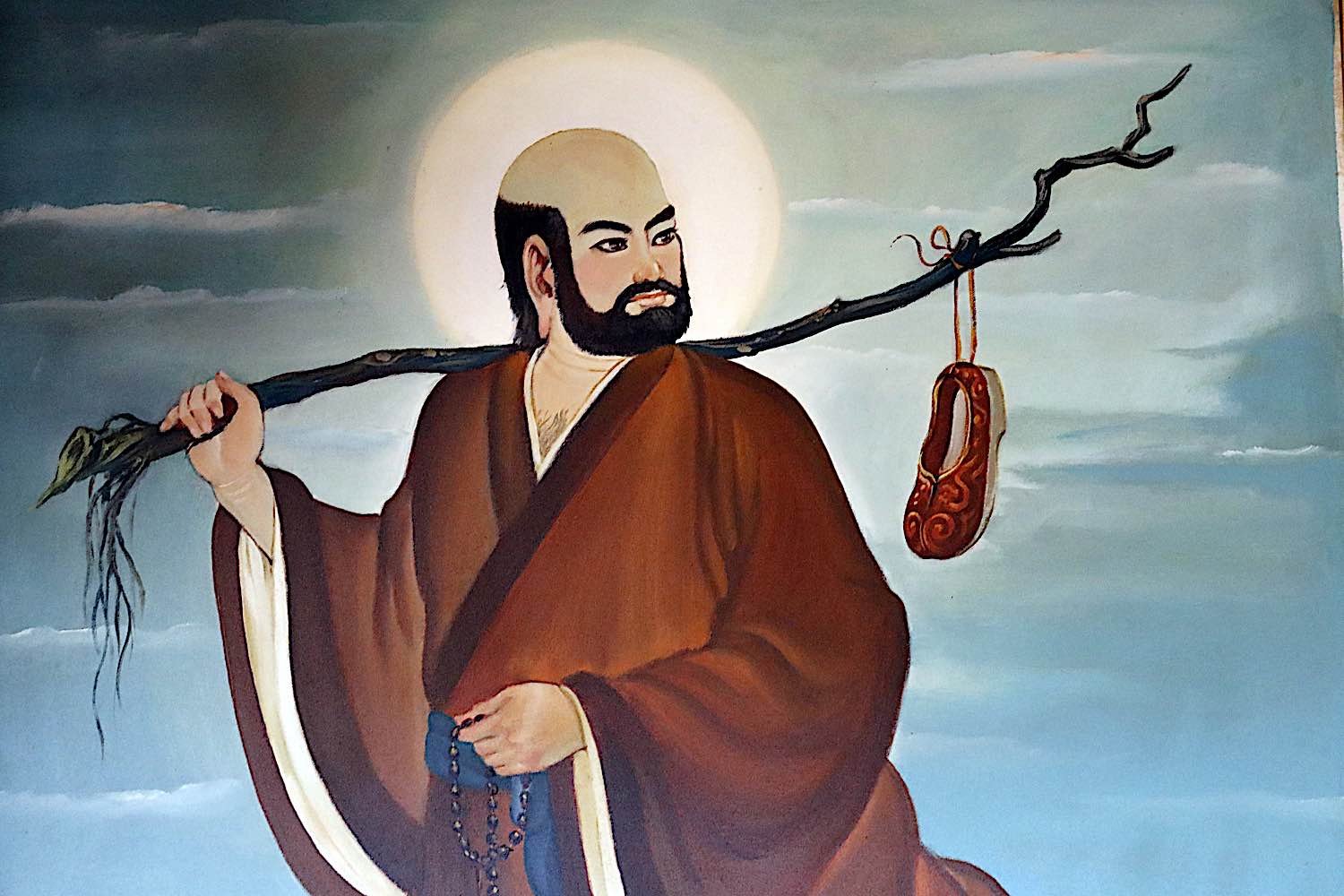
The Dangers of Argument: A Zen Perspective
Bodhidharma's assertion, "He who delights in argument is even farther," invites us to reflect on the nature of discourse and its potential to distance us from deeper truths. In a world where debate often masquerades as dialogue, this quote serves as a poignant reminder that the joy of argument can lead us away from the essence of understanding. The stakes are high; engaging in argument for its own sake can cloud our perception, obstructing the path to genuine insight and connection.
This teaching resonates profoundly in our contemporary landscape, where social media amplifies the cacophony of conflicting opinions. The allure of being right can overshadow the pursuit of wisdom, leaving us entangled in a web of intellectual sparring rather than fostering authentic relationships. Bodhidharma's words challenge us to examine our motivations in communication, urging us to seek clarity and compassion rather than mere victory in debate.
The image / the metaphor
The imagery in Bodhidharma's quote evokes a sense of distance, suggesting that those who revel in argument find themselves further removed from the heart of understanding. The verb "delights" implies a certain pleasure derived from conflict, a seductive trap that can ensnare even the most earnest seekers. This delight, however, is a mirage; it offers the fleeting satisfaction of being right while simultaneously leading us away from the deeper truths that lie beyond the surface of words.
In the speaker's tradition
Within the Zen tradition, Bodhidharma's teaching resonates with the concept of "prajna," or wisdom, which emphasizes direct experience over intellectualization. Zen encourages practitioners to transcend dualistic thinking, moving beyond the confines of right and wrong to embrace a more profound understanding of reality. This aligns with the notion of "sunyata," or emptiness, which teaches that our attachments to opinions and arguments can cloud our perception of the true nature of existence.
In the "Bloodstream Sermon," Bodhidharma emphasizes the importance of direct experience and the futility of clinging to conceptual frameworks. This echoes the teachings found in other Zen texts, such as the "Heart Sutra," which articulates the idea that form is emptiness and emptiness is form. Both texts invite us to let go of our attachments to words and concepts, urging us to seek the essence of truth that lies beyond the confines of argumentation.
Living the teaching
Consider a modern scenario where this teaching might apply: a heated discussion among friends about a contentious political issue. Each person passionately defends their viewpoint, relishing the back-and-forth of argument. Yet, in this exchange, the opportunity for genuine understanding is lost, as the focus shifts from exploring the complexities of the issue to merely winning the debate. Here, Bodhidharma's wisdom serves as a reminder that true connection and insight are often sacrificed at the altar of argument.
In a different context, imagine a relationship where misunderstandings arise frequently. One partner may find themselves delighting in proving their point during disagreements, inadvertently pushing the other away. By recognizing the futility of this approach and instead prioritizing open-hearted communication, they can cultivate a deeper connection. This shift from argument to understanding embodies Bodhidharma's teaching, inviting us to engage with one another from a place of compassion rather than competition.
A reflection
As we contemplate Bodhidharma's words, we are invited to reflect on our own engagement with discourse. Are there moments in our lives where we find ourselves delighting in argument, perhaps at the expense of deeper understanding? What might it look like to approach conversations with a spirit of inquiry and openness, rather than a desire to win? In this exploration, we may uncover the transformative power of letting go of argumentation in favor of connection and insight.
