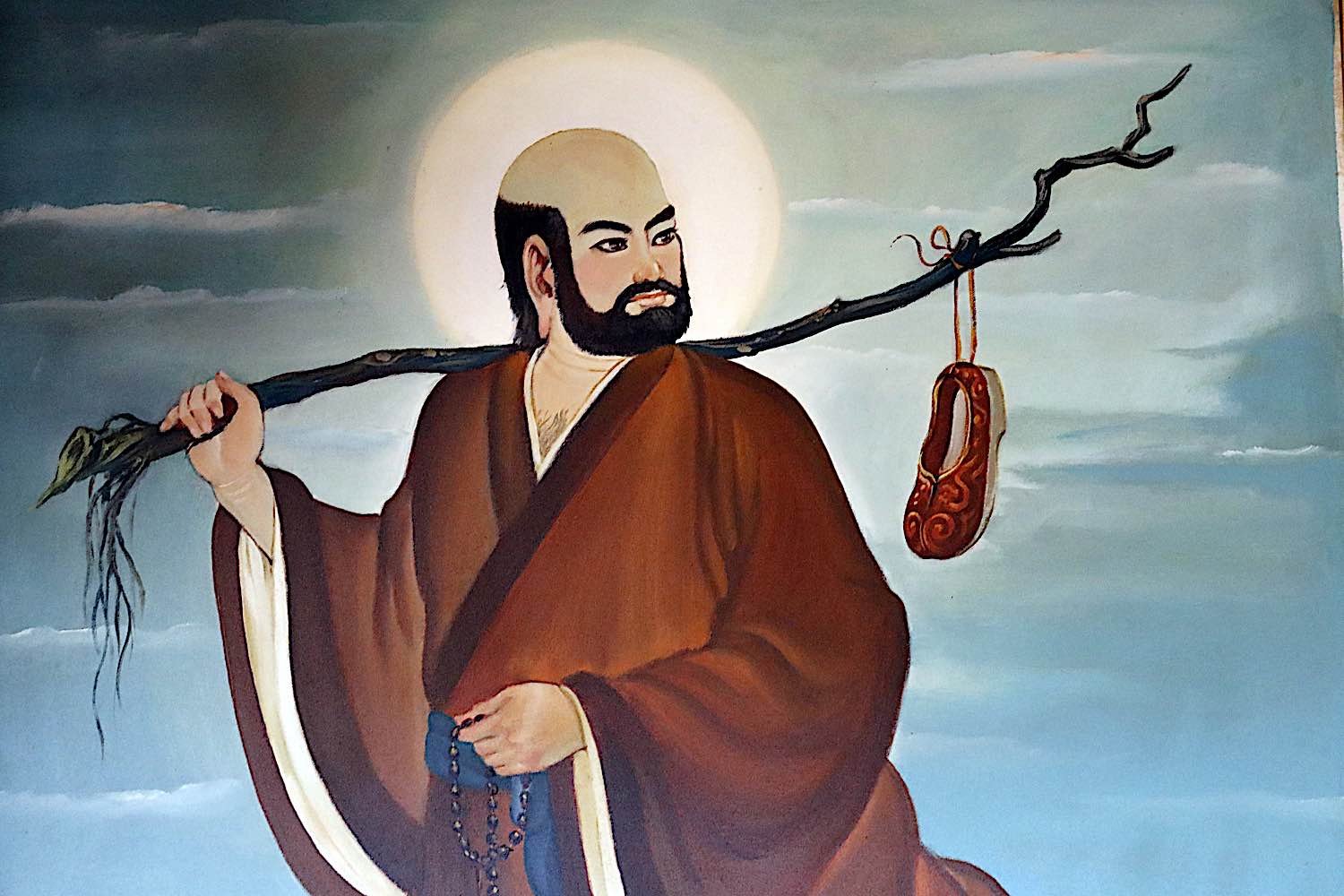
Bodhidharma’s declaration, “This is my final word,” resonates deeply within the Zen tradition, encapsulating the essence of completion and the profound simplicity that characterizes true understanding. In a world often cluttered with distractions and complexities, this statement serves as a reminder to distill our thoughts and experiences to their core. It invites us to reflect on what it means to arrive at a definitive conclusion, not just in words but in the very fabric of our being.
This assertion challenges us to consider the nature of finality in our spiritual journeys. What does it mean to reach a point of completion? Is it an end, or does it signify a new beginning? Bodhidharma’s words compel us to examine the layers of our understanding and the essence of our practice, urging us to confront the simplicity that lies beneath the surface of our thoughts and actions.
The image / the metaphor
Diving deeper into the metaphor, we can see that Bodhidharma is not merely offering a conclusion but rather pointing to the essence of existence itself. The finality he speaks of is not an end in the conventional sense; it is an invitation to experience the present moment fully. In Zen, this understanding aligns with the concept of ‘sunyata’ or emptiness, where the essence of things is revealed when we strip away the layers of distraction and illusion. Thus, Bodhidharma’s words become a gateway to experiencing the profound simplicity of being.
In the speaker's tradition
Bodhidharma, the legendary figure credited with bringing Zen Buddhism to China, embodies the principles of direct experience and the pursuit of enlightenment. His teachings emphasize the importance of ‘dharma’—the truth or law that governs the universe—and the necessity of realizing this truth within oneself. The notion of ‘kenosis,’ or self-emptying, resonates with his declaration, suggesting that to arrive at a final understanding, one must let go of preconceived notions and attachments.
In the context of Zen literature, Bodhidharma’s assertion can be likened to the teachings found in the ‘Heart Sutra,’ which articulates the idea that form is emptiness and emptiness is form. This interplay between form and essence underscores the importance of recognizing the transient nature of our thoughts and experiences. By embracing this understanding, we can approach Bodhidharma’s final word not as a conclusion but as an invitation to deeper inquiry and realization.
Living the teaching
Consider a modern scenario where the weight of decision-making looms large. In our fast-paced lives, we often find ourselves overwhelmed by choices, leading to a paralysis of analysis. Bodhidharma’s words can serve as a guiding light in such moments, encouraging us to distill our options down to their essence. By asking ourselves what truly matters, we can cut through the noise and arrive at a decision that feels authentic and aligned with our core values.
A reflection
As we contemplate Bodhidharma’s profound statement, we are invited to reflect on our own lives and the essence of our experiences. What does it mean for you to arrive at a final understanding in a particular area of your life? In what ways can you simplify your thoughts and actions to uncover the truth that lies beneath the surface? This inquiry not only deepens our engagement with Bodhidharma’s teaching but also encourages us to live with greater authenticity and presence.
