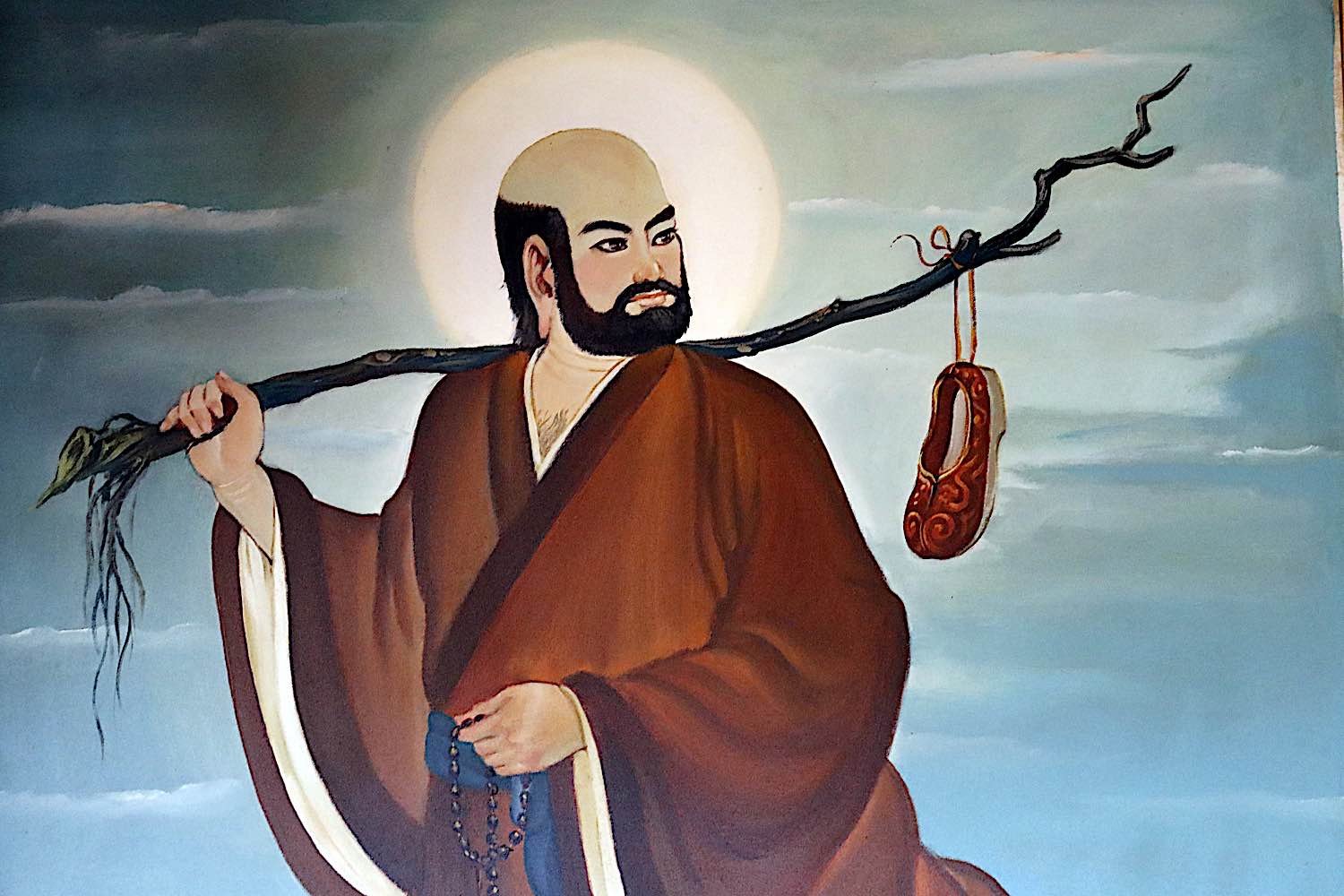
Bodhidharma's assertion, "This is the great koan," invites us into a profound exploration of existence itself. In Zen Buddhism, a koan serves as a riddle or paradox designed to provoke deep thought and facilitate awakening. This statement encapsulates the essence of our journey toward enlightenment, urging us to confront the mysteries of life and the self. It is a call to engage with the complexities of our experience, to embrace the unknown, and to seek understanding beyond conventional reasoning.
At its core, this quote challenges us to recognize that the greatest mysteries often lie within our own lives. The term "koan" suggests a puzzle that cannot be solved through logical thought alone; instead, it requires a shift in perception. Bodhidharma's words resonate with the timeless quest for truth, urging us to look beyond surface appearances and to delve into the depths of our consciousness. In doing so, we may uncover insights that lead to awakening, not just for ourselves, but for all beings.
The image / the metaphor
The phrase "the great koan" conjures an image of a vast, enigmatic landscape, where the horizon is obscured by fog and the path is unclear. The use of the word "great" elevates this koan to a universal level, suggesting that it encompasses the entirety of human experience. The verb "is" implies a state of being, inviting us to recognize that this koan is not merely an intellectual exercise but a lived reality. It beckons us to engage with the profound questions of existence: Who are we? What is our purpose? What lies beyond the veil of our everyday perceptions?
Diving deeper into the metaphor, we can see that the "great koan" represents the ultimate inquiry into the nature of reality and self. It is a reminder that the answers we seek may not be found in conventional wisdom or societal norms. Instead, they lie in the spaces between thoughts, in the silence that follows a question. This koan challenges us to embrace uncertainty and to find meaning in the ambiguity of life, suggesting that true understanding arises not from resolution but from the journey itself.
In the speaker's tradition
Bodhidharma, the legendary founder of Zen Buddhism, introduced concepts that resonate deeply within the tradition. His teachings emphasize the importance of direct experience and the realization of one's true nature, often referred to as "dharma." The idea of kenosis, or self-emptying, parallels the essence of the koan, as it invites practitioners to relinquish preconceived notions and attachments. In this light, the "great koan" can be seen as an invitation to enter a state of sunyata, or emptiness, where the self dissolves into the vastness of existence.
Living the teaching
Consider a modern scenario where the teaching of the great koan manifests in the workplace. Imagine a team facing a complex project with numerous challenges and conflicting ideas. In such moments, the pressure to find immediate solutions can lead to frustration and confusion. However, embracing the essence of the great koan encourages team members to step back, acknowledge the uncertainty, and engage in open dialogue. This approach fosters creativity and collaboration, allowing the team to navigate the complexities of their task with a sense of shared inquiry rather than rigid answers.
A reflection
As we contemplate Bodhidharma's assertion, we are invited to reflect on our own lives and the mysteries we encounter. What are the great koans that arise in your daily experience? In what ways do you resist the unknown, and how might embracing uncertainty lead to deeper understanding and awakening? Allow these questions to guide your contemplation, opening the door to insights that may illuminate your path.
