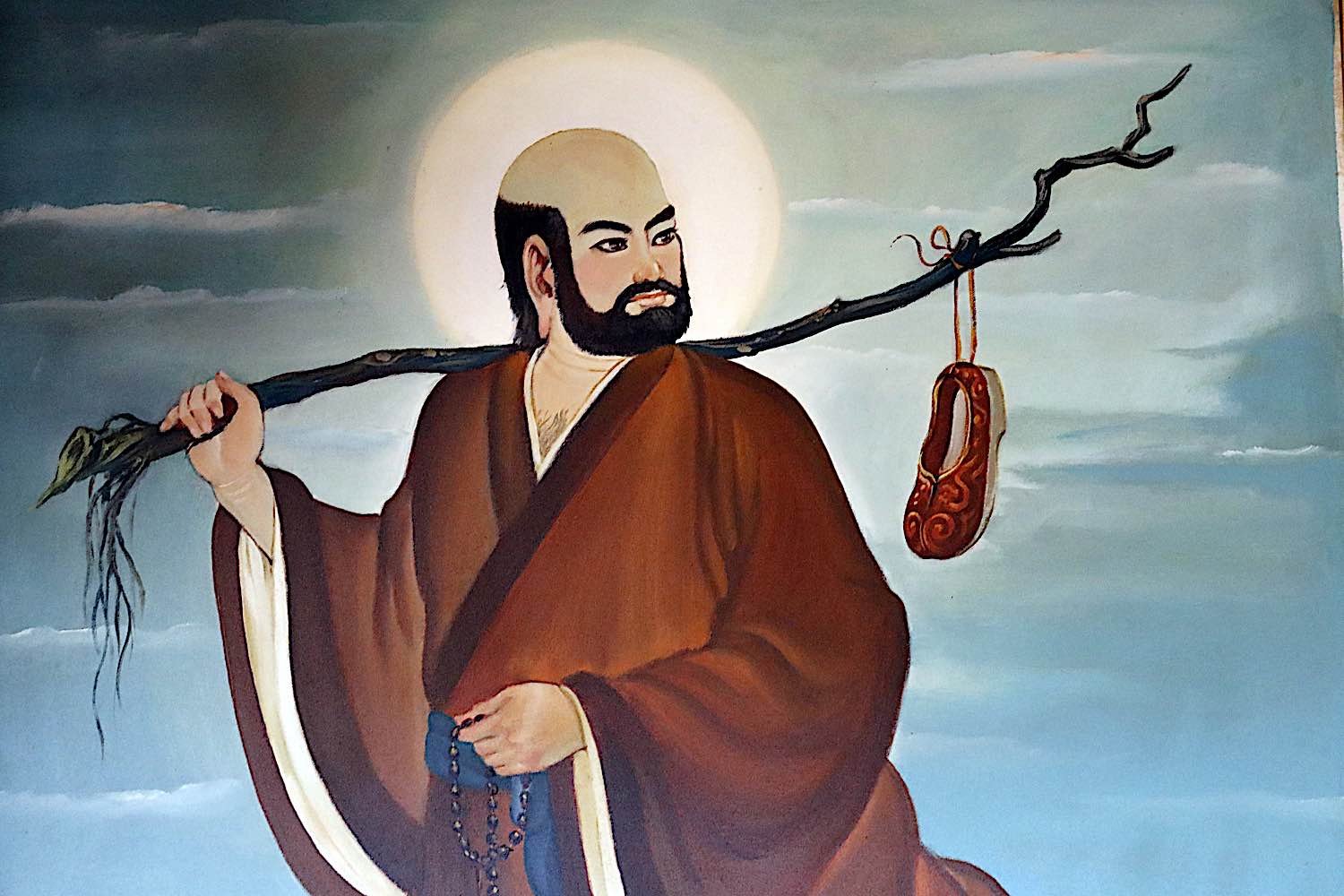
The Effortless Path of Realization
Bodhidharma's assertion, "What was difficult to grasp becomes effortless to live," invites us into a profound exploration of the nature of realization and the ease that can emerge from it. This quote speaks to the transformative journey of understanding, where the complexities of life and spiritual practice, once seemingly insurmountable, can eventually yield to a state of natural flow. It challenges us to consider how our struggles with concepts and practices can evolve into a seamless integration into our daily lives, emphasizing the importance of patience and perseverance on the spiritual path.
In a world often characterized by striving and effort, Bodhidharma's words resonate deeply, suggesting that the essence of spiritual awakening is not found in relentless pursuit but in the gentle unfolding of understanding. This transition from difficulty to ease is not merely a personal journey; it reflects a universal truth about the nature of existence itself. As we navigate the complexities of our inner and outer worlds, we are invited to trust that what feels challenging today may become second nature tomorrow, illuminating the path toward a more authentic and liberated way of being.
The image / the metaphor
The imagery in Bodhidharma's quote evokes a sense of transformation, where the once opaque becomes transparent, and the burdens of comprehension lift to reveal a lighter existence. The verbs "grasp" and "live" suggest a dynamic interplay between intellectual understanding and experiential embodiment. To "grasp" implies a struggle, a clinging to concepts that may feel elusive, while to "live" indicates a state of being where those concepts are seamlessly integrated into the fabric of daily life. This transition from effort to ease is akin to the process of learning to ride a bicycle; initially fraught with uncertainty, it eventually becomes a fluid expression of balance and grace.
Diving deeper into the metaphor, we can see that Bodhidharma is pointing to a fundamental truth about the nature of realization itself. The journey from difficulty to ease mirrors the Zen practice of letting go of attachments and preconceived notions. It suggests that the more we cling to our understanding, the more we hinder our ability to truly experience life as it is. In this light, the quote serves as a reminder that the essence of spiritual practice lies not in the accumulation of knowledge but in the surrender to the present moment, where life unfolds effortlessly when we cease to resist it.
In the speaker's tradition
Bodhidharma, the legendary figure credited with bringing Zen Buddhism to China, embodies the essence of direct experience over intellectual understanding. His teachings emphasize the importance of direct realization, or "prajna," which transcends mere conceptual knowledge. In Zen, the notion of "sunyata," or emptiness, plays a crucial role in this transformation. It suggests that our struggles and attachments to understanding are rooted in a misunderstanding of the nature of reality itself. When we recognize the emptiness of our concepts, we can begin to live with greater ease, as we no longer cling to rigid definitions or expectations.
This idea resonates with the teachings found in the "Bloodstream Sermon," where Bodhidharma articulates the importance of direct experience in realizing one's true nature. He encourages practitioners to look beyond the surface of thoughts and beliefs, inviting them to engage with the essence of their being. This aligns with the Zen practice of "koan" contemplation, where paradoxical questions lead to a direct experience of reality that transcends intellectual understanding. In this context, Bodhidharma's quote serves as a guiding light, illuminating the path toward a more effortless way of living that arises from deep realization.
Living the teaching
Consider a modern scenario where this teaching might resonate: a person grappling with the complexities of their career. Initially, they may find themselves overwhelmed by the demands of their job, feeling as though they must constantly strive to meet expectations and prove their worth. However, as they begin to embrace the principles of mindfulness and presence, they discover that the very act of engaging with their work can become a source of joy and fulfillment. What once felt like a burden transforms into a natural expression of their talents and passions, illustrating Bodhidharma's insight that the challenges of understanding can give way to a more effortless engagement with life.
This teaching can also be applied in the realm of relationships. Imagine a couple facing communication difficulties, where misunderstandings and conflicts seem insurmountable. By practicing patience and cultivating a deeper awareness of their emotions and reactions, they may find that the very act of listening and being present with one another allows for a more authentic connection to emerge. As they let go of the need to be right or to control the conversation, they discover that love and understanding flow more freely between them. In this way, Bodhidharma's wisdom illuminates the path to ease in our interactions, reminding us that what once felt difficult can become a harmonious dance of connection.
A reflection
As we contemplate Bodhidharma's profound statement, we are invited to reflect on our own lives and the areas where we experience struggle or resistance. What if we approached these challenges with the understanding that they may one day become effortless? In what ways can we cultivate patience and trust in our journey of realization? As we ponder these questions, we may find ourselves opening to the possibility that ease is not a distant goal but a natural outcome of our willingness to engage deeply with the present moment.
