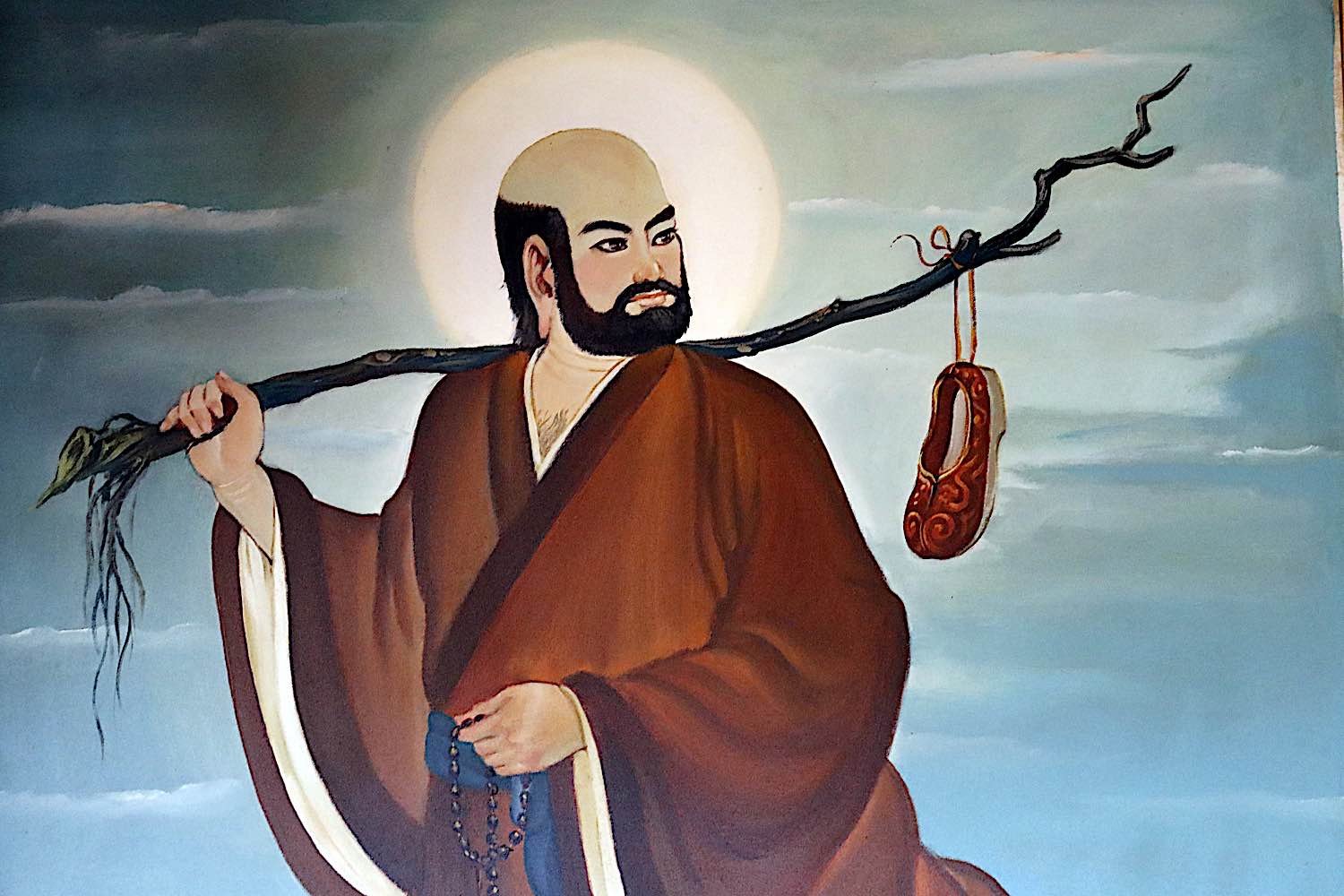
Walking the Path with Equanimity
Bodhidharma's assertion, "With perfect equanimity, you walk the Path," invites us to consider the profound state of balance and serenity that can accompany our journey through life. This quote encapsulates the essence of Zen practice, where the act of walking—both literally and metaphorically—becomes a meditation in itself. The stakes are high; in a world rife with distractions and emotional turbulence, cultivating equanimity is not merely a personal endeavor but a vital skill for navigating the complexities of existence.
To walk the Path with equanimity is to embrace a state of mind that remains undisturbed by external circumstances. It suggests a mastery over one's internal landscape, where the fluctuations of joy and sorrow, success and failure, do not dictate our sense of self or our direction. This teaching resonates deeply within the Zen tradition, where the journey is as significant as the destination, and the quality of our presence in each moment shapes our experience of life.
The image / the metaphor
The imagery of walking evokes a sense of movement and progression, suggesting that life is a continuous journey rather than a static state. The term "perfect equanimity" conjures a serene presence, one that remains calm amidst the chaos of life. The verbs chosen—"walk" and "equanimity"—imply an active engagement with the world, where one is not merely a passive observer but a participant in the unfolding of existence. This duality of action and stillness is central to the Zen experience, where the act of walking becomes a form of meditation.
In the speaker's tradition
Bodhidharma, the legendary figure credited with bringing Zen Buddhism to China, emphasized the importance of direct experience and personal realization. His teachings often revolve around concepts such as dharma—the natural law that governs the universe—and prajna, or wisdom, which arises from deep insight into the nature of reality. Equanimity, in this context, can be seen as a manifestation of one's understanding of sunyata, or emptiness, where one recognizes that all phenomena are transient and interconnected.
In the "Outline of Practice," Bodhidharma encourages practitioners to cultivate a mind that is free from attachment and aversion, a state that aligns closely with the notion of kenosis, or self-emptying, found in various spiritual traditions. This self-emptying allows for a deeper connection to the present moment, fostering a sense of peace that is not contingent upon external circumstances. The Zen koans, which often challenge conventional thinking, further illustrate this point, inviting practitioners to transcend dualistic notions of success and failure, thus embodying equanimity in their daily lives.
Living the teaching
Consider a modern scenario where the teaching of equanimity can be applied: a challenging work environment filled with deadlines and interpersonal conflicts. In such a setting, the ability to maintain a calm and balanced demeanor can transform not only one's own experience but also the atmosphere around them. By embodying equanimity, one can approach challenges with clarity and compassion, fostering a more harmonious workplace. This practice of remaining centered amidst chaos is a direct application of Bodhidharma's wisdom.
Another application of this teaching might arise in personal relationships, particularly during moments of conflict or misunderstanding. When faced with a disagreement, the practice of equanimity allows individuals to respond thoughtfully rather than react impulsively. By cultivating a state of inner calm, one can listen deeply and engage with empathy, creating space for resolution and understanding. This approach not only enhances the quality of relationships but also nurtures a sense of connection and shared humanity.
A reflection
As we contemplate Bodhidharma's words, we are invited to reflect on our own capacity for equanimity in our daily lives. How do we respond to the inevitable ups and downs that life presents? Are we able to walk our Path with a sense of balance and serenity, or do we find ourselves swayed by external circumstances? In this moment of reflection, consider: What practices can you incorporate into your life to cultivate a deeper sense of equanimity as you navigate your own unique journey?
