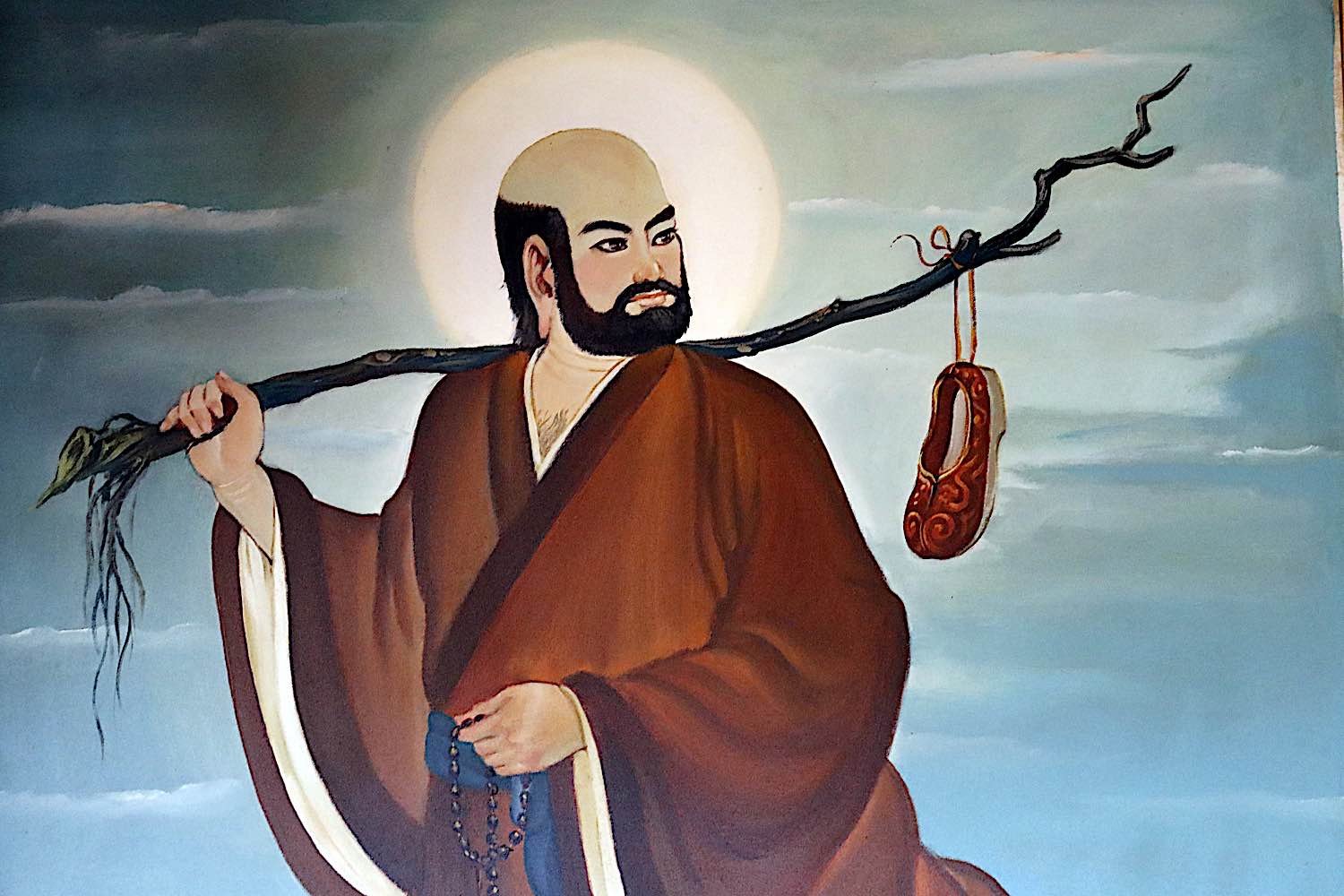
Bodhidharma's assertion that "Words are footprints in the mud — not the foot itself" invites us to reflect on the inherent limitations of language in conveying the fullness of experience. This metaphor suggests that while words can indicate a path or direction, they cannot encapsulate the essence of what they signify. In a world increasingly dominated by communication, understanding this distinction becomes vital; it reminds us that the true nature of our experiences often lies beyond the confines of verbal expression.
As we navigate our lives, we often rely on language to articulate our thoughts, feelings, and insights. However, Bodhidharma's wisdom urges us to recognize that words are merely markers, not the reality they attempt to describe. This understanding can deepen our relationships, enhance our self-awareness, and cultivate a more profound sense of presence. By acknowledging the limitations of language, we can begin to explore the deeper truths that reside within silence and direct experience.
The image / the metaphor
The imagery of "footprints in the mud" evokes a tactile sense of movement and impermanence. Footprints, as transient marks left behind, suggest that while we may trace a path through life, the essence of our journey cannot be fully captured in the impressions we leave. The choice of the word "mud" adds a layer of complexity; it symbolizes the murky, often unclear nature of our thoughts and expressions. Just as footprints can be washed away or obscured, so too can our words fail to convey the depth of our experiences.
Diving deeper into this metaphor, we can see that the footprints represent our attempts to communicate and connect with others. They are the traces of our inner lives, yet they are not the entirety of our being. The foot itself, which remains unseen in this metaphor, symbolizes the direct experience of life, the raw and unfiltered essence of existence that transcends verbal articulation. This distinction invites us to engage with life more directly, to seek understanding beyond the limitations of language.
In the speaker's tradition
Bodhidharma, the legendary figure credited with bringing Zen Buddhism to China, emphasizes direct experience and insight over intellectual understanding. In Zen, the concept of "dharma" refers to the teachings and truths that guide us, yet these teachings are often seen as pointers rather than the ultimate reality. This aligns with the notion of "sunyata," or emptiness, which suggests that all phenomena, including language, are devoid of inherent meaning. By recognizing the emptiness of words, we can approach the essence of our experiences with greater clarity.
A relevant text that echoes this sentiment is the "Heart Sutra," which famously states, "Form is emptiness, emptiness is form." This teaching underscores the idea that while words and forms can guide us, they do not encapsulate the ultimate truth. Bodhidharma's quote serves as a reminder that our understanding must go beyond the verbal and conceptual, urging us to engage with the world directly and intuitively, much like the Zen practice of zazen, or seated meditation, which invites us to experience the present moment without the interference of language.
Living the teaching
Consider a modern scenario where this teaching resonates: a conversation between friends discussing a profound life experience. One friend shares their feelings about a recent loss, using words that attempt to convey their grief. However, the other friend, while listening, may find that the words fall short of capturing the depth of that sorrow. In this moment, the listener might realize that true understanding comes not from the words spoken but from the shared silence and presence that envelops them. This awareness can foster a deeper connection, allowing both individuals to feel the weight of the experience without the need for elaborate explanations.
In another application, think about a challenging moment in a relationship where misunderstandings arise. Often, partners may find themselves caught in a cycle of verbal exchanges that fail to address the underlying emotions. By recognizing that words are merely footprints, one might choose to pause, breathe, and engage in a moment of silence together. This shift can create space for genuine connection, allowing both individuals to feel and express their emotions more authentically, beyond the limitations of language.
A reflection
As we contemplate Bodhidharma's insight, we are invited to consider the ways in which we rely on language to express our experiences. What might we discover if we allowed ourselves to sit in silence, to feel the weight of our emotions without the need to articulate them? In this exploration, we can ask ourselves: How can I cultivate a deeper understanding of my experiences beyond the words I use to describe them?
