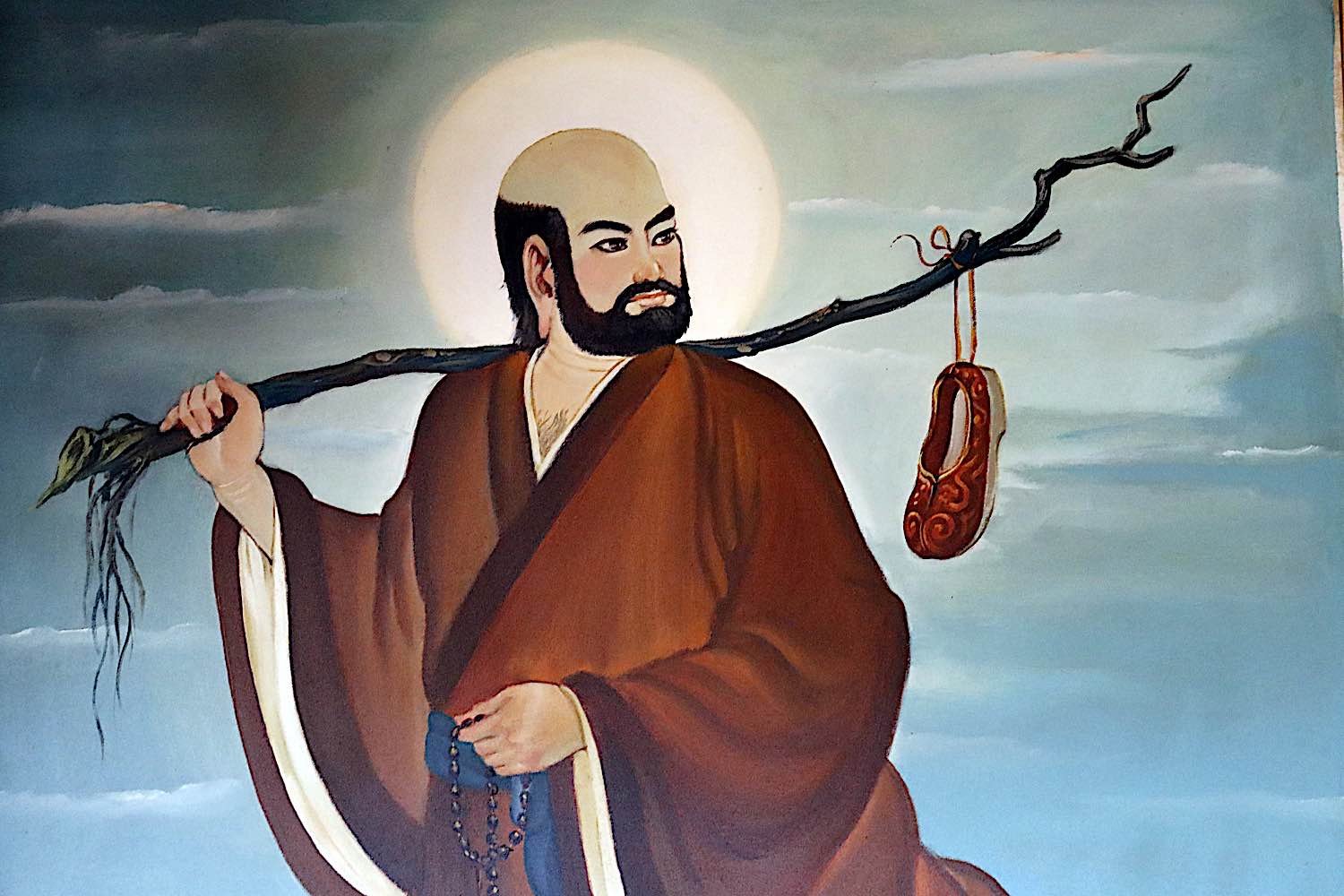
The Paradox of Seeking and Having
Bodhidharma's assertion that "worldly people deceive themselves by seeking; the awakened seek nothing and have everything" invites us to reflect on the nature of desire and fulfillment. In this statement, he contrasts the restless pursuit of worldly attachments with the profound contentment found in awakening. This dichotomy is not merely philosophical; it speaks to the core of human experience, where the chase for external validation often leads to a sense of emptiness. Understanding this quote is essential for anyone on a spiritual path, as it challenges us to reconsider what it means to truly possess and to be fulfilled.
Delving deeper, we find that Bodhidharma's words resonate with the Zen emphasis on non-attachment and the realization of inherent completeness. The awakened individual, in their state of enlightenment, recognizes that true abundance lies not in the accumulation of material wealth or achievements but in the profound understanding of one's own nature. This perspective shifts the focus from external pursuits to an inner journey, where the essence of being is already whole. Thus, the stakes are high: to awaken is to transcend the illusions that bind us to a life of seeking and striving.
The image / the metaphor
The imagery in Bodhidharma's quote evokes a stark contrast between two states of being: the seeker and the awakened. The term "seeking" conjures a sense of longing, a restless movement toward something perceived as lacking. It implies a journey fraught with dissatisfaction, where the seeker is perpetually chasing shadows, believing that fulfillment lies just beyond their grasp. In contrast, the awakened state is depicted as one of completeness, where the individual recognizes that they are not separate from the very essence of existence. This shift from seeking to having is not merely a change in perspective; it is a transformative realization that alters the fabric of one's experience.
Diving deeper into the metaphor, we can see that the act of seeking often stems from a fundamental misunderstanding of our relationship with the world. It suggests a duality between the self and the object of desire, reinforcing the illusion of separation. In Zen, this duality is often addressed through the concept of sunyata, or emptiness, which teaches that all phenomena are interconnected and devoid of inherent existence. The awakened individual, therefore, embodies a state of non-seeking, where they are fully present and engaged with life as it is, rather than as they wish it to be. This realization is not a passive acceptance but an active engagement with the fullness of existence.
In the speaker's tradition
Bodhidharma, as a pivotal figure in Zen Buddhism, emphasizes the importance of direct experience and the realization of one's true nature. His teachings resonate with the concept of dharma, which encompasses the truth of existence and the path to enlightenment. In Zen, awakening is often associated with the practice of meditation, where one learns to observe thoughts and desires without attachment. This practice aligns with the notion of kenosis, or self-emptying, where the individual relinquishes the ego's demands and opens themselves to the fullness of being. The awakened state, therefore, is not a destination but a continuous unfolding of awareness.
In the context of Zen texts, Bodhidharma's insights can be paralleled with the teachings found in the Heart Sutra, which articulates the essence of emptiness and the interdependence of all things. The sutra states, "Form is emptiness, emptiness is form," echoing the sentiment that true understanding transcends the dualistic nature of seeking and having. This profound realization invites practitioners to let go of attachments and recognize the inherent completeness of their existence. Thus, Bodhidharma's quote serves as a guiding principle for those navigating the complexities of desire and fulfillment.
Living the teaching
Consider a modern scenario where this teaching can be applied: an individual striving for career success. In their pursuit of promotions and accolades, they may find themselves caught in a cycle of anxiety and dissatisfaction. The more they seek recognition, the more elusive it becomes, leading to a sense of inadequacy. By reflecting on Bodhidharma's words, this person might begin to shift their focus from external validation to an internal sense of worth. They could cultivate a practice of mindfulness, recognizing their inherent value beyond achievements, thus embodying the awakened state of having everything by simply being.
Another application of this teaching can be found in interpersonal relationships. Imagine a person who constantly seeks approval from their partner, feeling incomplete without affirmation. This dynamic can create tension and dependency, as the individual believes their happiness hinges on external validation. By embracing the essence of non-seeking, they can learn to appreciate their own worth and cultivate a sense of sufficiency within themselves. This shift not only enhances their self-esteem but also fosters a healthier, more balanced relationship, where love is given freely rather than sought after.
A reflection
As we contemplate Bodhidharma's profound statement, we are invited to explore our own relationship with seeking and having. What are the areas in your life where you find yourself perpetually seeking, believing that fulfillment lies just out of reach? In what ways might you begin to recognize the inherent completeness within yourself, allowing you to embrace the present moment fully? This inquiry can serve as a powerful catalyst for transformation, guiding us toward a deeper understanding of our true nature and the richness of existence.
