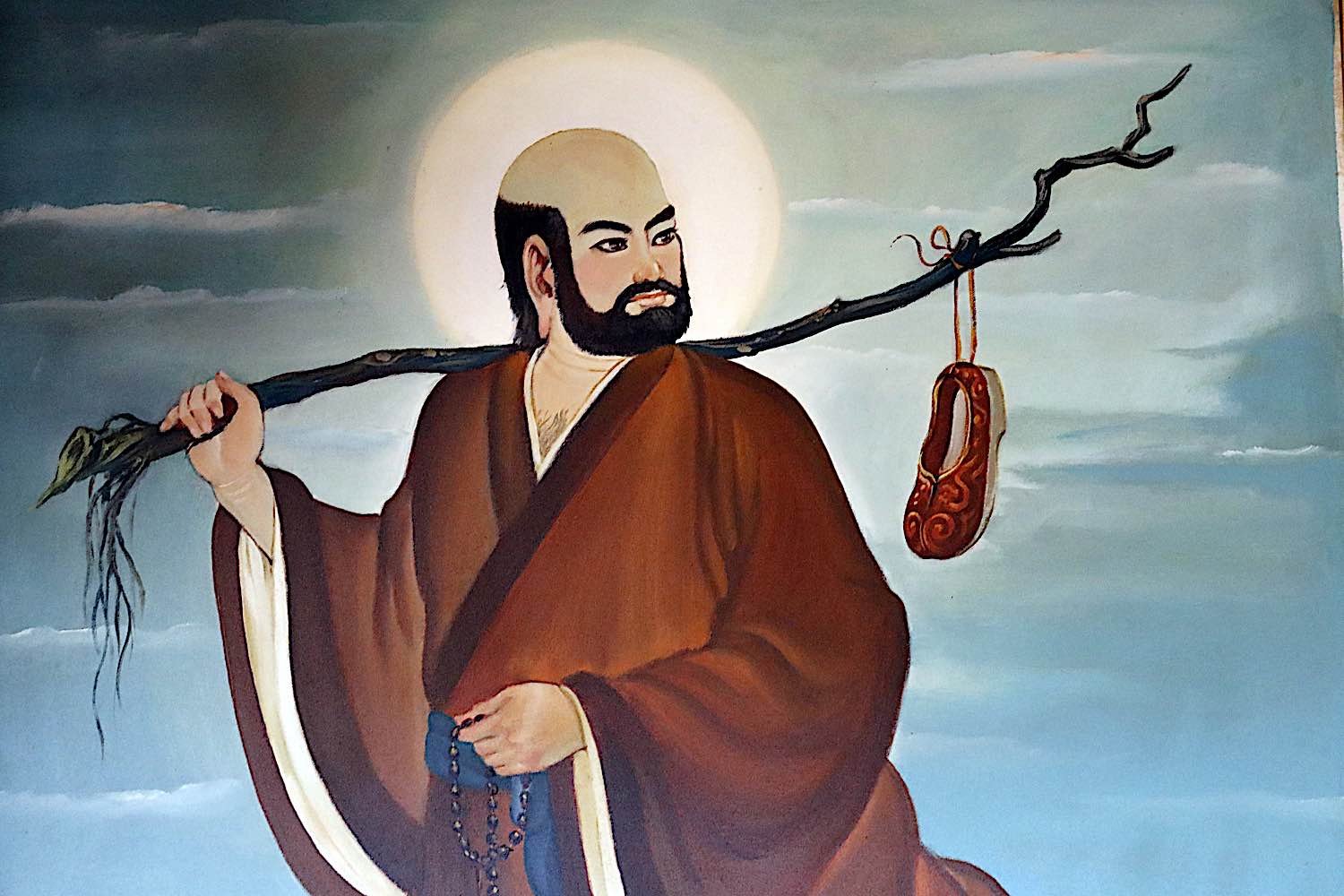
Bodhidharma's profound assertion, "Worship not the form; worship the essence," invites us to look beyond the superficial manifestations of our spiritual practices and to seek the deeper truths that lie beneath. In a world often preoccupied with appearances, this teaching challenges us to redirect our focus from the external to the internal, from the transient to the eternal. The essence, in this context, represents the core of our being and the ultimate reality, while the form signifies the myriad ways in which this essence can be expressed or perceived. Understanding this distinction is crucial for anyone on a spiritual path, as it can lead to a more authentic and meaningful engagement with the divine.
Delving deeper, we recognize that this quote encapsulates a fundamental tension within spiritual practice: the relationship between the tangible and the intangible. Forms—rituals, symbols, and even doctrines—serve as vessels for conveying deeper truths, yet they can also become distractions if we become overly attached to them. Bodhidharma's wisdom encourages us to cultivate a discerning awareness that allows us to appreciate the forms without losing sight of the essence they represent. This shift in perspective is not merely an intellectual exercise; it is a transformative practice that can profoundly alter our experience of spirituality.
The image / the metaphor
The imagery in Bodhidharma's quote evokes a sense of duality, where 'form' and 'essence' stand in contrast yet are intrinsically linked. The verb 'worship' suggests an act of reverence, an acknowledgment of something greater than oneself. However, the directive to focus on 'essence' implies a deeper engagement, one that transcends mere ritualistic observance. This call to worship the essence invites us to explore the underlying truths that inform our beliefs and practices, urging us to seek a connection that is more profound than the surface-level expressions of faith.
As we unpack this metaphor further, we can see that the essence represents the universal truths that bind us all, while forms are the diverse expressions of those truths across cultures and traditions. This understanding encourages us to appreciate the richness of spiritual diversity while recognizing that the core of all spiritual paths is the same: the quest for connection, understanding, and ultimately, liberation. By focusing on essence, we cultivate a sense of unity that transcends the boundaries created by differing forms.
In the speaker's tradition
Bodhidharma, the legendary figure credited with bringing Zen Buddhism to China, embodies the essence of this teaching within the broader context of Buddhist philosophy. Concepts such as 'sunyata' (emptiness) and 'prajna' (wisdom) resonate deeply with the idea of essence, suggesting that true understanding arises from recognizing the impermanence of forms. In Zen, the practice of 'kensho'—the direct experience of one's true nature—aligns with Bodhidharma's call to worship the essence, as it emphasizes the importance of direct experience over intellectual understanding.
Moreover, Bodhidharma's teachings echo the sentiments found in other spiritual traditions, such as Sufism's concept of 'fana,' which speaks to the dissolution of the self in the pursuit of the divine essence. In both traditions, the emphasis is placed on transcending the ego and the forms it clings to, allowing for a deeper communion with the ultimate reality. This shared understanding across traditions highlights the universality of Bodhidharma's message, inviting seekers from all backgrounds to explore the essence of their own spiritual journeys.
Living the teaching
In our modern lives, the challenge of distinguishing between form and essence often manifests in our relationships. For instance, consider a scenario where two friends engage in a heated debate over differing beliefs. If they become fixated on the forms of their arguments—the words, the ideologies—they may lose sight of the essence of their friendship, which is rooted in love, respect, and understanding. By remembering Bodhidharma's teaching, they can shift their focus from the superficiality of their disagreement to the deeper connection that brought them together in the first place, fostering compassion and reconciliation.
This teaching can also be applied in the realm of personal practice. Many individuals may find themselves caught in the ritualistic aspects of their spiritual routines—attending services, reciting prayers, or performing meditative practices—without fully engaging with the essence of these activities. By consciously approaching these practices with the intention to connect with their deeper meaning, one can transform a mundane routine into a profound exploration of self and spirit. This shift invites a more authentic experience of spirituality, one that resonates with the heart rather than merely the mind.
A reflection
As we contemplate Bodhidharma's wisdom, we are invited to ask ourselves: "In what areas of my life am I worshiping the form rather than the essence?" This question encourages a deep introspection that can reveal the ways in which we may be clinging to superficialities, whether in our spiritual practices, relationships, or personal beliefs. By embracing this inquiry, we open ourselves to the possibility of transformation, allowing the essence of our experiences to guide us toward a more authentic and fulfilling existence.
