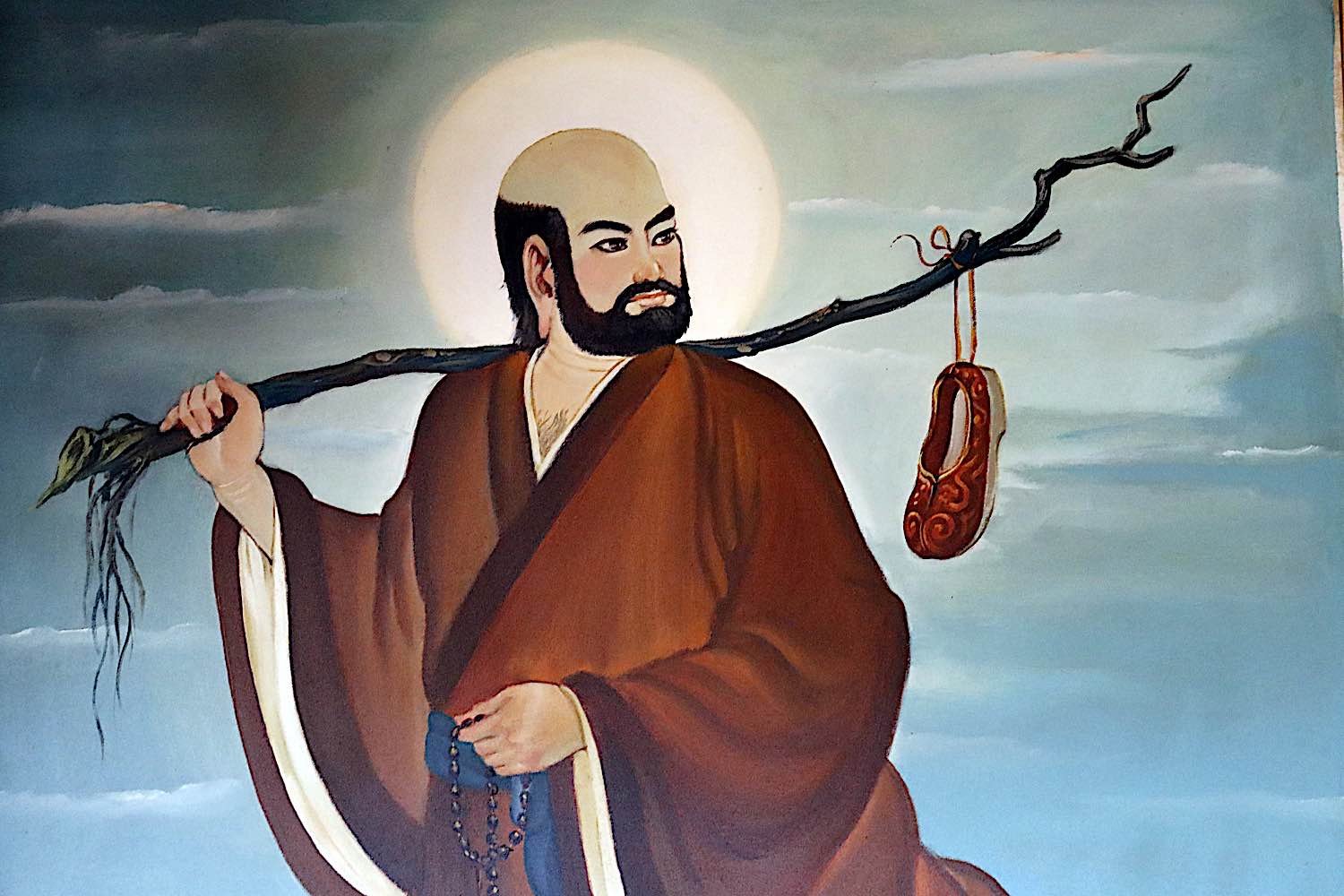
"You were the one who was hiding." This profound statement by Bodhidharma invites us to reflect on the nature of our own existence and the often-unrecognized barriers we erect between ourselves and our true essence. In a world filled with distractions and façades, the call to awaken from our self-imposed obscurity becomes a vital endeavor. Understanding this quote is not merely an intellectual exercise; it is a pathway to deeper self-awareness and liberation.
At its core, Bodhidharma's assertion challenges us to confront the uncomfortable truth that we often hide from ourselves. This hiding can manifest in various forms—fear, denial, or the relentless pursuit of external validation. The stakes are high; remaining in this state of concealment can lead to a life devoid of authenticity and genuine connection. To embrace the invitation to awaken is to embark on a transformative journey toward self-discovery and enlightenment.
The image / the metaphor
The imagery in Bodhidharma's quote is strikingly evocative. The act of hiding suggests a deliberate withdrawal, a retreat into the shadows of our psyche where we conceal our vulnerabilities and truths. The choice of the verb "were" implies a past state, hinting that this hiding is not an inherent quality but rather a condition we have adopted. This subtle distinction invites us to recognize that the power to emerge from hiding lies within us, waiting to be activated.
Diving deeper into the metaphor, we can see that hiding is not merely a physical act but a psychological and spiritual one. It speaks to the layers of identity we construct to protect ourselves from the world's judgments and expectations. In Zen philosophy, this act of hiding can be likened to the concept of "delusion," where we become ensnared in our own misconceptions about who we are. The journey toward awakening, then, is one of peeling back these layers, revealing the radiant self that has always existed beneath the surface.
In the speaker's tradition
Bodhidharma, the legendary figure credited with bringing Zen Buddhism to China, emphasizes the importance of direct experience and self-inquiry in his teachings. His assertion resonates deeply with the Zen concepts of "dharma" and "prajna," which advocate for understanding the true nature of reality and the self. In Zen, the act of hiding can be seen as a form of ignorance, a failure to recognize the inherent emptiness (sunyata) of our constructed identities. This ignorance keeps us trapped in cycles of suffering and dissatisfaction.
In the "Bloodstream Sermon," Bodhidharma articulates the necessity of awakening to our true nature, which is often obscured by our attachments and aversions. This aligns with the Zen practice of "koan" contemplation, where practitioners are encouraged to confront paradoxical statements that challenge their conventional understanding. Just as a koan invites us to transcend dualistic thinking, Bodhidharma's quote urges us to confront the self-imposed barriers that prevent us from experiencing our authentic selves.
Living the teaching
Consider a modern scenario where this teaching resonates: a professional who feels unfulfilled despite outward success. This individual may find themselves hiding behind a façade of achievement, fearing that their true desires and passions are unworthy or impractical. In this context, Bodhidharma's words serve as a catalyst for introspection, prompting the individual to examine the motivations behind their choices and to confront the fear of revealing their authentic self. The journey toward awakening begins with acknowledging this hiding and taking steps to align one's life with their true values.
In relationships, the act of hiding can manifest as emotional withdrawal or a reluctance to express one's true feelings. Imagine a couple where one partner feels the need to suppress their emotions to maintain harmony. Bodhidharma's teaching encourages both partners to engage in open communication, fostering an environment where vulnerability is not only accepted but celebrated. By shedding the layers of pretense, they can cultivate a deeper connection, ultimately leading to a more fulfilling and authentic relationship.
A reflection
As we contemplate Bodhidharma's assertion, we are invited to engage in a profound inquiry: What aspects of myself am I hiding from? This question serves as a mirror, reflecting the parts of our identity that yearn for acknowledgment and acceptance. In this moment of reflection, we can begin to unravel the layers of self-deception and embrace the journey toward awakening, allowing our true selves to emerge into the light.
