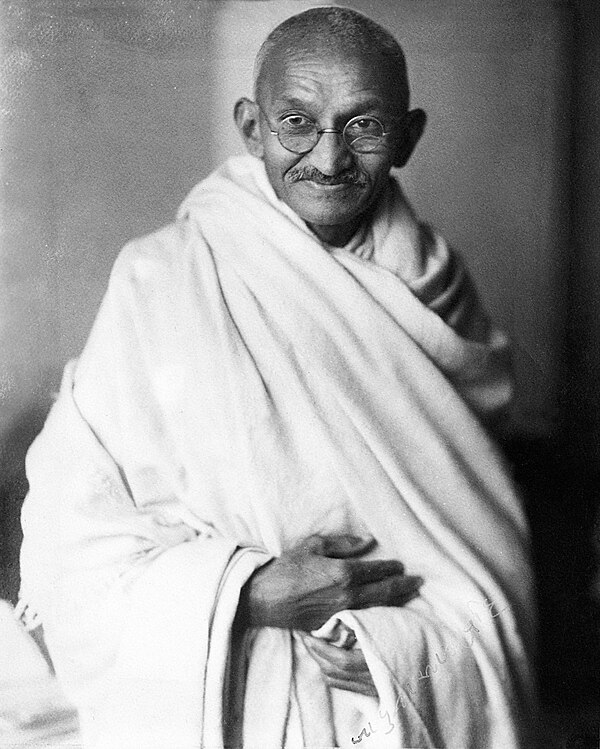
The Weight of Action: Gandhi's Call to Practice
In the poignant words of Mahatma Gandhi, "An ounce of practice is worth more than tons of preaching." This statement encapsulates a profound truth about the nature of wisdom and the importance of action over mere words. In a world often saturated with rhetoric and theoretical discussions, Gandhi urges us to recognize that true understanding and transformation arise from lived experience. The stakes are high; without action, our insights remain dormant, unable to effect change in ourselves or the world around us.
Gandhi's assertion invites us to reflect on the essence of authenticity in our spiritual journeys. It challenges us to consider how often we find ourselves caught in the cycle of talking about ideals without embodying them. This disconnect between belief and practice can lead to disillusionment and stagnation. By emphasizing the value of practice, Gandhi not only highlights the necessity of action but also calls us to a deeper engagement with our values, urging us to translate our beliefs into tangible deeds that resonate with our inner truths.
The image / the metaphor
At first glance, the imagery in Gandhi's quote is strikingly simple yet deeply evocative. The comparison of "an ounce of practice" to "tons of preaching" conjures a vivid contrast between the weight of action and the lightness of words. The choice of "ounce" suggests something small yet potent, while "tons" implies an overwhelming abundance that lacks substance. This juxtaposition invites us to feel the gravity of action, suggesting that even the smallest act of genuine practice can outweigh a mountain of unfulfilled intentions.
Diving deeper into the metaphor, we can see that Gandhi is not merely advocating for action but is also critiquing the emptiness of ungrounded discourse. The metaphor serves as a reminder that wisdom is not merely an intellectual exercise; it is a lived experience that demands our engagement. In this light, the "ounce of practice" becomes a symbol of authenticity, a call to align our inner convictions with our outward expressions. It challenges us to ask ourselves: how can we embody our beliefs in ways that resonate with our daily lives?
In the speaker's tradition
Gandhi's perspective is deeply rooted in the Hindu tradition, where the concepts of dharma and karma play pivotal roles. Dharma, often translated as duty or righteousness, emphasizes the importance of living in accordance with one's values and responsibilities. In this context, Gandhi's call to practice can be seen as an invitation to fulfill one's dharma through action, aligning one's life with higher principles. The idea of karma further reinforces this notion, suggesting that our actions have consequences that shape our spiritual journey.
In the Bhagavad Gita, a foundational text of Hindu philosophy, the dialogue between Arjuna and Krishna underscores the significance of action without attachment to the results. Krishna advises Arjuna to perform his duty as a warrior, emphasizing that it is the action itself that holds value, not the fruits of that action. This resonates with Gandhi's teaching, as both emphasize the necessity of engaging in righteous action as a means of spiritual growth and fulfillment. In this light, Gandhi's quote serves as a modern echo of ancient wisdom, reminding us that true understanding is forged in the crucible of practice.
Living the teaching
Consider a modern scenario where this teaching finds relevance: a community activist who passionately advocates for social justice. While their speeches may inspire many, it is the tangible actions they take—organizing events, supporting marginalized voices, and engaging in grassroots efforts—that truly embody their message. This individual understands that their words alone cannot create the change they seek; it is through their commitment to action that they can effect real transformation in their community. Here, Gandhi's wisdom resonates, illustrating that practice is the bedrock of meaningful advocacy.
In a more personal context, think about a relationship where one partner often expresses love through words but struggles to demonstrate it through actions. The other partner may feel a disconnect, longing for gestures that affirm the spoken sentiments. In this situation, Gandhi's teaching serves as a reminder that love must be lived and expressed through acts of kindness, support, and presence. By embodying love in tangible ways, the relationship can deepen, illustrating the profound impact of practice in nurturing connections.
A reflection
As we contemplate Gandhi's powerful assertion, we are invited to reflect on our own lives: in what areas do we speak of our values without embodying them? What small actions can we take today to align our practices with our beliefs? This contemplation encourages us to bridge the gap between thought and action, fostering a deeper connection to our spiritual journeys and the world around us. In the spirit of Gandhi's wisdom, let us consider how we might transform our insights into meaningful practices that resonate with our true selves.


