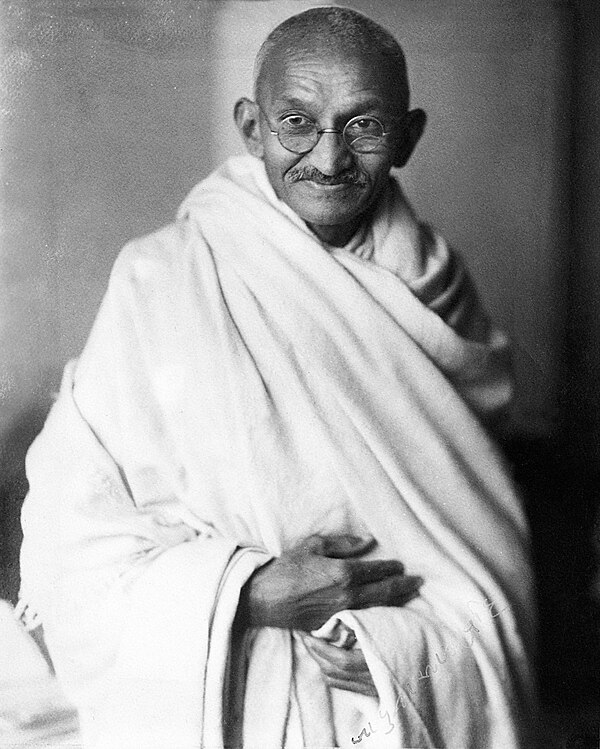
The Divine Beyond Boundaries
Mahatma Gandhi's assertion that "God has no religion" invites us to transcend the limitations imposed by organized belief systems and to recognize the universal essence of the divine. This statement challenges the often divisive nature of religious identities, urging us to see beyond the labels that separate us. In a world rife with conflict stemming from religious differences, Gandhi's words resonate deeply, reminding us that the divine is not confined to human constructs but is a vast, unifying force that connects all of humanity.
To understand the weight of Gandhi's declaration, we must consider the implications of a God unbound by religion. This perspective encourages a more profound exploration of spirituality, one that emphasizes the shared values of love, compassion, and unity found across various traditions. By recognizing that the divine transcends religious boundaries, we open ourselves to a more inclusive understanding of spirituality, fostering a sense of belonging that is rooted in our shared humanity rather than our differences.
The image / the metaphor
The imagery in Gandhi's quote evokes a sense of expansiveness, suggesting that the divine is not limited to the confines of any single doctrine or practice. The verb "has" implies possession, yet in this context, it is a possessive that is ultimately inadequate to describe the nature of God. The phrase "no religion" serves as a powerful negation, challenging the very structures that often define and confine our understanding of the divine. This creates a felt sense of liberation, inviting individuals to explore a more personal and direct relationship with the divine, free from the constraints of institutionalized beliefs.
Diving deeper into the metaphor, we can see that Gandhi's assertion is not merely a rejection of organized religion but an invitation to embrace a more profound spiritual truth. It suggests that the divine essence is akin to an ocean, vast and deep, while religions are like rivers that flow into it. Each river may have its own path and characteristics, but ultimately, they all contribute to the same ocean. This metaphor encourages us to appreciate the diversity of spiritual expressions while recognizing the underlying unity that connects them all.
In the speaker's tradition
Gandhi's perspective can also be illuminated through the lens of the Bhagavad Gita, a foundational text in Hindu philosophy. In this scripture, Lord Krishna speaks of the eternal nature of the soul, which transcends the temporary identities we often cling to. The Gita teaches that true wisdom lies in recognizing the unity of all beings, a sentiment echoed in Gandhi's assertion that God exists beyond the confines of religion. This alignment with the Gita underscores the timeless nature of Gandhi's message, inviting us to seek the divine in the shared essence of humanity.
Living the teaching
In our contemporary world, the teaching that "God has no religion" can manifest in various ways, particularly in interfaith dialogues and community initiatives that seek to bridge divides. For instance, consider a community project that brings together individuals from different religious backgrounds to address a common social issue, such as poverty or environmental sustainability. In such settings, participants often discover shared values and goals that transcend their differing beliefs, fostering a sense of unity and cooperation. This practical application of Gandhi's teaching illustrates how recognizing the divine beyond religious boundaries can lead to meaningful collaboration and understanding.
Another poignant application of this teaching can be found in personal relationships, particularly during moments of conflict or misunderstanding. When faced with a disagreement rooted in differing beliefs, one might reflect on Gandhi's assertion to seek common ground rather than focusing on divisive differences. By approaching the situation with an open heart and a willingness to understand the other person's perspective, individuals can cultivate compassion and empathy, allowing the divine essence within each person to shine through. This practice not only strengthens relationships but also deepens one's spiritual journey by embracing the interconnectedness of all beings.
A reflection
As we contemplate Gandhi's profound assertion that "God has no religion," we are invited to reflect on our own beliefs and the ways they may both unite and divide us. In what ways can we let go of rigid identities and embrace a more expansive understanding of the divine? How might this shift in perspective transform our relationships with others and our approach to spirituality? These questions encourage us to explore the depths of our own beliefs while remaining open to the rich tapestry of human experience that connects us all.


