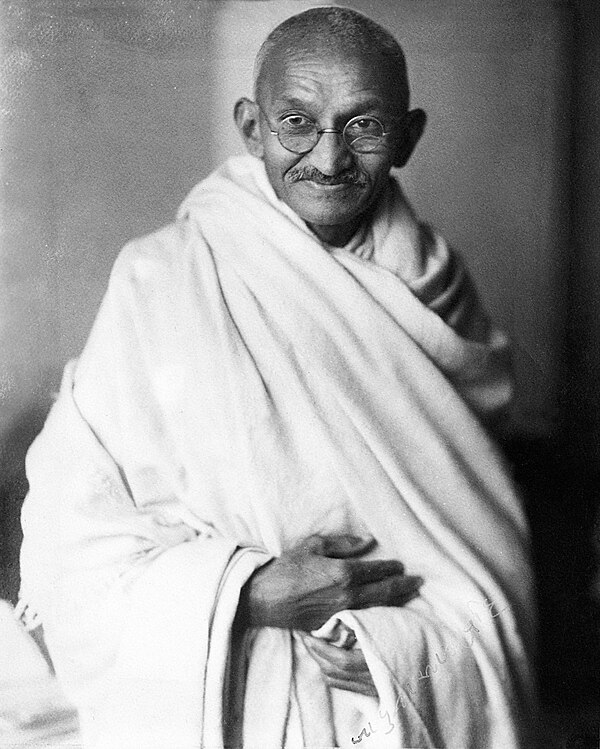
The Heart of Service: Gandhi's Call to Humility
Mahatma Gandhi's assertion, "I have been a servant of others all my life. I would have it no other way," encapsulates a profound commitment to selfless service. This statement is not merely a reflection of his personal ethos but a clarion call to humanity, urging us to embrace the transformative power of serving others. In a world often dominated by self-interest and individualism, Gandhi's words remind us of the deeper fulfillment that arises from humility and altruism.
To understand the weight of Gandhi's declaration, we must consider the cultural and spiritual context in which he lived. His life was a testament to the belief that true strength lies in vulnerability and that the act of serving others is a pathway to personal and collective liberation. By positioning himself as a servant, Gandhi invites us to reconsider our roles in society and challenges us to find meaning through our connections with others.
The image / the metaphor
The imagery in Gandhi's quote evokes a sense of devotion and dedication. The term "servant" conjures up a picture of someone who willingly places the needs of others above their own, embodying a spirit of humility. The phrase "all my life" suggests a lifelong commitment, indicating that this is not a fleeting sentiment but a foundational aspect of his identity. The verbs chosen here—"have been" and "would have it"—imply a deep-rooted sense of purpose, as if serving others is not just an action but a way of being.
Diving deeper into the metaphor, we see that Gandhi's notion of servitude transcends mere obligation; it becomes a sacred practice. This service is not about subjugation or loss of self but rather about the realization that our true selves are intertwined with the well-being of others. In this light, being a servant transforms into an act of love, where the boundaries of self and other dissolve, revealing a shared humanity that binds us all.
In the speaker's tradition
Moreover, Gandhi's philosophy can be likened to the concept of kenosis found in Christian mysticism, which speaks to the idea of self-emptying for the sake of others. This parallel highlights a universal truth across spiritual traditions: that the act of serving others is a pathway to spiritual growth and enlightenment. In his writings, Gandhi often referenced the Bhagavad Gita, where the idea of selfless action (karma yoga) is central, reinforcing the notion that one’s actions should be performed without attachment to the fruits of those actions.
Living the teaching
In contemporary life, Gandhi's teaching on service can manifest in various ways, particularly in community engagement. Imagine a local volunteer who dedicates their weekends to helping at a food bank. This individual embodies Gandhi's spirit, recognizing that their time and effort contribute to the well-being of those in need. By stepping into the role of a servant, they not only uplift others but also enrich their own lives, finding purpose and connection in the process.
On a more personal level, consider the dynamics of a challenging relationship, perhaps with a family member or a close friend. In moments of conflict, embracing the mindset of a servant can transform the interaction. Instead of seeking to assert one's own needs or grievances, one might choose to listen deeply and offer support, thereby fostering healing and understanding. This practice of humility and service in our relationships can lead to profound shifts, nurturing a sense of compassion and unity.
A reflection
As we contemplate Gandhi's profound declaration, we are invited to reflect on our own lives and the roles we play within our communities and relationships. How can we embody the spirit of service in our daily actions? In what ways might we shift our focus from self-interest to the well-being of others? These questions challenge us to explore the depths of our humanity and the interconnectedness that binds us all.


