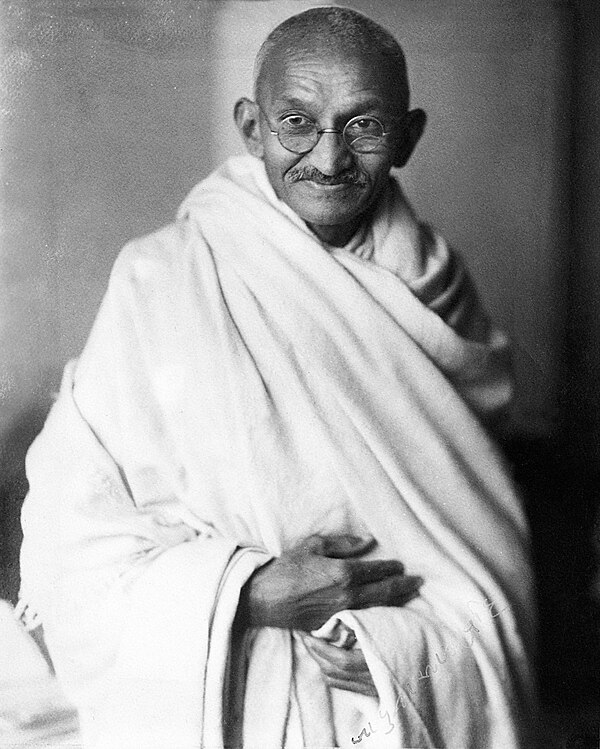
The Essence of Education: Beyond Literacy
Mahatma Gandhi's assertion that "literacy is not the end of education or even the beginning" invites us to reconsider the very foundations of what it means to be educated. He emphasizes that true education transcends mere reading and writing; it is an ongoing journey of self-discovery and personal growth. This perspective challenges us to reflect on the purpose of education in our lives and society, urging us to seek a more profound understanding of ourselves and the world around us.
In a world increasingly fixated on quantifiable achievements, Gandhi's words serve as a poignant reminder that education should be about the holistic development of the individual. He speaks to an "all-round drawing out of the best," suggesting that education is a nurturing process that cultivates our innate potential. This understanding of education as a transformative experience is essential in fostering wisdom, compassion, and a sense of interconnectedness in our communities.
The image / the metaphor
The imagery in Gandhi's quote evokes a sense of cultivation, akin to a gardener tending to a diverse array of plants. The verbs "drawing out" imply an active engagement, suggesting that education is not a passive acquisition of knowledge but rather a dynamic process of unveiling one's true self. This metaphor of nurturing resonates deeply, as it highlights the importance of creating an environment where individuals can flourish and thrive.
Diving deeper into this metaphor, we can envision education as a sacred space where the seeds of potential are sown and nurtured. Just as a gardener must understand the unique needs of each plant, educators must recognize the diverse gifts and challenges of each student. This understanding fosters a sense of belonging and encourages individuals to explore their passions, ultimately leading to a more enriched and fulfilling life.
In the speaker's tradition
Furthermore, the notion of prajna, or wisdom, aligns closely with Gandhi's vision of education. In the Bhagavad Gita, wisdom is portrayed as an essential quality for navigating the complexities of life. By fostering an environment that encourages the development of prajna, education becomes a transformative force that empowers individuals to make informed choices and act with integrity in their lives.
Living the teaching
Consider a modern scenario where Gandhi's teaching resonates profoundly: a classroom filled with students from diverse backgrounds. In such an environment, the focus on literacy alone may overlook the unique strengths and challenges each student brings. By embracing Gandhi's holistic approach to education, educators can create a space that values emotional intelligence, creativity, and collaboration, ultimately fostering a sense of community and belonging among students.
In personal relationships, this teaching can manifest in the way we engage with one another. For instance, during a conflict, rather than merely seeking to "win" the argument, we can approach the situation with the intention of drawing out the best in each other. This shift in perspective encourages empathy and understanding, transforming challenging moments into opportunities for growth and deeper connection.
A reflection
As we contemplate Gandhi's profound insight into the nature of education, we are invited to ask ourselves: How can I cultivate an environment in my life that draws out the best in myself and others? This question encourages us to reflect on our roles as learners and educators, urging us to embrace the transformative power of education in all its forms. By doing so, we can contribute to a more compassionate and enlightened world.


