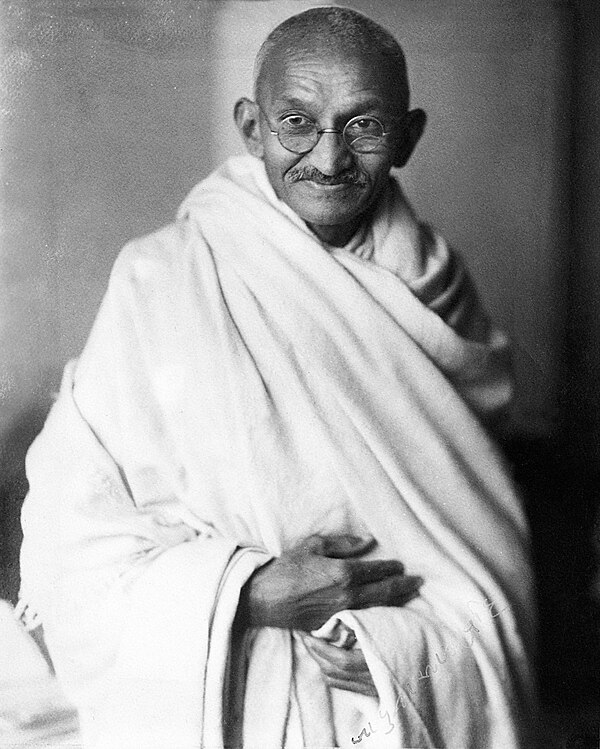
The Divine Dance of Truth and Nonviolence
Mahatma Gandhi's assertion that "My religion is based on truth and nonviolence. Truth is my god, nonviolence the means of realizing him" encapsulates a profound spiritual philosophy that transcends mere dogma. In this statement, Gandhi invites us to consider the essence of our beliefs and actions, urging a commitment to truth as the ultimate divine principle while positioning nonviolence as the pathway to its realization. This perspective is not only a personal creed but also a call to collective awakening, emphasizing that our spiritual journeys must be rooted in ethical conduct and compassionate engagement with the world.
In a world often fraught with conflict and division, Gandhi's words resonate with a timeless urgency. They challenge us to reflect on the nature of our convictions and the methods we employ to uphold them. The interplay between truth and nonviolence serves as a reminder that our pursuit of authenticity must be tempered with compassion, suggesting that the highest ideals of spirituality are realized not through force or coercion but through understanding and love. This dual commitment to truth and nonviolence invites us to explore the depths of our humanity and the interconnectedness of all beings.
The image / the metaphor
The imagery within Gandhi's quote is rich and evocative, presenting truth as a divine entity and nonviolence as the vehicle through which we can access this higher reality. The phrase "Truth is my god" elevates the concept of truth to a sacred status, suggesting that it is not merely an abstract principle but a living, breathing force that guides our lives. Meanwhile, the term "nonviolence" evokes a sense of gentle strength, a deliberate choice to engage with the world in a manner that fosters peace rather than discord. This juxtaposition of the divine and the practical invites a deeper contemplation of how we embody our beliefs in everyday life.
Diving deeper into the metaphor, we can see that Gandhi's formulation implies a dynamic relationship between truth and nonviolence. Truth, as the ultimate goal, requires a means of realization that is equally profound. Nonviolence, therefore, is not simply the absence of aggression; it is an active, intentional practice that nurtures understanding and compassion. This metaphorical dance between the two concepts suggests that our spiritual journeys are not linear but rather a continuous interplay of seeking, understanding, and embodying the truth through our actions.
In the speaker's tradition
Furthermore, Gandhi's approach can be compared to the concept of bhakti, or devotion, which emphasizes a loving relationship with the divine. In this context, truth becomes an object of devotion, and nonviolence serves as the expression of that devotion in the world. The Bhagavad Gita, a seminal text in Hindu philosophy, echoes this sentiment by illustrating the importance of aligning one's actions with a higher moral order. In this way, Gandhi's teachings resonate with the timeless wisdom found in Hindu scriptures, inviting us to engage in a path of devotion that is both truthful and compassionate.
Living the teaching
In contemporary society, the application of Gandhi's teachings on truth and nonviolence can be seen in various social movements advocating for justice and equality. For instance, consider the ongoing struggles for civil rights, where activists embody the principles of nonviolence in their pursuit of truth and justice. These movements often emphasize dialogue, understanding, and peaceful protest as means to challenge systemic injustices. By adhering to Gandhi's philosophy, these activists not only seek to reveal the truth of their circumstances but also strive to do so in a manner that honors the dignity of all involved, fostering a more compassionate society.
On a more personal level, the teachings of truth and nonviolence can be applied in our relationships and daily interactions. Imagine a moment of conflict with a loved one, where emotions run high, and misunderstandings abound. In such instances, choosing to respond with nonviolence—through active listening, empathy, and open communication—can pave the way for deeper understanding and reconciliation. By prioritizing truth and nonviolence in our personal lives, we cultivate a space for healing and connection, embodying Gandhi's vision in the intimate fabric of our everyday experiences.
A reflection
As we contemplate Gandhi's profound words, we are invited to reflect on our own relationship with truth and nonviolence. How do we embody these principles in our lives, both in our personal interactions and in our broader engagements with society? In what ways can we deepen our commitment to truth while ensuring that our actions remain rooted in compassion? This inquiry not only challenges us to examine our beliefs but also encourages us to cultivate a more harmonious existence, both within ourselves and in our communities.


