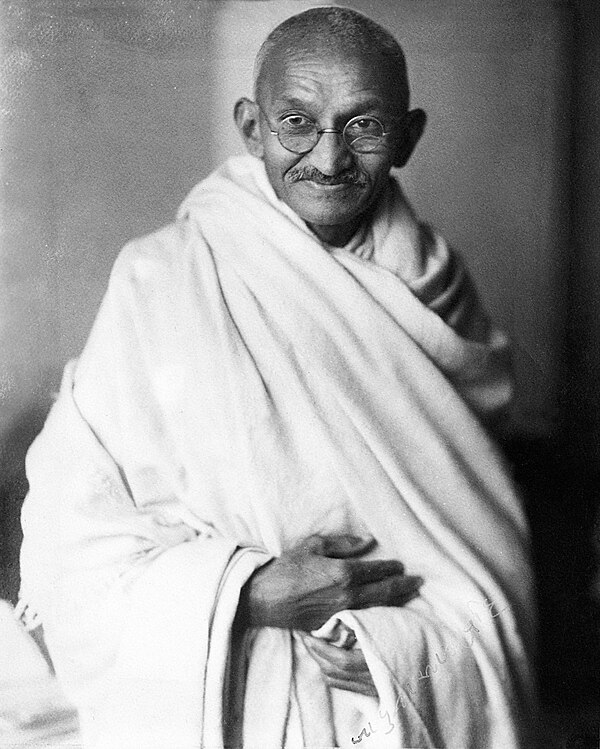
The True Currency of the Heart
Mahatma Gandhi's assertion that "real wealth is not gold, but the love that we share through our service to others" invites us to reconsider our understanding of wealth itself. In a world often driven by material accumulation, this quote challenges us to recognize that the deepest fulfillment comes not from possessions, but from the connections we forge through acts of kindness and service. The stakes are high: embracing this perspective can transform our lives and the lives of those around us, fostering a sense of community and purpose that transcends the superficial allure of material riches.
Gandhi's words resonate deeply within the fabric of human experience, suggesting that love and service are the true measures of our existence. This perspective encourages us to cultivate relationships and engage in acts of compassion, positioning love as a vital force that enriches our lives and the lives of others. By prioritizing service over self-interest, we not only enhance our own well-being but also contribute to a collective sense of belonging and interconnectedness that is essential for a harmonious society.
The image / the metaphor
The imagery in Gandhi's quote evokes a stark contrast between the glittering allure of gold and the warm, nurturing essence of love. Gold, often seen as the ultimate symbol of wealth, represents materialism and the pursuit of individual gain. In contrast, love is portrayed as an intangible yet profoundly enriching force, one that flourishes through selfless acts of service. The verbs "share" and "serve" emphasize action and reciprocity, suggesting that true wealth is not hoarded but generously distributed among others.
Diving deeper into the metaphor, we see that love, unlike gold, cannot be quantified or stored away. It is a living energy that grows when given away, creating a cycle of giving and receiving that enriches both the giver and the receiver. This perspective invites us to view our lives as interconnected, where our acts of service become the threads that weave a tapestry of community and compassion. In this light, wealth transforms from a solitary pursuit into a shared journey, where the richness of our lives is measured by the love we cultivate and the lives we touch.
In the speaker's tradition
Furthermore, Gandhi's emphasis on service resonates with the concept of kenosis, or self-emptying, found in various spiritual traditions. This idea encourages individuals to let go of their ego-driven desires in favor of serving others, thus embodying the essence of love that Gandhi champions. In the context of his life and teachings, we see a profound commitment to nonviolent resistance and social justice, illustrating how love and service can become powerful tools for transformation in both personal and societal realms.
Living the teaching
In our modern world, the teaching of Gandhi can be applied in numerous concrete scenarios. Consider a community volunteer program where individuals come together to support those in need, such as a food bank or a shelter. Here, participants experience firsthand the joy and fulfillment that arises from serving others, reinforcing the idea that true wealth lies in the connections formed through acts of kindness. This shared experience not only alleviates immediate needs but also fosters a sense of belonging and purpose among volunteers, illustrating the transformative power of love in action.
Another application of this teaching can be found in personal relationships, particularly during challenging moments. Imagine a situation where a friend is going through a difficult time; instead of focusing on our own discomfort, we can choose to offer our support and presence. This act of service, rooted in love, not only strengthens the bond between friends but also enriches our own lives, reminding us that our true wealth is found in the love we give and receive. By integrating this perspective into our daily practices, we cultivate a life that reflects Gandhi's vision of wealth as love.
A reflection
As we contemplate Gandhi's profound assertion, we are invited to reflect on our own lives and the ways in which we measure wealth. Are we prioritizing material possessions, or are we nurturing the relationships and acts of service that truly enrich our existence? In this spirit, consider this contemplative question: How can you embody the principle of love as wealth in your daily interactions and choices? By exploring this question, we open ourselves to a deeper understanding of what it means to live a life rich in love and service.


