The Transformative Power of Love in Confrontation
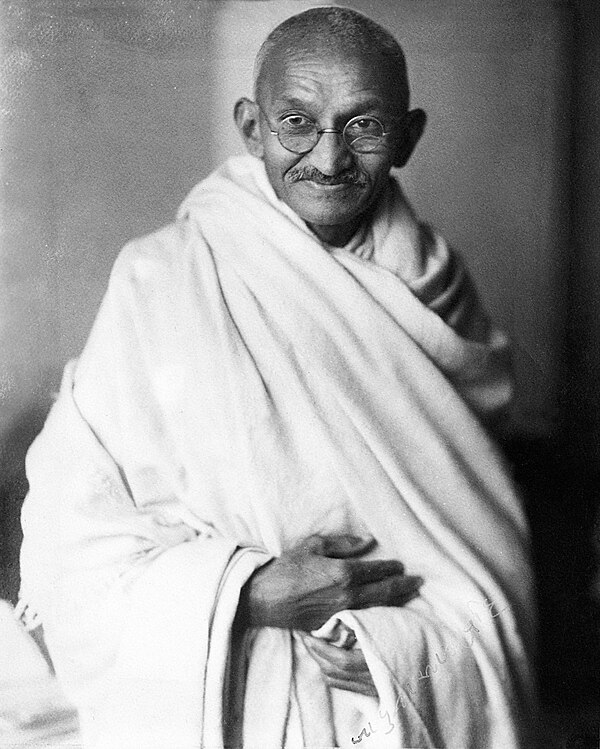
Mahatma Gandhi's assertion, "Whenever you are confronted with an opponent, conquer him with love," invites us to reconsider our responses to conflict and opposition. In a world often dominated by strife and division, this quote serves as a profound reminder of the potential for love to transcend animosity. Gandhi's wisdom urges us to approach our adversaries not with hostility, but with compassion and understanding, suggesting that true strength lies in the ability to love even those who oppose us.
This teaching is particularly significant in our contemporary context, where polarization and conflict seem to be the norm. Gandhi's perspective challenges us to cultivate a mindset that prioritizes love over aggression, urging us to see our opponents as fellow human beings deserving of empathy. By embracing this approach, we not only transform our interactions but also contribute to a broader culture of peace and reconciliation, demonstrating that love can indeed conquer even the deepest divides.
The image / the metaphor
The imagery within Gandhi's quote is rich and evocative, presenting love as a formidable force capable of overcoming opposition. The verb "conquer" suggests an active engagement, a deliberate choice to rise above the instinct to retaliate or defend oneself aggressively. This choice to respond with love implies a deep well of inner strength and resilience, as it requires us to transcend our immediate emotional reactions and engage with a higher purpose.
In the speaker's tradition
Gandhi's teaching is deeply rooted in the Hindu tradition, where concepts such as ahimsa (nonviolence) and bhakti (devotion) play pivotal roles. Ahimsa, in particular, emphasizes the importance of non-harm and compassion towards all living beings, aligning seamlessly with the idea of conquering with love. This approach reflects a profound understanding of dharma, the moral order that governs individual conduct and societal harmony, suggesting that love is an essential component of righteous action.
In the Bhagavad Gita, a foundational text of Hindu philosophy, we find echoes of Gandhi's sentiment in the teachings of Krishna, who advocates for selfless action and devotion. The Gita emphasizes that true strength lies not in physical power or dominance but in the ability to act with love and compassion, even in the face of adversity. This alignment with the Gita underscores the timeless nature of Gandhi's message, illustrating that the path of love is both a spiritual and ethical imperative.
Living the teaching
Consider a modern scenario where this teaching can be applied: a heated discussion in a workplace where colleagues hold opposing views on a project. Instead of allowing the conversation to devolve into conflict, one might choose to listen actively and respond with empathy, seeking to understand the underlying concerns of the other party. By approaching the situation with love and respect, the dialogue can shift from confrontation to collaboration, fostering a more harmonious and productive environment.
In personal relationships, the application of Gandhi's teaching can be equally transformative. Imagine a moment of tension with a loved one, where misunderstandings have led to hurt feelings. By consciously choosing to respond with love—perhaps through a heartfelt apology or an open conversation—one can break the cycle of resentment and pave the way for healing. This practice of loving confrontation not only strengthens bonds but also cultivates a deeper sense of connection and understanding.
A reflection
As we reflect on Gandhi's profound words, we are invited to consider how we might embody this teaching in our own lives. What would it look like to approach our opponents—not with anger or disdain, but with love and compassion? In moments of conflict, how can we remind ourselves of our shared humanity and choose to respond from a place of love? These contemplative questions challenge us to explore the depths of our capacity for love, urging us to transform not only our interactions but also our inner landscapes.


