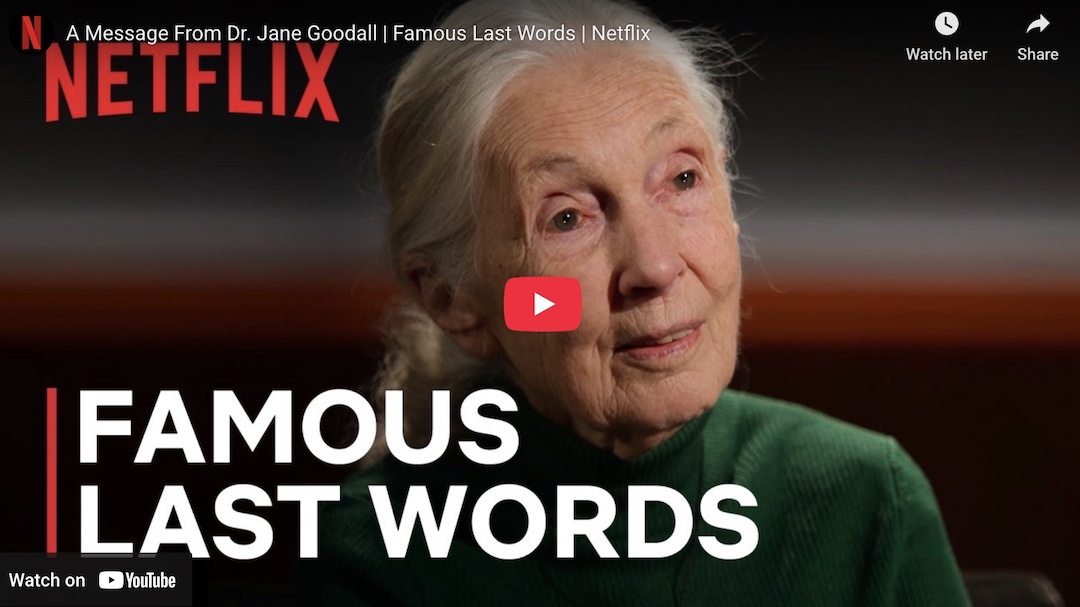
Jane Goodall's assertion that "Hope must lead to action. Without action, hope is empty" serves as a poignant reminder of the intrinsic relationship between our aspirations and our efforts. In a world often overshadowed by despair and environmental degradation, this quote challenges us to recognize that hope is not merely a passive sentiment but a call to engage actively with the world around us. The stakes are high; without the courage to act, our hopes remain mere illusions, disconnected from the tangible realities we wish to transform.
Goodall's words resonate deeply in a time when many feel overwhelmed by the enormity of global challenges, from climate change to social injustice. This quote invites us to reflect on the nature of hope itself—how it can inspire us to take meaningful steps toward change, yet also how it can become a hollow promise if not accompanied by deliberate action. In this light, hope becomes a dynamic force, urging us to embody our values through our choices and behaviors, thus bridging the gap between intention and impact.
The image / the metaphor
The imagery in Goodall's quote evokes a sense of urgency and responsibility. The word "hope" conjures visions of light and possibility, while "action" suggests movement, dynamism, and the necessity of engagement. By stating that hope must lead to action, Goodall emphasizes that hope is not a passive state of mind but a catalyst for change. The verbs chosen—"lead" and "empty"—imply a journey and a consequence, respectively, underscoring that without the momentum of action, hope risks becoming a mere shadow of what it could be.
Diving deeper into the metaphor, we can see that hope is akin to a seed, full of potential yet requiring the nurturing soil of action to flourish. Just as a seed cannot grow without water and sunlight, hope cannot manifest into reality without the commitment to act. This interplay between hope and action reflects the interconnectedness of our intentions and the world we inhabit, suggesting that our aspirations are only as powerful as the steps we take to realize them.
In the speaker's tradition
Jane Goodall's work is deeply rooted in the contemplative-ecology tradition, which emphasizes the interconnectedness of all living beings and the moral responsibility we hold toward the Earth. Concepts such as dharma, which refers to one's duty or path, resonate with Goodall's call for action. In this context, hope becomes a form of dharma—an ethical imperative that compels us to act in ways that honor our shared existence and the fragile ecosystems we inhabit. The idea of kenosis, or self-emptying, also parallels Goodall's message, as it invites us to relinquish our self-centered desires in favor of collective well-being.
In her book, "The Book of Hope," Goodall draws upon her experiences and observations of the natural world to illustrate how hope can be a powerful motivator for action. She often references the resilience of nature and the capacity for regeneration, echoing the Buddhist concept of sunyata, or emptiness, which teaches that our actions can create profound change. By aligning our hopes with purposeful actions, we can cultivate a sense of agency that not only transforms our lives but also contributes to the healing of our planet.
Living the teaching
Consider a modern scenario where Goodall's teaching finds relevance: the global movement for climate action. Many individuals and organizations express hope for a sustainable future, yet this hope must translate into concrete actions—such as reducing carbon footprints, advocating for policy changes, or engaging in community initiatives. The collective efforts of millions, fueled by hope, have the potential to influence systemic change, demonstrating that when hope is paired with action, it can lead to tangible results.
On a more personal level, this teaching can manifest in our relationships. For instance, when we hope for deeper connections with loved ones, that hope must inspire us to engage actively—through open communication, acts of kindness, and shared experiences. In moments of conflict or misunderstanding, it is easy to feel hopeless; yet, by choosing to act with empathy and understanding, we breathe life into our hopes for harmony and connection. This practice of translating hope into action can transform not only our relationships but also our inner landscapes, fostering a sense of agency and purpose.
A reflection
As we contemplate Goodall's profound insight, we are invited to reflect on the nature of our own hopes. What aspirations do we hold dear, and how might we translate them into meaningful actions? In a world that often feels paralyzed by challenges, let us ask ourselves: How can we embody our hopes through deliberate choices and actions that contribute to the greater good? This question not only challenges us to take responsibility for our dreams but also encourages us to engage with the world in a way that honors the interconnectedness of all life.