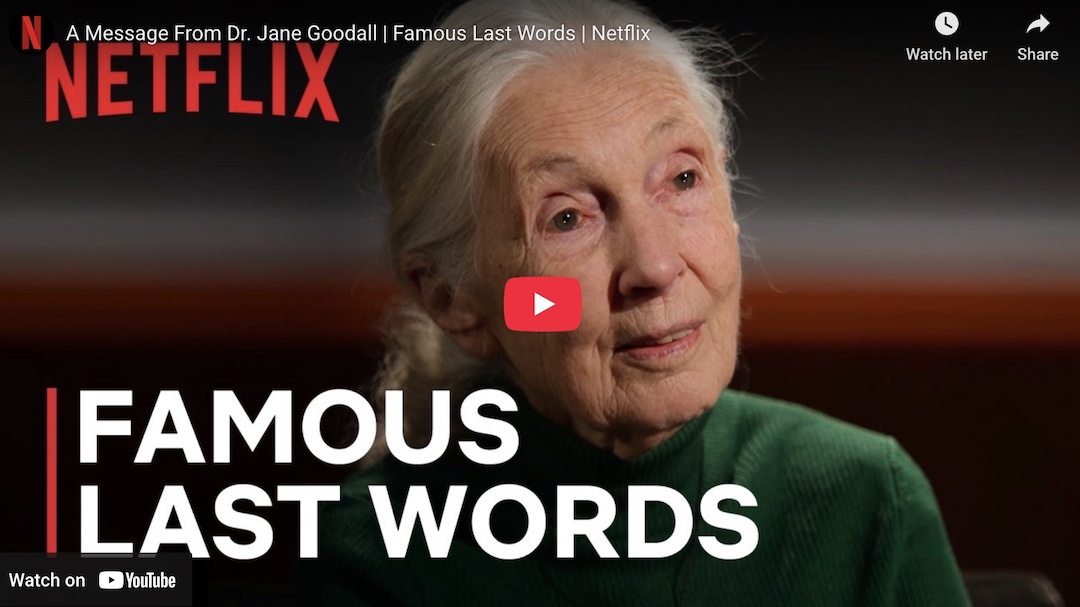
Jane Goodall's poignant assertion, "The least I can do is speak out for those who cannot speak for themselves," serves as a clarion call for compassion and advocacy. In a world often characterized by the silencing of marginalized voices—whether they belong to the voiceless animals of the earth or the disenfranchised members of society—this quote reminds us of our moral obligation to act. It underscores the importance of using our own voices to advocate for those who lack the power to advocate for themselves, illuminating the interconnectedness of all beings and the responsibility that comes with it.
Goodall's words resonate deeply within the framework of contemplative ecology, where the relationship between humanity and the natural world is viewed through a lens of empathy and stewardship. This perspective invites us to reflect on our role as caretakers of the planet and its inhabitants. By acknowledging the plight of those who cannot speak, we not only affirm their existence but also recognize our shared responsibility to protect and nurture the delicate web of life that sustains us all.
The image / the metaphor
The imagery in Goodall's quote evokes a profound sense of responsibility. The phrase "speak out" suggests an active engagement, a deliberate choice to raise one's voice in defense of the vulnerable. The verbs chosen—"speak" and "cannot"—highlight the disparity between those who have a platform and those who do not. This stark contrast invites us to consider the weight of silence and the power of advocacy, urging us to break the chains of oppression that silence the cries of the innocent.
Diving deeper into the metaphor, we can see that "speaking out" transcends mere vocalization; it embodies a commitment to justice and compassion. It calls us to be the voice for the voiceless, to embody the essence of empathy in our actions. This metaphorical act of speaking becomes a bridge, connecting us to the experiences of others and fostering a sense of unity in our shared humanity. In this light, Goodall's words become a reminder that our voices can be instruments of change, capable of resonating through the corridors of power and influence.
In the speaker's tradition
Jane Goodall's work is deeply rooted in the tradition of contemplative ecology, which emphasizes the interconnectedness of all life forms. This perspective aligns with concepts such as dharma, which speaks to our duty to act in accordance with the greater good, and kenosis, the act of self-emptying to make space for others. Goodall's advocacy for animals and the environment reflects a profound understanding of sunyata, or emptiness, wherein the recognition of our shared existence compels us to act with compassion and integrity.
In her book "Reason for Hope," Goodall draws upon her experiences with chimpanzees to illustrate the emotional and social complexities of non-human beings. This aligns with the Buddhist notion of prajna, or wisdom, which encourages us to see beyond the surface and recognize the intrinsic value of all life. By advocating for those who cannot advocate for themselves, Goodall embodies the essence of bhakti, a devotion that transcends self-interest and seeks the welfare of all beings.
Living the teaching
In contemporary society, the call to speak for the voiceless can be seen in various movements advocating for animal rights, environmental protection, and social justice. For instance, consider the plight of endangered species facing habitat destruction. Activists and organizations work tirelessly to raise awareness and implement conservation efforts, embodying Goodall's teaching by using their voices to advocate for those who cannot speak for themselves. This modern scenario illustrates the profound impact that collective advocacy can have on the preservation of life and the health of our planet.
On a more personal level, the teaching can manifest in our daily interactions and relationships. Imagine a situation where a friend is struggling but feels unable to express their pain. By actively listening and offering support, we become a voice for their unspoken struggles, validating their experiences and encouraging them to share their truth. This practice of compassionate listening not only strengthens our relationships but also fosters a culture of empathy and understanding, reminding us that every voice matters, even when it is not heard.
A reflection
As we reflect on Goodall's powerful quote, we are invited to consider our own roles as advocates in a world that often silences the vulnerable. What does it mean for us to speak out for those who cannot speak for themselves? In what ways can we amplify the voices of the marginalized in our communities and beyond? These contemplative questions encourage us to engage deeply with our responsibilities, challenging us to embody compassion and advocacy in our daily lives.