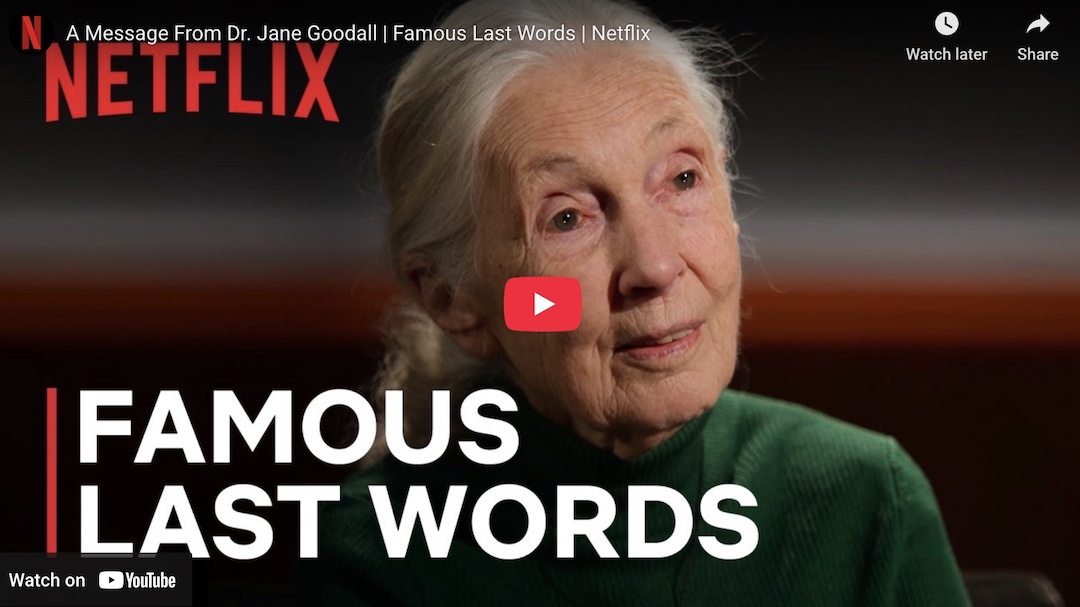
Jane Goodall's assertion that "the truth is, you cannot have any healthy ecosystem without all the parts. Each species plays a role" invites us to reflect on the intricate web of life that sustains our planet. This statement transcends mere ecological observation; it speaks to the essence of interdependence that governs not only the natural world but also our human relationships and communities. Understanding this interconnectedness is crucial, especially in an age where environmental degradation and species extinction threaten the delicate balance of our ecosystems.
In a broader sense, Goodall's words challenge us to reconsider our place within the tapestry of life. Each species, from the smallest microorganism to the largest mammal, contributes to the health of the ecosystem, just as each individual plays a role in the collective human experience. This perspective encourages a shift from viewing ourselves as separate entities to recognizing our shared responsibility for the well-being of all life forms. It is a call to cultivate awareness and compassion, not only for our fellow humans but for every being that shares this planet.
The image / the metaphor
The imagery in Goodall's quote evokes a vibrant, dynamic ecosystem, where each species is a thread in the intricate fabric of life. The verbs "have" and "play" suggest active participation and essential contribution, emphasizing that no part is superfluous. This notion of roles within an ecosystem resonates deeply, as it illustrates a harmonious interplay where the absence of one species can lead to unforeseen consequences, much like a missing note in a symphony. The felt sense of this interconnectedness is palpable; it invites us to visualize a thriving environment where every creature, no matter how small, is vital to the whole.
Diving deeper into the metaphor, we can see that Goodall's assertion extends beyond ecological boundaries into the realm of human existence. Just as each species fulfills a unique function within its habitat, individuals within a community bring diverse strengths and perspectives that enrich the collective experience. This metaphor of interdependence serves as a reminder that our actions, whether positive or negative, reverberate throughout the ecosystem of life. It challenges us to consider how we can contribute to the health of our communities and the world at large.
In the speaker's tradition
Jane Goodall's work is rooted in the contemplative-ecology tradition, which emphasizes the profound connections between all living beings. This perspective aligns with concepts such as dharma, which refers to the inherent duty or role each being has in the universe. In this context, Goodall's assertion resonates with the idea of kenosis, or self-emptying, where individuals recognize their place within the larger whole and act with humility and responsibility. The interconnectedness she speaks of echoes the Buddhist concept of sunyata, or emptiness, which teaches that nothing exists in isolation; everything is interrelated and interdependent.
In her book "Seeds of Hope," Goodall draws parallels between the health of ecosystems and the well-being of humanity, suggesting that our survival is intricately linked to the survival of other species. This idea is reminiscent of the ecological wisdom found in indigenous traditions, which often emphasize living in harmony with nature. Just as the interconnectedness of species is vital for ecological balance, so too is the recognition of our shared humanity essential for social harmony. Goodall's insights invite us to reflect on how we can embody these principles in our daily lives.
Living the teaching
Consider a modern scenario where this teaching resonates: a community garden initiative. In such a project, individuals from diverse backgrounds come together to cultivate plants, share knowledge, and foster relationships. Each participant brings unique skills and perspectives, contributing to the overall health of the garden and the community. This collaborative effort exemplifies Goodall's assertion that every role is essential; without the contributions of each person, the garden would not thrive. It serves as a microcosm of the larger ecosystem, illustrating how interdependence can lead to flourishing environments.
Another application of this teaching can be found in personal relationships, particularly during challenging moments. When conflicts arise, it is easy to focus on individual grievances and lose sight of the interconnectedness that binds us. By recognizing that each person plays a role in the relationship dynamic, we can approach conflicts with empathy and understanding. This perspective encourages us to listen deeply and seek common ground, fostering healing and growth. In daily practice, this might involve setting aside time for reflection, allowing us to consider how our actions impact others and the broader community.
A reflection
As we contemplate Goodall's profound statement, we are invited to ask ourselves: How do I recognize and honor the roles of others in my life and the world around me? This question encourages a deeper exploration of our interconnectedness and the ways in which we can contribute to the health of our ecosystems—both natural and social. By reflecting on our relationships and responsibilities, we can cultivate a sense of stewardship that honors the intricate web of life we are all a part of.