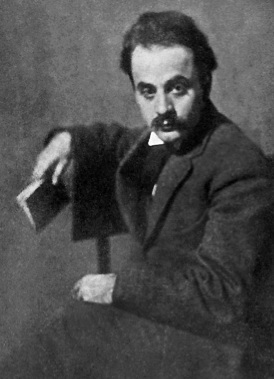
Kahlil Gibran's poignant assertion, "The most pitiful among men is he who turns his dreams into silver and gold," invites us to reflect on the profound dissonance between material wealth and the richness of our inner lives. In this statement, Gibran warns against the peril of prioritizing financial gain over the pursuit of our deepest aspirations and dreams. This sentiment resonates deeply in a world often obsessed with material success, urging us to reconsider what truly constitutes a fulfilling life.
At its core, Gibran's quote challenges us to examine the values we hold dear and the paths we choose to pursue. It serves as a reminder that the essence of our dreams lies not in their commodification but in their ability to inspire and elevate our spirits. By equating dreams with mere currency, we risk losing sight of their transformative power, ultimately leading to a life devoid of meaning and authenticity.
The image / the metaphor
The imagery in Gibran's quote evokes a stark contrast between the ethereal nature of dreams and the cold, hard reality of silver and gold. The verbs "turns" and "is" suggest a transformation that is both tragic and limiting; dreams, which are inherently expansive and liberating, become confined within the narrow boundaries of materialism. This metaphor paints a vivid picture of a soul shackled by the weight of wealth, unable to soar toward the heights of its true potential.
Diving deeper into this metaphor, we can see that Gibran is not merely critiquing the act of accumulating wealth but is also highlighting the loss of vision that accompanies such a transformation. The act of turning dreams into gold implies a sacrifice of creativity, passion, and purpose for the sake of financial security. In this light, Gibran's words serve as a cautionary tale, urging us to nurture our dreams rather than allow them to be diminished by the allure of material gain.
In the speaker's tradition
Kahlil Gibran, a luminary of Christian mysticism, draws upon themes that resonate with the spiritual traditions of selflessness and the pursuit of higher truths. Concepts such as kenosis—the idea of self-emptying for the sake of others—echo throughout his work, suggesting that true fulfillment arises not from accumulation but from giving oneself to the world. In this context, Gibran's warning against the commodification of dreams aligns with the mystical understanding that our true purpose transcends material wealth.
Moreover, Gibran's insights can be likened to the teachings found in the Gospel of Thomas, where the pursuit of spiritual wealth is emphasized over earthly possessions. In one of the sayings, it is stated, "Where your treasure is, there your heart will be also." This parallel reinforces Gibran's message, urging us to invest our hearts in the pursuit of dreams that elevate our spirits rather than those that merely fill our pockets.
Living the teaching
Consider a modern scenario where an individual, driven by societal expectations, chooses a career path solely for financial gain. This person may find themselves trapped in a cycle of dissatisfaction, feeling unfulfilled despite their material success. Gibran's quote serves as a poignant reminder that true happiness lies not in the accumulation of wealth but in the pursuit of one's passions and dreams, which can lead to a more meaningful and authentic existence.
A reflection
As we contemplate Gibran's profound statement, we are invited to reflect on our own lives and the dreams we hold dear. Are we nurturing our aspirations, or have we allowed them to be overshadowed by the pursuit of material wealth? In this moment of introspection, consider this contemplative question: What dreams have you set aside in favor of financial security, and how might you begin to reclaim them in your life?
