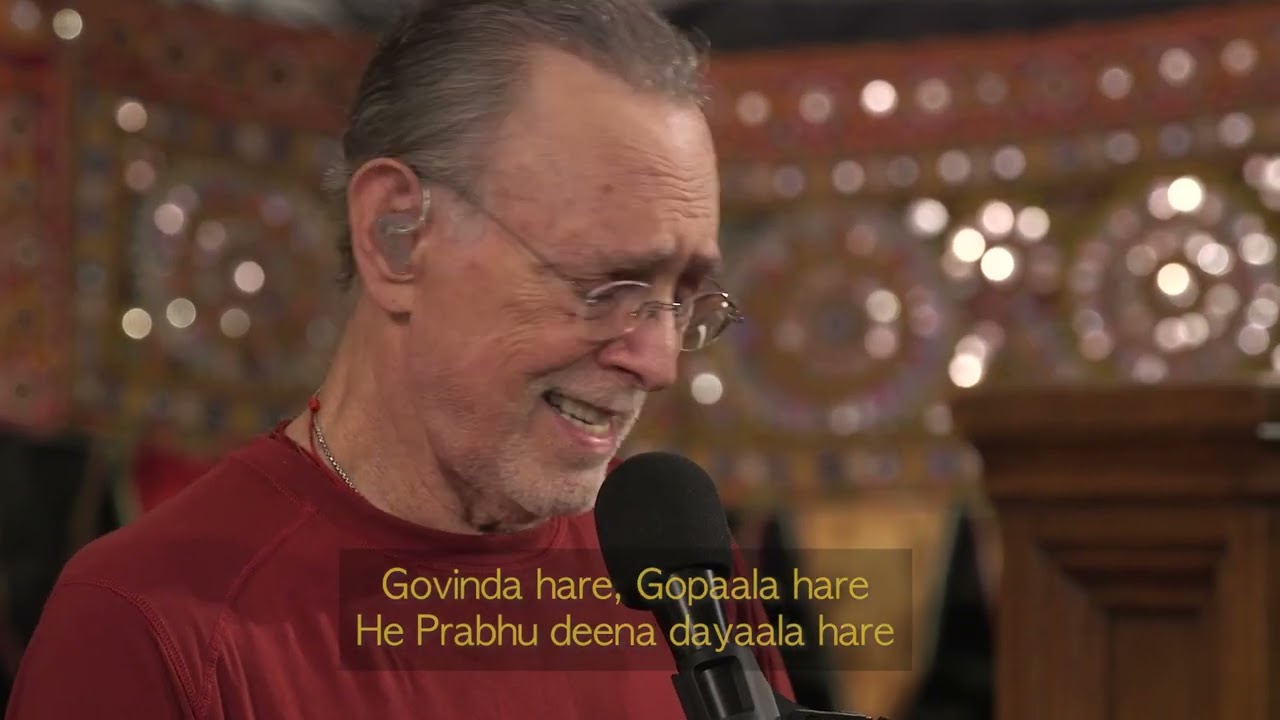
In the profound words of Krishna Das, "In the chanting, Maharaj-ji is the singer, the song, and the listener," we are invited to explore the intricate tapestry of existence where the act of chanting transcends mere sound. This statement encapsulates a deep spiritual truth: that in the practice of bhakti, the divine is not separate from the experience of devotion. The essence of this teaching lies in recognizing that the act of devotion is a holistic experience, where the devotee, the object of devotion, and the act itself merge into one unified expression of love and presence.
To delve deeper, we must consider the implications of this unity. In a world often marked by division and separation, the idea that the singer, the song, and the listener are one challenges our conventional understanding of identity and relationship. It suggests that in the act of chanting, we are not merely participants in a ritual; we become conduits of a greater reality, where the boundaries of self dissolve. This perspective invites us to experience life as an interconnected flow, where every note sung reverberates within the heart of the universe.
The image / the metaphor
The imagery in Krishna Das's quote is rich and evocative, painting a picture of a seamless experience in which the roles of singer, song, and listener are indistinguishable. The act of chanting becomes a dynamic interplay, where the vibrations of sound resonate not only in the air but also within the soul. The verbs chosen—singing, being, listening—suggest an active engagement with the divine, a dance of participation rather than passive observation. This metaphor of unity invites us to consider how we engage with our spiritual practices and the world around us.
Going deeper, the metaphor speaks to the essence of bhakti itself, which is rooted in love and devotion. In this context, the act of chanting is not merely a vocal exercise; it is an expression of the heart's longing for connection with the divine. The singer embodies the spirit of devotion, the song becomes a vehicle for that love, and the listener is transformed through the experience. This triad of interaction illustrates the profound truth that in the realm of spirituality, separation is an illusion, and true understanding arises from the recognition of our interconnectedness.
In the speaker's tradition
Krishna Das's teachings are deeply embedded in the tradition of bhakti, which emphasizes devotion as a path to spiritual realization. Central to this tradition is the concept of *fana*, or the annihilation of the self in the presence of the divine, where the individual ego dissolves into the greater whole. This aligns with the notion of *kenosis*, the self-emptying of one's own will to become a vessel for divine love. In bhakti, the act of chanting serves as a practice that facilitates this surrender, allowing practitioners to experience the unity of being that Krishna Das articulates.
A relevant text that echoes this sentiment is the *Bhagavad Gita*, where Lord Krishna speaks of the importance of devotion and surrender. In Chapter 9, Verse 22, Krishna assures that those who are devoted to Him will have their needs met, emphasizing the reciprocal relationship between the devotee and the divine. This passage reinforces the idea that in the act of devotion—much like the chanting described by Krishna Das—there is a profound exchange that transcends the individual, inviting us into a deeper relationship with the universe.
Living the teaching
Consider a modern scenario where this teaching can resonate: a group of friends gathers for a shared experience of chanting. As they come together, each person brings their own intentions, struggles, and joys. In this collective act, the boundaries between individual experiences begin to blur. The singer becomes a channel for the collective energy, the song reflects the shared heart of the group, and the listeners are transformed by the vibrations of love and connection. This moment illustrates how chanting can create a space where unity is felt, allowing participants to experience the divine presence in a tangible way.
Another application of this teaching can be found in the context of relationships. Imagine a couple navigating a difficult conversation. If they approach the dialogue with the understanding that they are both singers and listeners in the song of their relationship, they may find a deeper connection. By embodying the principles of bhakti, they can transcend the conflict, recognizing that their love is the song that binds them. In this way, the act of listening becomes a sacred practice, allowing each partner to feel seen and heard, ultimately leading to a harmonious resolution.
A reflection
As we contemplate the profound unity expressed in Krishna Das's quote, we are invited to ask ourselves: How can I embody the roles of singer, song, and listener in my own life? This question encourages us to reflect on our relationships, our spiritual practices, and our engagement with the world. By exploring this triad, we may discover new depths of connection and understanding, ultimately leading us to a more profound experience of unity in our daily lives.