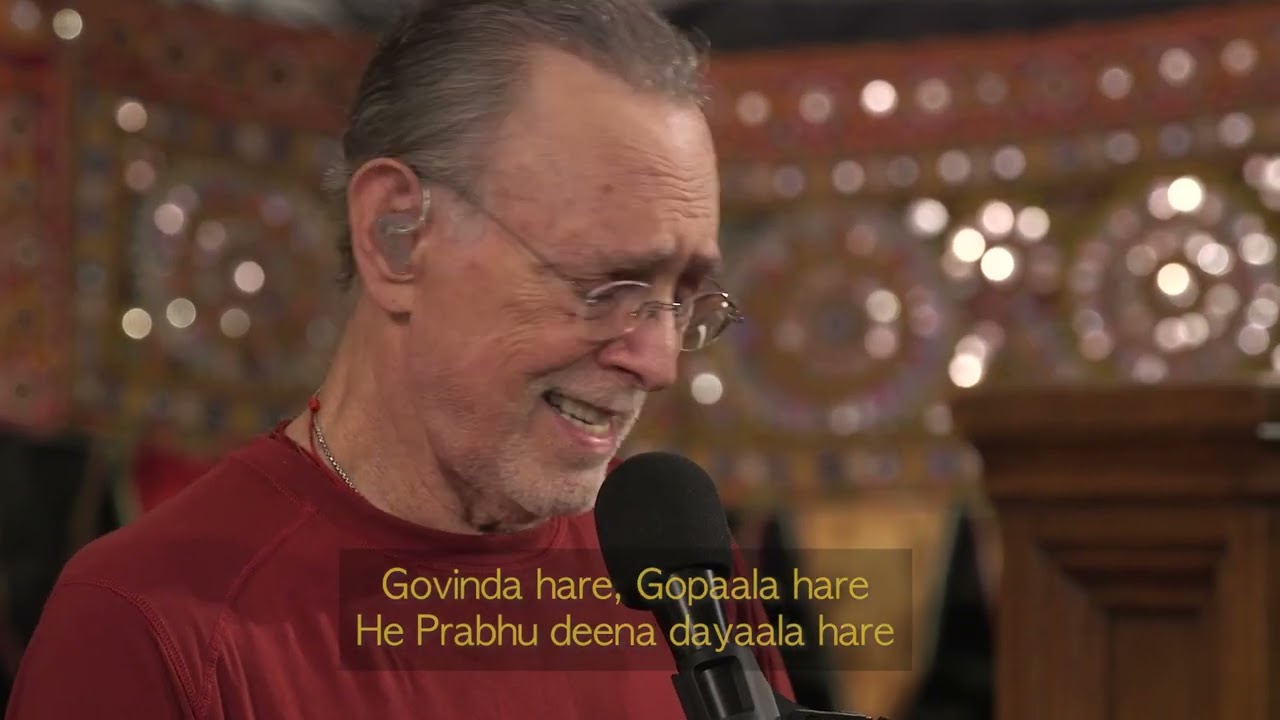
In the profound words of Krishna Das, "To love Maharaj-ji is to love everyone he loves." This statement invites us into a deeper understanding of love that transcends personal attachment and extends into a universal embrace. It suggests that the love we cultivate for a spiritual teacher, or any figure of deep reverence, can ripple outward, encompassing all beings. This notion is not merely a poetic sentiment; it is a call to action, urging us to recognize the interconnectedness of all life through the lens of love.
At its core, this quote challenges us to expand our definition of love. It implies that true devotion to a beloved figure, such as Maharaj-ji, is not confined to a singular relationship but rather serves as a gateway to a more expansive love. This love is inclusive, inviting us to see the divine in everyone and everything. In a world often marked by division and separation, Krishna Das's words resonate as a reminder of our shared humanity and the potential for love to heal and unite.
The image / the metaphor
The imagery in Krishna Das's quote evokes a sense of boundless affection and connection. The act of loving Maharaj-ji becomes a conduit through which we can access a more profound love for all beings. The verbs "to love" and "to love" create a cyclical relationship, suggesting that our devotion to one can naturally extend to many. This metaphor of love as a flowing river illustrates how our hearts can expand, carrying the essence of our devotion into the world.
Diving deeper into this metaphor, we can see that loving Maharaj-ji symbolizes a surrender to a higher love, one that transcends the ego and personal desires. It invites us to consider how our attachments can transform into a more universal compassion. The act of loving becomes a practice of kenosis, or self-emptying, where we let go of our limited perceptions and allow ourselves to be filled with the love that is inherent in all beings. This expansive love is not just an emotion; it is a state of being that invites us to recognize the divine spark within everyone.
In the speaker's tradition
Krishna Das, rooted in the bhakti tradition, embodies the essence of devotion that is central to this spiritual path. Bhakti, often translated as "devotion," emphasizes a personal relationship with the divine, characterized by love and surrender. This tradition teaches that through loving devotion, we can transcend the self and experience a profound connection with all of creation. Concepts such as dharma, or righteous duty, and prajna, or wisdom, intertwine with this love, guiding us toward a life that honors the interconnectedness of all beings.
In the context of bhakti, the teachings of saints like Ram Dass and Maharaj-ji emphasize the importance of seeing the divine in everyone. The Bhagavad Gita, a foundational text in this tradition, echoes this sentiment when it speaks of seeing all beings with an equal eye. In Chapter 5, Verse 18, it states, "The wise see with equal vision a learned and humble Brahmin, a cow, an elephant, a dog, and a dog-eater." This perspective aligns beautifully with Krishna Das's assertion, reinforcing the idea that love for one can lead to love for all.
Living the teaching
Imagine a scenario where you encounter someone whose views starkly contrast your own. In such moments, the teaching of loving Maharaj-ji as a pathway to loving everyone can serve as a transformative practice. Instead of reacting with frustration or judgment, you might pause and reflect on the shared humanity that connects you. By invoking the love you feel for Maharaj-ji, you can cultivate compassion for this person, recognizing that they, too, are deserving of love and understanding. This practice can shift the dynamic from conflict to connection, allowing love to bridge the gap between differences.
In a more intimate context, consider a relationship that has become strained. Perhaps a loved one is facing challenges that you find difficult to understand. By applying the teaching of loving Maharaj-ji, you can approach this relationship with a heart open to love. Instead of focusing on the frustrations or misunderstandings, you can draw upon the love you have for your spiritual teacher, allowing it to flow into your interactions. This can create a space for healing and reconciliation, reminding both you and your loved one of the inherent love that exists between you.
A reflection
As we contemplate the depth of Krishna Das's quote, we are invited to explore the question: How can I expand my capacity to love beyond my immediate circle? This inquiry challenges us to consider the barriers we erect around our hearts and encourages us to dismantle them. In doing so, we may discover that the love we cultivate for our spiritual teachers can indeed illuminate the path to loving all beings, fostering a world where compassion reigns supreme.