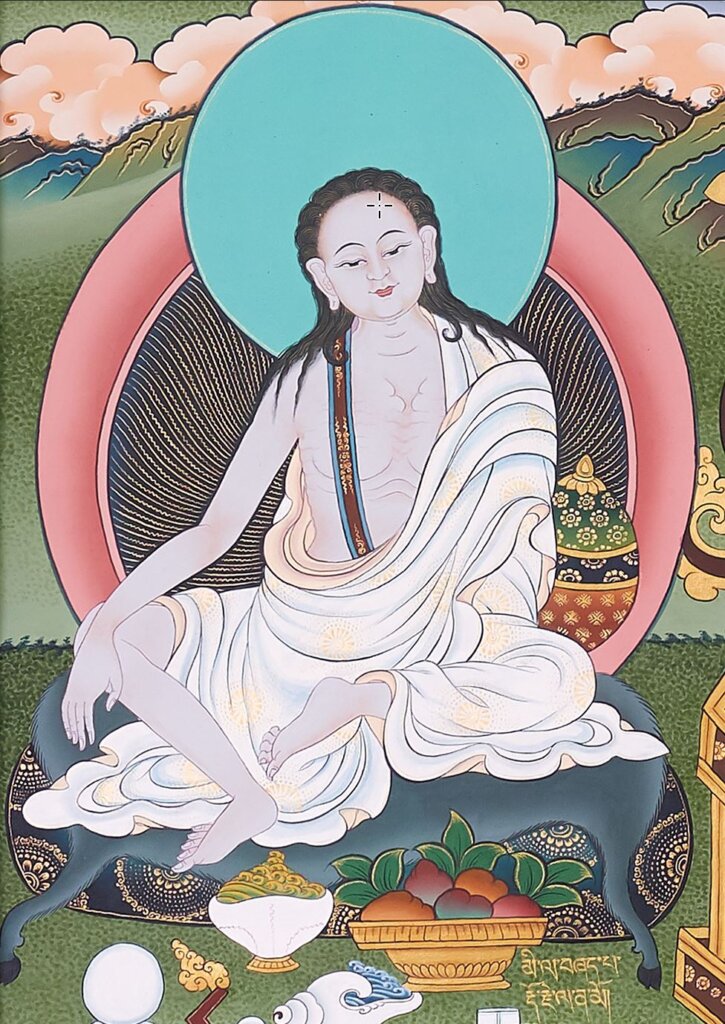
“Choose, then — moment by moment.” This profound statement by Milarepa invites us to reflect on the nature of choice and the significance of our decisions as they unfold in the present. It emphasizes the importance of being fully engaged in each moment, suggesting that our lives are shaped not by grand, sweeping decisions but by the small, often overlooked choices we make continuously. This perspective is vital in a world that often encourages us to rush through life, missing the subtle yet powerful opportunities for growth and transformation that each moment presents.
In a deeper sense, Milarepa’s words challenge us to cultivate mindfulness and awareness in our daily lives. They remind us that every moment is an invitation to choose consciously, to align our actions with our values, and to embrace the impermanence of existence. This teaching resonates with the core of Buddhist practice, where the present moment is seen as the only true reality. By choosing moment by moment, we engage in a practice of presence that can lead to profound insights and a more authentic way of living.
The image / the metaphor
At first glance, the phrase “moment by moment” evokes a sense of time flowing like a river, where each choice is a ripple that affects the course of our lives. The verb “choose” is active and dynamic, suggesting that we are not passive recipients of fate but rather active participants in shaping our destinies. This imagery encourages us to see life as a series of interconnected moments, each one ripe with potential and possibility. It invites us to pause and consider how our choices, no matter how small, contribute to the larger tapestry of our existence.
Diving deeper into the metaphor, we can understand that each moment is not just a fleeting instance but a sacred opportunity for transformation. The act of choosing implies a level of awareness and intention, urging us to engage with our thoughts, emotions, and actions. This moment-to-moment choice is akin to the practice of mindfulness, where we learn to observe our experiences without judgment, allowing us to respond rather than react. In this way, Milarepa’s teaching becomes a call to cultivate a deeper relationship with ourselves and the world around us.
In the speaker's tradition
Milarepa, a revered figure in Tibetan Buddhism, embodies the essence of dharma, the path of truth and ethical living. His life story illustrates the transformative power of conscious choice, as he moved from a life of vengeance to one of profound compassion and enlightenment. In this context, the concept of kenosis, or self-emptying, resonates deeply with Milarepa’s teaching. By choosing moment by moment, we practice letting go of our attachments and preconceived notions, allowing space for wisdom and compassion to arise.
Moreover, Milarepa’s emphasis on choice aligns with the Buddhist understanding of sunyata, or emptiness, which teaches that our perceptions and experiences are not fixed but fluid. This perspective invites us to recognize that our choices are not merely reactions to external circumstances but are deeply influenced by our inner state of being. In the context of Milarepa’s songs, we find echoes of this teaching in texts like the Heart Sutra, which reminds us that form is emptiness and emptiness is form, urging us to engage with the world from a place of awareness and intention.
Living the teaching
Consider a modern scenario where this teaching might resonate: a busy professional facing a multitude of decisions each day. In the rush to meet deadlines and fulfill obligations, it is easy to lose sight of the power of choice. By embracing Milarepa’s wisdom, this individual can pause amidst the chaos, recognizing that each moment presents an opportunity to choose how to respond. Whether it’s deciding to approach a challenging task with patience or choosing to engage with colleagues with kindness, these momentary decisions can significantly impact their overall well-being and work environment.
In a different context, imagine a relationship strained by misunderstandings and unspoken grievances. Here, the practice of choosing moment by moment becomes crucial. By consciously deciding to listen with empathy, to express feelings openly, or to offer forgiveness, individuals can transform the dynamics of their interactions. This approach fosters a deeper connection and understanding, illustrating how the simple act of choice can lead to healing and growth in our relationships.
A reflection
As we contemplate Milarepa’s invitation to “choose, then — moment by moment,” we are called to reflect on our own lives. In what areas do we find ourselves reacting automatically rather than choosing consciously? What would it look like to approach each moment with awareness and intention? By engaging with these questions, we can begin to uncover the profound impact of our choices and the transformative power of living fully in the present.
