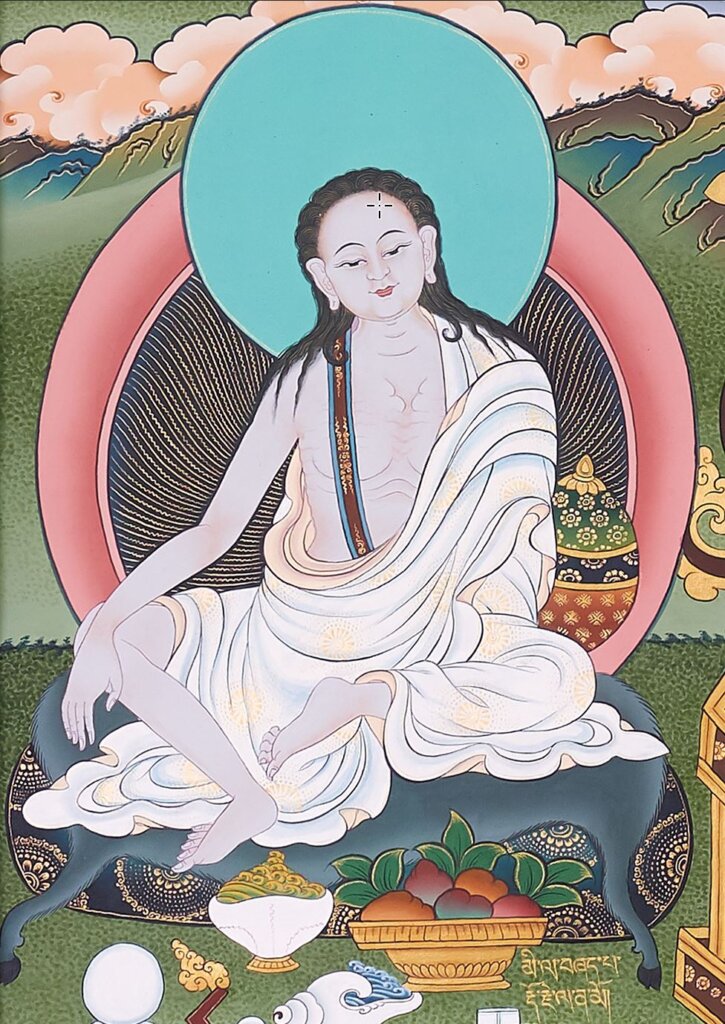
Milarepa's profound assertion, "Do not look for any other Buddha but your own mind," invites us to turn our gaze inward, suggesting that the essence of enlightenment resides not in external figures or doctrines, but within the very fabric of our own consciousness. This statement underscores the importance of self-exploration and the recognition that the path to awakening is a deeply personal journey. In a world often preoccupied with external validation and authority, Milarepa's words remind us that the true source of wisdom and understanding lies within ourselves.
To delve deeper into this teaching is to confront the complexities of our own minds. The notion that we must seek the Buddha within challenges conventional perceptions of spirituality, which frequently emphasize the need for external guidance or adherence to established doctrines. Instead, Milarepa encourages us to cultivate an intimate relationship with our own thoughts, emotions, and experiences, suggesting that the key to liberation is not found in distant teachings but in the quiet contemplation of our inner landscape.
The image / the metaphor
At the heart of Milarepa's quote lies a powerful metaphor that evokes the image of the mind as a vast, uncharted territory. The verb "look" implies an active engagement, urging us to explore the depths of our consciousness rather than passively accepting external teachings. The phrase "your own mind" emphasizes the personal nature of this exploration, suggesting that each individual's journey is unique and must be undertaken with sincerity and courage. This imagery invites us to envision our minds as both a sanctuary and a labyrinth, filled with potential insights and hidden obstacles.
Diving deeper into this metaphor reveals the intricate relationship between the mind and the concept of Buddha. In Buddhism, the term "Buddha" signifies an awakened state of being, a realization of one's true nature. By directing our attention inward, Milarepa implies that we can uncover this awakened state within ourselves. The journey to recognizing our own Buddha nature is akin to navigating through the complexities of our thoughts and emotions, ultimately leading us to a profound understanding of our true selves.
In the speaker's tradition
Milarepa, a revered figure in Tibetan Buddhism, embodies the principles of dharma and the transformative power of personal experience. His life story, marked by trials and tribulations, illustrates the path of kenosis—the self-emptying that allows for the emergence of true wisdom. In this context, the teaching of looking within aligns with the Buddhist concept of sunyata, or emptiness, which encourages practitioners to recognize the transient nature of thoughts and emotions. By understanding that our minds are not fixed entities but rather fluid and ever-changing, we can begin to see the Buddha that resides within.
This teaching resonates with the teachings found in the Heart Sutra, which emphasizes the idea that form is emptiness and emptiness is form. Just as the sutra invites us to transcend dualistic thinking, Milarepa's quote encourages us to move beyond the search for external validation and to recognize the inherent potential within ourselves. The journey to enlightenment is not about seeking outside ourselves but about uncovering the wisdom that has always been present within our own minds.
Living the teaching
Consider a modern scenario where this teaching can be applied: a person grappling with feelings of inadequacy in their professional life. In a culture that often equates success with external achievements, one might feel compelled to seek validation from mentors or role models. However, by embracing Milarepa's wisdom, this individual can begin to explore their own thoughts and feelings, recognizing that their worth is not contingent upon external accolades but rather rooted in their unique qualities and experiences. This internal exploration can lead to a more authentic sense of self and a deeper understanding of their true capabilities.
In relationships, the teaching can manifest in moments of conflict or misunderstanding. Instead of seeking answers from friends or external sources, one might turn inward to examine their own reactions and emotions. By doing so, they can cultivate empathy and understanding, recognizing that their responses are often reflections of their own inner struggles. This practice not only fosters healthier relationships but also deepens one's connection to their own mind, allowing for personal growth and transformation.
A reflection
As we contemplate Milarepa's profound insight, we are invited to ask ourselves: What does it mean to seek the Buddha within my own mind? This question encourages us to engage in a process of introspection, examining our thoughts, beliefs, and emotions with curiosity and compassion. In a world that often distracts us with external pursuits, this inquiry serves as a gentle reminder to return to ourselves, to explore the depths of our consciousness, and to uncover the wisdom that lies within.
