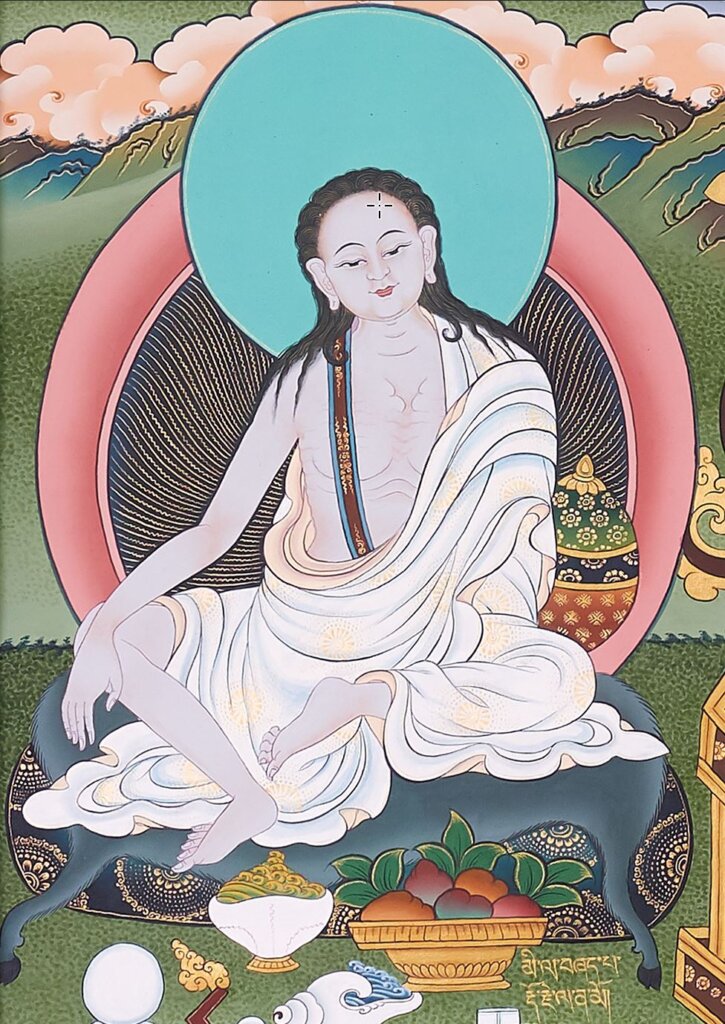
Embracing the Void: The Wisdom of Letting Go
Milarepa's poignant exhortation, "In the bardo of dying, do not cling," invites us to confront the profound nature of death and the impermanence of existence. This statement serves as a reminder that in the liminal space between life and death—the bardo—we are often tempted to grasp at the familiar, the known, and the comforting. Yet, it is precisely in this moment of transition that we are called to release our attachments and embrace the unknown. Understanding this teaching is essential, as it not only pertains to the physical act of dying but also to the myriad ways we cling to experiences, identities, and relationships throughout our lives.
As we delve deeper into Milarepa's wisdom, we recognize that clinging is a fundamental aspect of human suffering. Our attachments can create a false sense of security, leading us to resist the natural flow of life. In the bardo, where the boundaries of self begin to dissolve, the act of clinging can hinder our spiritual progress and prevent us from experiencing the liberation that comes with surrender. Thus, Milarepa's words resonate not only in the context of death but also in our daily lives, urging us to cultivate a practice of non-attachment and acceptance.
The image / the metaphor
The imagery of the "bardo" evokes a rich tapestry of spiritual significance within Buddhist thought. The term itself refers to the intermediate state between death and rebirth, a transitional phase where the soul navigates the consequences of its past actions. In this context, the verb "cling" carries a weighty connotation, suggesting a desperate grasping at the ephemeral. The felt sense of this quote is one of urgency and poignancy, as it implores us to recognize the futility of holding on in a moment that demands release.
Metaphorically, the bardo represents not only the literal experience of dying but also the myriad transitions we face throughout our lives. Each moment of change—be it the end of a relationship, the loss of a job, or the passage of time—can be viewed as a bardo in its own right. In these moments, the temptation to cling can be overwhelming, yet Milarepa's teaching encourages us to let go, to trust in the unfolding of life, and to embrace the uncertainty that accompanies transformation.
In the speaker's tradition
Milarepa, a revered figure in Tibetan Buddhism, embodies the principles of dharma and the path of enlightenment. His teachings emphasize the importance of recognizing the impermanence of all things, a concept deeply rooted in the Buddhist understanding of sunyata, or emptiness. This notion suggests that all phenomena are transient and devoid of inherent existence, thus inviting practitioners to cultivate a sense of detachment from the material world. In this light, Milarepa's exhortation to refrain from clinging becomes a profound expression of the wisdom found within the teachings of the Buddha.
In the Tibetan Book of the Dead, a text that explores the bardo experience in depth, we find similar themes of non-attachment and the importance of recognizing the illusory nature of reality. The text guides the deceased through the bardo, encouraging them to let go of their attachments and to recognize the luminosity of their true nature. This parallel reinforces Milarepa's teaching, illustrating that the path to liberation lies in our ability to release our clinging and to embrace the transformative power of the bardo.
Living the teaching
Consider a modern scenario where this teaching resonates: a loved one is terminally ill, and the impending loss creates a whirlwind of emotions. In such moments, the instinct to cling—to hold on to memories, to seek comfort in the familiar—can be overwhelming. Yet, Milarepa's wisdom invites us to navigate this experience with grace, encouraging us to cherish the moments we have while also preparing to let go. By embracing the reality of impermanence, we can cultivate a deeper appreciation for the present and honor the journey of our loved one without being ensnared by fear or grief.
Another application of this teaching might arise in the context of a difficult relationship. When faced with conflict or the potential end of a partnership, the urge to cling to past experiences, shared dreams, or even the identity we have built around the relationship can be strong. Milarepa's words remind us that clinging can prevent growth and healing. By allowing ourselves to release our attachments, we create space for new possibilities, whether that means fostering a deeper understanding with our partner or finding the courage to move on. In both scenarios, the practice of letting go becomes a pathway to liberation and transformation.
A reflection
As we contemplate Milarepa's profound teaching, we are invited to reflect on our own lives and the ways in which we cling to the past, to people, or to experiences. What attachments are we holding onto that may be hindering our spiritual growth? In the spirit of inquiry, consider this contemplative question: How might your life change if you were to embrace the practice of non-clinging, particularly in moments of transition or loss? Allow this question to guide your reflections, inviting you to explore the depths of your own experience and the transformative power of letting go.
