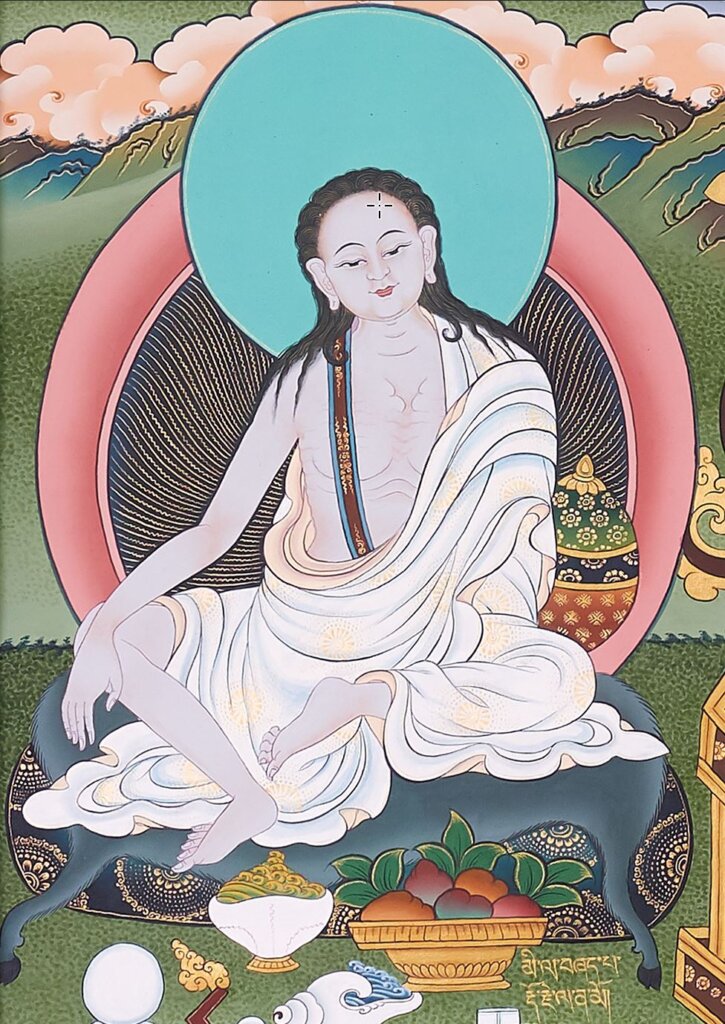
The Silent Bloom of Insight
Milarepa's poignant assertion, "In the noise of the village, no flower of insight blooms," invites us to reflect on the profound relationship between silence and understanding. In a world filled with distractions and incessant chatter, the cultivation of insight often feels like a daunting task. This quote serves as a reminder that true wisdom requires a sanctuary of quietude, where the mind can settle and the heart can open. The stakes are high; without this inner stillness, we risk losing touch with our deeper selves and the insights that can guide our lives.
Delving deeper, we recognize that the "noise of the village" symbolizes not just external distractions but also the internal clamor of thoughts, fears, and societal expectations. In this context, Milarepa's words resonate with a universal truth: the chaos of modern life can drown out the subtle whispers of wisdom that arise from within. To nurture the "flower of insight," we must intentionally carve out spaces of silence and solitude, allowing our inner landscapes to flourish. This endeavor is not merely a personal journey; it is a collective call to seek clarity amidst the tumult of existence.
The image / the metaphor
The imagery in Milarepa's quote is rich and evocative. The "noise of the village" conjures a vivid picture of a bustling community, filled with the sounds of daily life—conversations, laughter, and the clamor of activity. In stark contrast, the "flower of insight" symbolizes the delicate and often elusive nature of understanding. Just as a flower requires the right conditions to bloom—sunlight, water, and fertile soil—so too does insight require a nurturing environment of silence and contemplation. The verbs chosen here—"bloom" and "noise"—highlight the tension between chaos and clarity, emphasizing that insight cannot thrive in a cacophony.
Going deeper into the metaphor, we can see that the village represents not only the external world but also the inner turmoil that often accompanies our thoughts. The noise can be understood as the incessant chatter of the mind, filled with worries, judgments, and distractions that prevent us from accessing deeper truths. In this light, Milarepa's quote becomes a call to cultivate an inner garden, where silence acts as the fertile ground for insight to take root and flourish. The juxtaposition of the village and the flower serves as a powerful reminder that our environment—both external and internal—plays a crucial role in shaping our capacity for understanding.
In the speaker's tradition
Milarepa, a revered figure in Tibetan Buddhism, embodies the principles of dharma and the quest for enlightenment through personal transformation. His life story, marked by profound suffering and eventual liberation, illustrates the importance of inner silence as a pathway to wisdom. Concepts such as prajna, or transcendent wisdom, and sunyata, the emptiness that allows for the fullness of experience, resonate deeply with the essence of Milarepa's teaching. In this tradition, silence is not merely the absence of sound; it is a state of being that opens the heart and mind to the deeper truths of existence.
In the context of Buddhist texts, we can draw parallels to the teachings found in the Heart Sutra, which emphasizes the notion of emptiness as a means to perceive reality without the distortions of attachment and aversion. Just as the Heart Sutra invites practitioners to embrace the silence of emptiness, Milarepa's quote encourages us to seek the quiet spaces within ourselves where insight can emerge. Both teachings highlight the necessity of transcending the noise—whether it be external distractions or internal conflicts—to access the profound wisdom that lies within.
Living the teaching
Consider a modern scenario where this teaching resonates: a busy professional navigating the demands of work, family, and social obligations. In the midst of constant notifications, meetings, and the pressure to perform, finding a moment of silence can feel nearly impossible. Yet, it is precisely in these moments of overwhelming noise that the need for introspection becomes most urgent. By intentionally setting aside time for solitude—perhaps through meditation, nature walks, or simply sitting in silence—one can create the conditions for insight to bloom, allowing clarity and understanding to emerge from the chaos.
Another application of this teaching might arise in the context of a strained relationship. When conflicts arise, the noise of emotions—anger, frustration, and hurt—can cloud our ability to see the situation clearly. By embracing silence, whether through mindful breathing or taking a step back to reflect, we can create space for understanding and compassion to flourish. In this way, Milarepa's wisdom serves as a guiding light, reminding us that insight often requires the courage to pause, listen, and cultivate the quietude necessary for true connection and resolution.
A reflection
As we contemplate Milarepa's profound words, we are invited to consider the role of silence in our own lives. What practices can we cultivate to create spaces of quietude amidst the noise? In what ways can we nurture the "flower of insight" within ourselves, allowing it to bloom in the fertile ground of stillness? These questions beckon us to explore the delicate balance between the external world and our inner landscapes, guiding us toward a deeper understanding of ourselves and our place in the universe.
