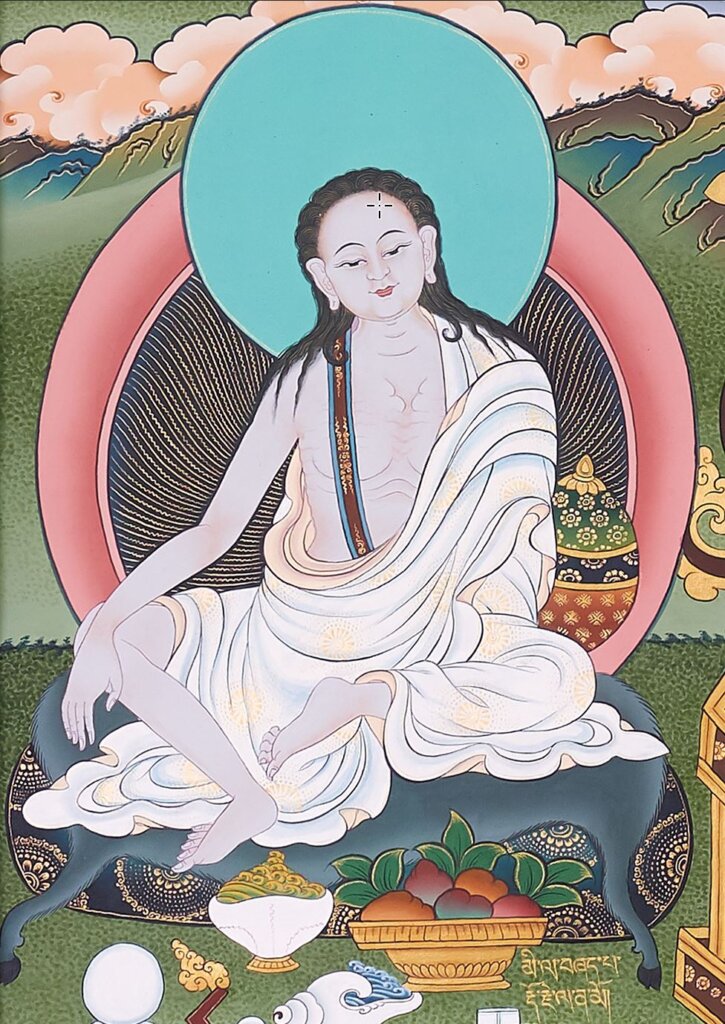
Milarepa's poignant declaration, "My fingertips are calloused from the rope I climb to my cave; my mind is purified by the rope of meditation," encapsulates the duality of physical and spiritual endeavor. In this vivid imagery, he speaks to the arduous journey of self-discovery and the transformative power of meditation. The calloused fingertips symbolize the sacrifices and labor inherent in the pursuit of enlightenment, while the purified mind reflects the clarity and insight gained through dedicated practice. This quote invites us to reflect on the relationship between our physical efforts and our inner states, urging us to recognize that true spiritual growth often requires both toil and contemplation.
Milarepa, a revered figure in Tibetan Buddhism, embodies the archetype of the seeker who endures hardship to attain spiritual wisdom. His life story is a testament to the profound connection between physical austerity and mental clarity. The metaphor of the rope serves as a bridge between the tangible and the intangible, illustrating how our struggles can lead to profound insights. In a world often dominated by distractions and superficial pursuits, Milarepa's words resonate deeply, reminding us that the path to inner peace is often paved with effort and perseverance.
The image / the metaphor
The imagery in Milarepa's quote is rich and evocative. The "rope" he refers to is not merely a physical object; it symbolizes the discipline and commitment required to ascend the heights of spiritual understanding. The act of climbing to his cave represents the arduous journey of self-exploration, where each pull on the rope signifies a step toward enlightenment. The callouses on his fingertips serve as a testament to the labor involved in this ascent, suggesting that spiritual growth is not without its challenges and sacrifices. This visceral imagery invites us to feel the weight of the journey, to understand that the path to awakening is often fraught with difficulty.
Diving deeper into the metaphor, we can see that the rope also signifies the connection between the seeker and the divine. Just as a rope can be both a means of ascent and a lifeline, meditation serves as a tool that binds the practitioner to their innermost self and the universe. The purification of the mind through meditation is akin to shedding layers of ignorance and distraction, revealing the clarity that lies beneath. This duality of effort and insight encapsulates the essence of spiritual practice, where the physical and the mental intertwine to create a holistic experience of awakening.
In the speaker's tradition
Milarepa's teachings are deeply rooted in the Tibetan Buddhist tradition, where the concepts of dharma and meditation play pivotal roles. The notion of dharma encompasses the ethical and moral principles that guide one's life, while meditation serves as the practice through which one can cultivate awareness and insight. In this context, the "rope of meditation" symbolizes the disciplined practice that leads to the realization of sunyata, or emptiness, a core tenet of Buddhist philosophy. This emptiness is not a void but rather a state of profound clarity and understanding, where the practitioner transcends the illusions of the self and experiences the interconnectedness of all beings.
In the context of Milarepa's life, we can draw parallels to the concept of kenosis, or self-emptying, found in various spiritual traditions. Just as Milarepa relinquished worldly attachments to pursue his spiritual path, the practice of kenosis invites us to let go of our ego-driven desires. This surrender allows for the emergence of a purer state of being, akin to the purified mind that Milarepa describes. The teachings of the Tibetan Book of the Dead also resonate here, emphasizing the importance of preparation and mindfulness in the face of life’s ultimate transitions, reinforcing the idea that spiritual practice is a continuous journey toward liberation.
Living the teaching
Consider a modern scenario where this teaching might resonate: a busy professional grappling with the demands of work and personal life. In the pursuit of success, they may find themselves overwhelmed, their mental clarity clouded by stress and distraction. By embracing the metaphor of Milarepa's rope, this individual can recognize the importance of carving out time for meditation and reflection amidst their busy schedule. Just as Milarepa climbed to his cave, they too can ascend to a place of inner peace through dedicated practice, transforming their calloused fingertips into instruments of mindfulness.
In relationships, the teaching can manifest in moments of conflict or misunderstanding. When faced with a difficult conversation, one might recall Milarepa's wisdom and choose to engage in a moment of meditation before responding. This pause allows for the purification of the mind, fostering clarity and compassion rather than reactionary responses. By embodying the spirit of Milarepa, individuals can navigate their relationships with greater awareness, recognizing that the effort to cultivate understanding is as vital as the insights gained from such practices.
A reflection
As we contemplate Milarepa's profound words, we are invited to ask ourselves: What ropes are we climbing in our own lives, and how can we cultivate the discipline of meditation to purify our minds? This question encourages us to reflect on our personal journeys, recognizing the interplay between our physical efforts and our inner states. In embracing this inquiry, we open ourselves to the possibility of transformation, allowing the callouses of our struggles to become symbols of our resilience and growth.
