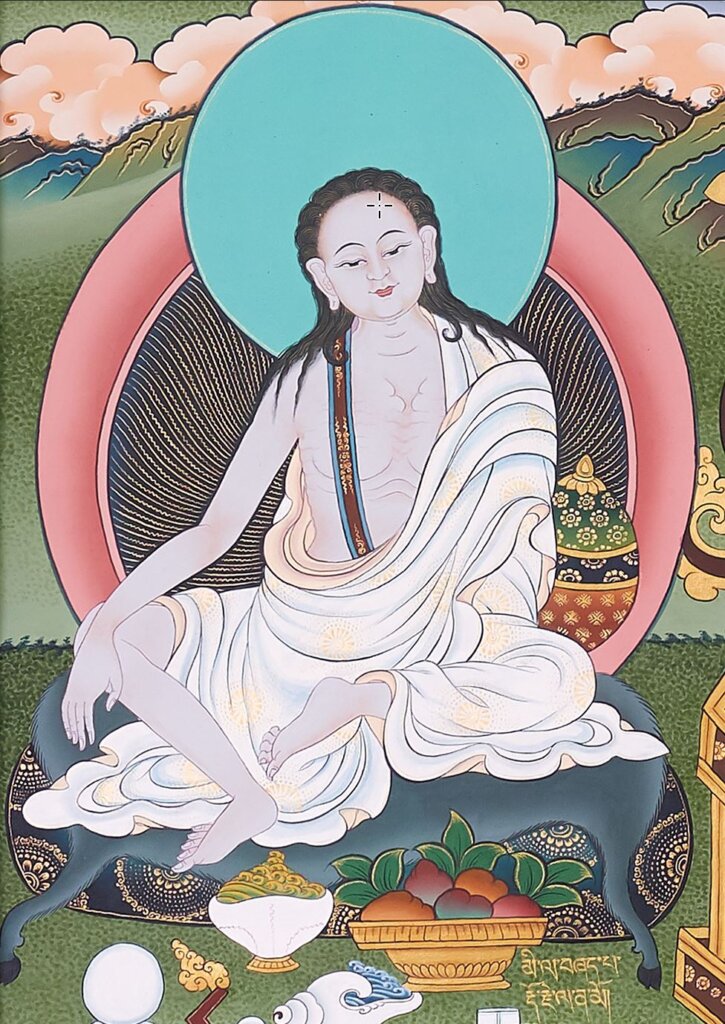
The Nourishment of Simplicity: Milarepa's Austerity
In the profound words of Milarepa, "My food was the nettle of the mountain; my drink was the stream's pure water," we encounter a vivid portrayal of a life steeped in simplicity and austerity. This statement encapsulates the essence of a spiritual journey that prioritizes the essentials of existence over the distractions of material abundance. Milarepa, a revered figure in Tibetan Buddhism, invites us to reflect on the nature of sustenance—not merely in the physical sense but as a metaphor for spiritual nourishment. The stakes are high; in a world rife with excess and superficiality, his words beckon us to consider what truly sustains us.
As we delve deeper into Milarepa's experience, we recognize that his choice of sustenance is not arbitrary but deeply intentional. The nettle, often regarded as a humble and even prickly plant, symbolizes resilience and the capacity to thrive in harsh conditions. The pure water of the stream represents clarity and the essential nature of life itself. Together, these elements illustrate a profound commitment to living authentically, stripped of the complexities that often cloud our spiritual paths. Milarepa's life serves as a testament to the transformative power of simplicity, urging us to seek nourishment that aligns with our highest values.
The image / the metaphor
At first glance, Milarepa's quote conjures images of a rugged mountain landscape, where the nettle grows defiantly amidst the rocks and the stream flows with unyielding purity. The verbs "was" and "was" ground the statement in a stark reality, emphasizing a state of being rather than a pursuit of external validation. This imagery evokes a visceral sense of connection to nature, where the elements of the earth provide sustenance in their most unadulterated forms. The nettle, often overlooked or dismissed, becomes a symbol of the overlooked treasures that lie in simplicity.
Delving deeper, the metaphor extends beyond the physical realm into the spiritual. The nettle can be seen as a representation of the challenges and discomforts we often face on our spiritual journeys. Just as Milarepa embraced the nettle, we too are invited to embrace the prickly aspects of our lives—those moments of struggle and discomfort that ultimately lead to growth. The stream's pure water serves as a reminder of the clarity and refreshment that comes from living in alignment with our true selves, unencumbered by the noise of societal expectations.
In the speaker's tradition
Milarepa's teachings are deeply rooted in the Tibetan Buddhist tradition, where concepts such as dharma and kenosis resonate profoundly. Dharma, the path of righteousness and truth, invites practitioners to seek the essence of existence beyond material attachments. Kenosis, or self-emptying, aligns with Milarepa's choice to forgo worldly comforts in favor of spiritual awakening. This radical simplicity reflects the Buddhist understanding of sunyata, or emptiness, which teaches that true fulfillment arises not from accumulation but from the release of desires and attachments.
In the context of Milarepa's life, we can draw parallels to the teachings found in the "Bodhicaryavatara" by Shantideva, where the cultivation of compassion and the relinquishing of ego are emphasized. Just as Milarepa found nourishment in the nettle and the stream, Shantideva encourages us to find joy in the simplicity of selflessness and the purity of intention. Both figures illuminate the path toward enlightenment, reminding us that true sustenance lies in the embrace of our authentic selves.
Living the teaching
Consider a modern scenario where the teachings of Milarepa resonate profoundly: the overwhelming nature of contemporary life, filled with distractions and demands. Imagine a busy professional, constantly chasing promotions and accolades, only to find themselves feeling empty and unfulfilled. In this context, Milarepa's wisdom invites us to reassess our priorities and seek nourishment in the simple joys of life—perhaps through a walk in nature, a moment of stillness, or a shared meal with loved ones. By embracing the nettle of our daily challenges and drinking from the stream of present-moment awareness, we can cultivate a deeper sense of fulfillment.
In relationships, Milarepa's teaching can manifest as a commitment to authenticity and vulnerability. Picture a couple navigating a difficult conversation, where the urge to protect oneself from discomfort may overshadow the desire for connection. By embodying the spirit of the nettle, they can embrace the prickly emotions that arise, allowing for a deeper understanding of one another. In this way, the practice of simplicity and authenticity fosters a space for genuine connection, transforming challenges into opportunities for growth.
A reflection
As we contemplate Milarepa's words, we are invited to reflect on our own sources of nourishment. What are the nettles in our lives that we might be avoiding, and how can we embrace them as essential to our growth? In a world that often prioritizes convenience and comfort, how can we seek the pure waters of clarity and authenticity? Let this contemplation guide us toward a deeper understanding of what it means to live simply and authentically, nourishing our spirits with the essentials of life.
