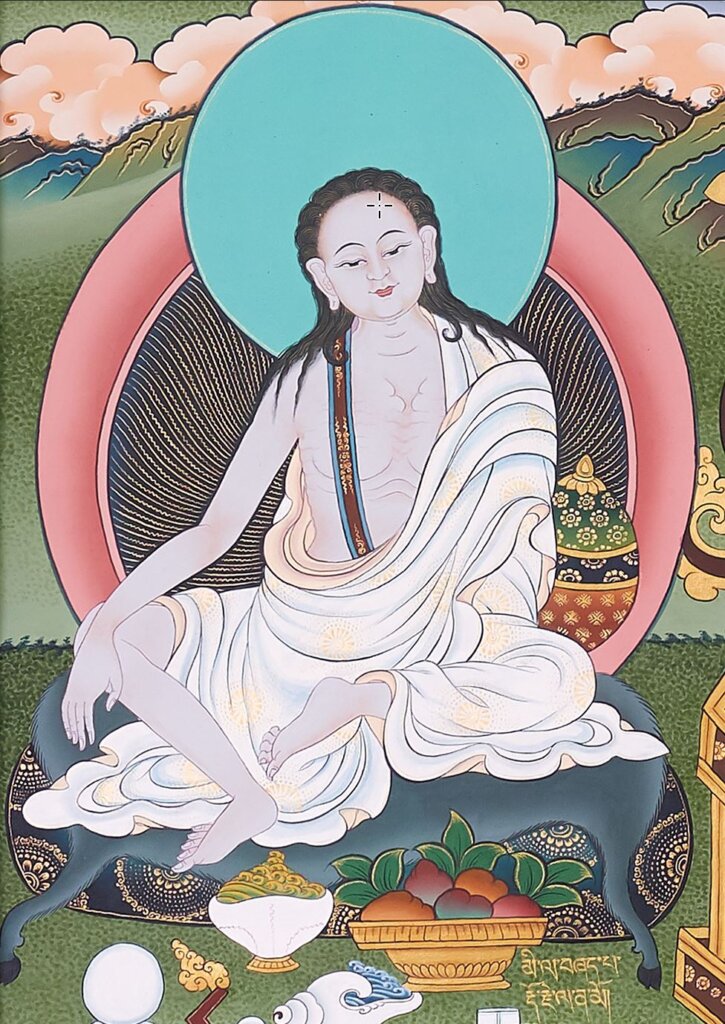
Milarepa's assertion, "My method is the method of letting go," invites us into a profound exploration of surrender and release. In a world often characterized by attachment and clinging, this statement serves as a gentle reminder of the transformative power inherent in relinquishing control. The stakes are high; our ability to let go can lead to liberation from suffering and a deeper connection to the essence of our being. This teaching resonates not only within the context of Buddhism but also speaks to the universal human experience of grappling with the impermanence of life.
To delve deeper into Milarepa's wisdom, we must recognize that letting go is not merely an act of resignation but a conscious choice to embrace the flow of existence. It is an invitation to release the burdens we carry, whether they be emotional, psychological, or material. This method of surrender challenges us to confront our fears and insecurities, ultimately leading to a more authentic and liberated self. In this light, Milarepa's words become a beacon for those seeking a path toward inner peace and enlightenment.
The image / the metaphor
The phrase "the method of letting go" conjures images of a gentle release, akin to the act of dropping a heavy stone into a river, allowing it to sink and be carried away by the current. The verbs "letting go" evoke a sense of ease and fluidity, suggesting that this process does not require force or struggle. Instead, it invites a softening of the heart and mind, encouraging us to trust in the natural unfolding of life. This imagery resonates deeply with the Buddhist concept of impermanence, where all things are transient and ever-changing.
In the speaker's tradition
Milarepa's teaching of letting go is deeply rooted in the Buddhist tradition, particularly within the context of the path to enlightenment. Concepts such as dharma, the natural law of the universe, and sunyata, or emptiness, are integral to understanding this method. In Buddhism, the act of letting go is often associated with the relinquishment of attachment and desire, which are seen as the root causes of suffering. This aligns with the practice of kenosis, a term that refers to the self-emptying of one's will in favor of divine will, allowing for a deeper connection to the essence of reality.
In the Tibetan Buddhist text "Songs of Milarepa," the poet-saint's life exemplifies the transformative power of surrender. His journey from a life of vengeance to one of profound compassion illustrates the profound shifts that occur when one embraces the method of letting go. Milarepa's songs serve as a testament to the liberation found in relinquishing the ego and embracing the interconnectedness of all beings. This narrative not only highlights the importance of letting go but also serves as a guide for those seeking to navigate their own spiritual journeys.
Living the teaching
Consider a modern scenario where the teaching of letting go can be applied: a professional facing the stress of an impending deadline. The pressure to perform can lead to anxiety and a sense of being overwhelmed. By embracing Milarepa's method of letting go, the individual can consciously release the need for perfection and control, allowing themselves to focus on the task at hand with a sense of ease. This shift in perspective can transform the experience from one of dread to one of flow, fostering creativity and clarity.
In the realm of relationships, the practice of letting go can manifest in moments of conflict or misunderstanding. When tensions arise, the instinct may be to cling to one's perspective or to seek validation. However, by embodying the method of letting go, one can choose to release the need to be right or to hold onto grievances. This act of surrender opens the door to empathy and understanding, allowing for deeper connections and healing within the relationship. In both scenarios, the essence of Milarepa's teaching becomes a guiding light, illuminating the path toward greater peace and harmony.
A reflection
As we contemplate Milarepa's profound statement, we are invited to reflect on our own lives: What are the burdens we carry that may benefit from the act of letting go? In what areas do we find ourselves clinging to expectations, fears, or desires that hinder our growth? This inquiry encourages us to explore the spaces within ourselves that yearn for release, ultimately guiding us toward a more liberated and authentic existence. In embracing the method of letting go, we may discover the profound freedom that lies in surrendering to the flow of life.
