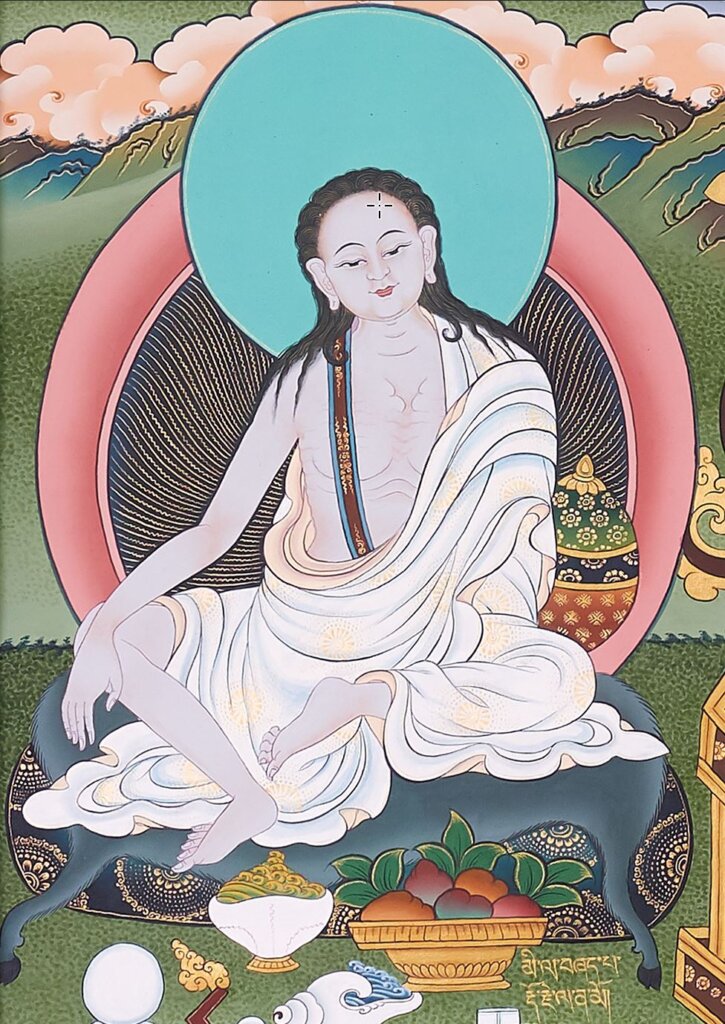
Milarepa's assertion that "solitude is the soil of awakening" invites us to reconsider our relationship with isolation and introspection. In a world that often glorifies busyness and social engagement, this quote serves as a poignant reminder of the transformative power of solitude. It suggests that true awakening—an essential aspect of spiritual growth—can only take root in the quiet, fertile ground of our inner selves. This idea is not merely a philosophical musing; it is a call to embrace moments of stillness as vital to our spiritual journey.
To delve deeper into this notion, we must recognize that solitude is not synonymous with loneliness. Instead, it is an intentional space where one can cultivate awareness and connect with the deeper currents of existence. In this sacred solitude, we can confront our fears, desires, and the myriad distractions that often cloud our perception. Milarepa, a revered figure in Tibetan Buddhism, understood that the path to enlightenment is often paved with moments of introspection, where the noise of the external world fades away, allowing the soul to awaken to its true nature.
The image / the metaphor
The imagery of "soil" in Milarepa's quote evokes a sense of nurturing and growth. Soil is a rich, organic medium that supports life, suggesting that solitude is not merely an absence of company but a vital environment for spiritual development. The verb "awakening" implies a process, one that requires time, patience, and care—much like the cultivation of a garden. In this metaphor, solitude becomes a sanctuary where the seeds of insight can germinate, unfurling into the vibrant blossoms of understanding and compassion.
Diving deeper into this metaphor, we can see that just as soil must be tended to, so too must our solitude be cultivated with intention. It is not enough to simply withdraw from the world; we must actively engage with our inner landscape. This engagement can take many forms—meditation, reflection, or even creative expression. Each of these practices serves to enrich the soil of our solitude, allowing the awakening process to flourish. In this light, solitude transforms from a mere absence of noise into a dynamic space of potential and growth.
In the speaker's tradition
Milarepa's teachings are deeply rooted in the Buddhist tradition, which emphasizes the importance of solitude in the pursuit of enlightenment. Concepts such as dharma—the path of truth—and sunyata, or emptiness, resonate with the idea that solitude allows us to strip away the layers of illusion that obscure our true nature. In this context, solitude is not a retreat from the world but a necessary step toward understanding the interconnectedness of all beings. It is through this lens that we can appreciate the profound wisdom embedded in Milarepa's words.
Furthermore, Milarepa's life exemplifies the transformative power of solitude. His journey from a life of vengeance to one of profound compassion illustrates the potential for awakening that solitude can foster. In his songs, he often reflects on the trials he faced while alone in the mountains, highlighting how these experiences led to deep insights and a profound connection with the universe. This narrative aligns with the Buddhist concept of kenosis, or self-emptying, where one must let go of the ego to experience true awakening.
Living the teaching
In our modern lives, the teaching of solitude as a fertile ground for awakening can manifest in various ways. Consider a busy professional who finds themselves overwhelmed by the demands of work and social obligations. By intentionally carving out time for solitude—perhaps through a weekend retreat or a daily meditation practice—this individual can reconnect with their inner self. In these moments of quiet, they may discover clarity about their true desires and values, leading to a more authentic and fulfilling life.
A reflection
As we contemplate Milarepa's assertion that "solitude is the soil of awakening," we are invited to consider our own relationship with solitude. How often do we create space for introspection in our lives? In what ways can we cultivate this fertile ground to nurture our spiritual growth? Reflecting on these questions can guide us toward a deeper understanding of ourselves and our place in the world, reminding us that in the stillness, we may find the awakening we seek.
