The Abundance of the Small: Embracing Sufficiency in a World of Want
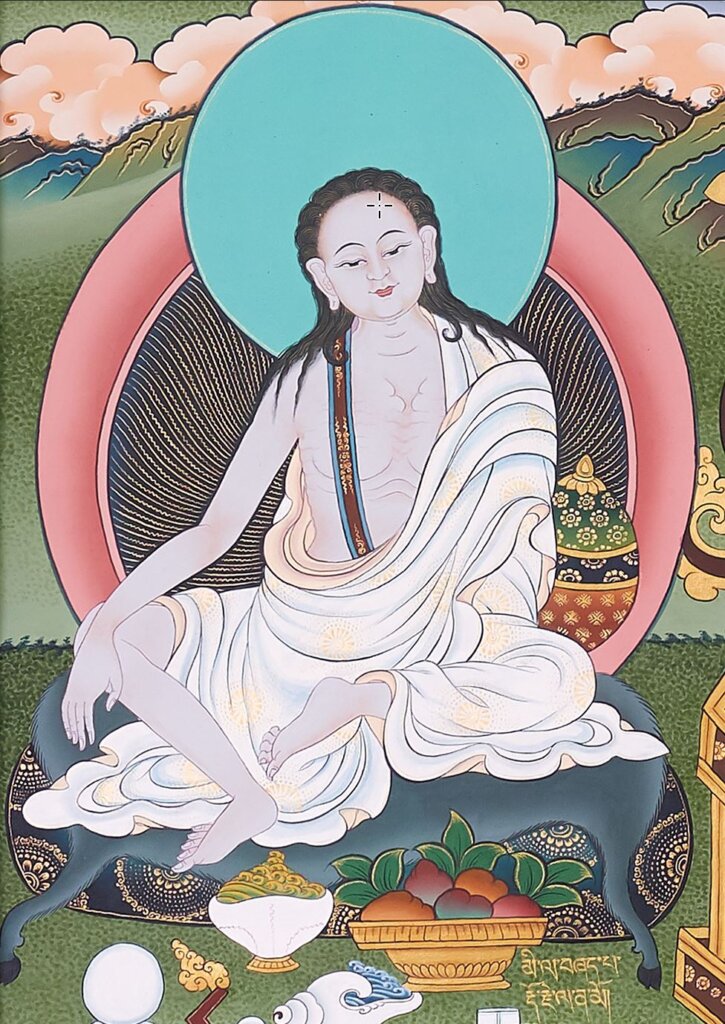
Milarepa's poignant assertion, "The hermit's bowl is full though it is small," invites us to reconsider our understanding of abundance and sufficiency. In a culture often driven by accumulation and comparison, this quote serves as a gentle reminder that true richness lies not in the size of our possessions but in the depth of our contentment. It challenges us to reflect on what it means to feel fulfilled and to recognize that even the smallest vessel can hold a wealth of experience and insight.
As we delve deeper into this teaching, we uncover layers of meaning that resonate with the essence of spiritual practice. The hermit, often seen as a figure of solitude and simplicity, embodies a life stripped of excess, yet paradoxically full of wisdom and insight. This fullness is not merely a physical state but a profound spiritual realization that invites us to explore the nature of our own lives and the ways we measure worth and fulfillment.
The image / the metaphor
The imagery of a hermit's bowl evokes a sense of simplicity and minimalism, suggesting that what is essential can often be found in the most unassuming forms. The choice of the word "bowl" is significant; it implies a receptacle, a space designed to hold and nurture. The smallness of the bowl contrasts sharply with the idea of fullness, inviting us to ponder how something diminutive can contain a vastness of experience, emotion, and understanding. This juxtaposition creates a felt sense of abundance that transcends material limitations.
Diving deeper into the metaphor, we can see the hermit's bowl as a symbol of the inner life. It represents the mind and heart, which, when cultivated with care, can yield a richness that is not dependent on external circumstances. The fullness of the bowl suggests that spiritual nourishment comes from within, and that our capacity for joy, love, and wisdom is not dictated by the size of our material possessions but by the depth of our inner experience. In this way, Milarepa invites us to shift our focus from the external to the internal, from scarcity to sufficiency.
In the speaker's tradition
Milarepa, a revered figure in Tibetan Buddhism, embodies the principles of dharma and the transformative power of renunciation. His life story illustrates the journey from a life of suffering to one of profound spiritual realization, emphasizing the importance of inner wealth over material gain. The concept of kenosis, or self-emptying, resonates deeply with the idea of the hermit's bowl, suggesting that by letting go of our attachments and desires, we create space for true abundance to flourish. This aligns with the Buddhist understanding of sunyata, or emptiness, which teaches that true fullness arises from the relinquishment of ego and desire.
In the context of Milarepa's teachings, we can draw parallels to the notion of prajna, or wisdom, which is cultivated through deep contemplation and understanding of the nature of reality. His songs often reflect the realization that liberation comes not from external achievements but from an inner awakening. This perspective is echoed in the Heart Sutra, which states, "Form is emptiness, emptiness is form," reinforcing the idea that what we perceive as lacking may, in fact, be a gateway to profound fullness.
Living the teaching
Consider a modern scenario where this teaching might resonate: a person navigating the pressures of contemporary life, constantly bombarded by messages of success that equate to wealth and status. In this context, the hermit's bowl serves as a powerful reminder that fulfillment can be found in the simple joys of life—moments spent with loved ones, the beauty of nature, or the satisfaction of a job well done. By embracing the notion that their bowl is already full, they can cultivate gratitude and contentment, shifting their focus from what they lack to the richness of their current experience.
In relationships, the teaching of the hermit's bowl can also be transformative. Imagine a couple facing challenges, feeling the strain of unmet expectations and desires. By recognizing that their connection, though imperfect, is already abundant in love and shared experiences, they can foster a deeper appreciation for one another. This perspective encourages them to nurture their bond rather than seek fulfillment outside of it, allowing their relationship to flourish in the space of sufficiency rather than scarcity.
A reflection
As we contemplate Milarepa's wisdom, we are invited to ask ourselves: In what areas of my life do I feel a sense of lack, and how might I shift my perspective to recognize the fullness that already exists? This question encourages a deep exploration of our values and priorities, inviting us to embrace the richness of our experiences, however small they may seem. By reflecting on this, we can begin to cultivate a sense of sufficiency that transforms our relationship with ourselves and the world around us.
