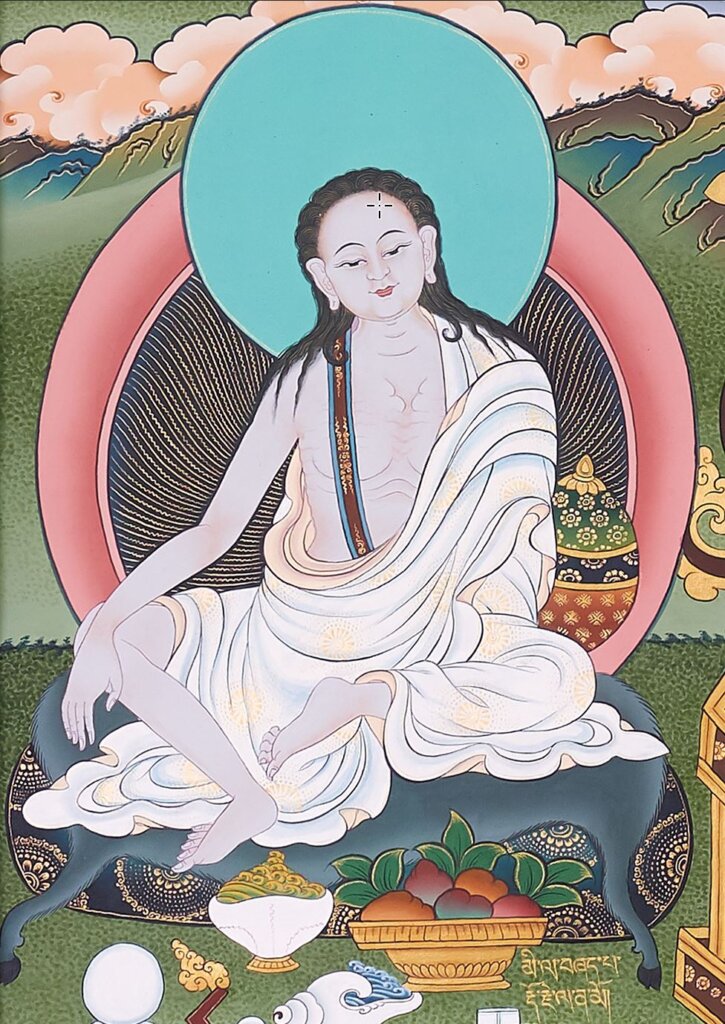
Milarepa's exhortation to "cultivate devotion above all" serves as a profound reminder of the centrality of devotion in the spiritual journey. In a world often preoccupied with material pursuits and transient distractions, this call to prioritize devotion invites us to reflect on what truly matters in our lives. Devotion, in this context, is not merely an emotional attachment but a deep, abiding commitment to the path of awakening and the cultivation of wisdom.
This emphasis on devotion is particularly significant in the context of Buddhist practice, where the heart's intention shapes the quality of our engagement with the teachings. Milarepa, a revered figure in Tibetan Buddhism, embodies the transformative power of devotion through his life and teachings. His words challenge us to examine our own priorities and to consider how a genuine commitment to spiritual practice can lead to profound inner transformation.
The image / the metaphor
At first glance, the phrase "cultivate devotion" evokes the imagery of a gardener tending to a delicate plant. The act of cultivation implies a nurturing process, one that requires patience, care, and consistent effort. The verb "cultivate" suggests that devotion is not a static state but a dynamic practice that grows and evolves over time. This imagery invites us to consider how we can actively engage with our spiritual lives, tending to our devotion as we would a garden, ensuring it receives the sunlight of awareness and the water of intention.
In the speaker's tradition
Milarepa's teachings are deeply rooted in the Tibetan Buddhist tradition, where devotion is often linked to the concept of *bhakti*, or loving devotion towards the teacher and the teachings. This devotion is not merely an emotional response; it is a profound recognition of the interconnectedness of all beings and the wisdom that arises from surrendering to the path. In this context, devotion becomes a vehicle for *prajna*, or wisdom, allowing practitioners to transcend the ego and experience the essence of *sunyata*, or emptiness.
In the *Songs of Milarepa*, we find numerous references to the transformative power of devotion. For instance, Milarepa often speaks of his own struggles and the pivotal role that his unwavering devotion played in overcoming obstacles. This mirrors the teachings found in other Buddhist texts, such as the *Lotus Sutra*, which emphasizes the importance of faith and devotion as essential components of the spiritual path. Through devotion, one can access the deeper truths of existence and cultivate a heart that is open to the mysteries of life.
Living the teaching
Consider a modern scenario where the teaching of cultivating devotion can be applied: a busy professional grappling with the demands of work and family life. Amidst the chaos, this individual might feel a longing for deeper meaning and connection. By consciously prioritizing devotion—whether through daily meditation, acts of kindness, or moments of gratitude—this person can begin to transform their experience. Devotion becomes a grounding force, allowing them to navigate the complexities of life with a sense of purpose and clarity.
In the realm of relationships, the cultivation of devotion can manifest in profound ways. Imagine a couple facing challenges in their partnership; by consciously choosing to cultivate devotion towards one another, they can foster a deeper understanding and connection. This might involve setting aside time for meaningful conversations, practicing active listening, or engaging in shared spiritual practices. In these moments, devotion becomes a bridge, allowing love and compassion to flourish even amidst difficulties.
A reflection
As we contemplate Milarepa's call to "cultivate devotion above all," we are invited to reflect on our own lives and priorities. What does devotion mean to you in your spiritual journey? How can you actively cultivate it in your daily practices and relationships? These questions serve as a compass, guiding us toward a deeper understanding of ourselves and our connection to the world around us.
